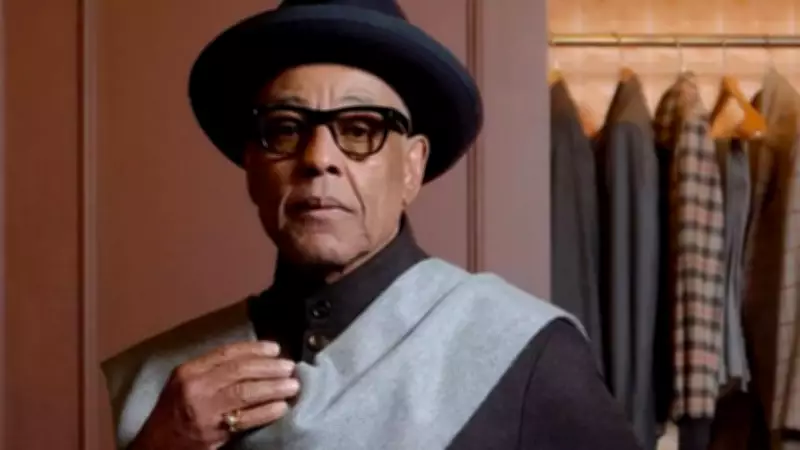
Breaking Bad Star Giancarlo Esposito Calls for 'Revolution' in Viral Sundance Statement
In a powerful political declaration that has rapidly spread across social media platforms, Breaking Bad star Giancarlo Esposito has called for collective action, describing the current moment in the United States as one demanding "a revolution". The actor's remarks, delivered during the Sundance Film Festival, have ignited widespread discussion across political circles, entertainment communities, and online forums.
Esposito's Forceful Remarks at Sundance Festival Premiere
Esposito made these comments while attending the premiere of his new crime thriller The Only Living Pickpocket in New York. Speaking to Variety, the Emmy-nominated actor framed his statements within the context of escalating political tensions, particularly referencing federal law enforcement actions like Immigration and Customs Enforcement (ICE) operations that have drawn national attention and criticism.
The actor's words were direct and literal rather than metaphorical. "This is time for a revolution and they don't even know that's what they're starting. We have to stand up to it. They can't take us all down", Esposito told journalists at Sundance. He elaborated that if the entire world mobilized against entrenched power structures—symbolized by the Kremlin, Tehran, or Washington—authorities would be unable to suppress everyone, even if significant casualties occurred.

Esposito further emphasized, "Some very rich old white men are exerting their power to suppress our own people, thus creating a feeling of civil war in the streets, preparing the haters to hate, teaching them how to shoot. This is all a preparation for a very insidious problem that's happening in our world. And for me, I have to speak out. We will not be ICE'd out. This is not going to happen." His choice of language, invoking large-scale resistance and potential sacrifice, immediately generated strong reactions from commentators and the public alike.
Political Context and Celebrity Solidarity at Sundance
The actor's call for revolution emerges against a backdrop of increasing political polarization and civil unrest in the United States. Recent federal operations in cities like Minneapolis have faced criticism from civil rights groups for alleged heavy-handed tactics and constitutional violations, fueling debates over law enforcement, immigration policy, and civil liberties.
Esposito connected these enforcement actions to a "feeling of civil war in the streets", echoing progressive narratives about inequality, power structures, and institutional control. His comments were part of a broader display of solidarity at Sundance, where several celebrities, including his co-star Tatiana Maslany, were seen wearing "ICE Out" pins during media appearances.
Maslany, who also wore an "Artists for Ceasefire" pin, commented on international conflicts, stating, "There is still genocide happening in Gaza and as much as there's a 'Trump peace plan,' Israel has continued to kill Gazans and people in Palestine." This demonstrates how Hollywood figures are increasingly linking domestic issues with global humanitarian concerns.
Social Media Eruption: Support, Criticism, and Satirical Responses
Unsurprisingly, Esposito's remarks have become one of the most shared entertainment-political moments of the week. On platforms like X and Reddit, reactions have spanned from enthusiastic support to sharp criticism and humorous satire.
Many users celebrated the actor's boldness and resonated with his call to resist what they perceive as growing authoritarian tendencies, praising him as a "voice of the people." Others dismissed the remarks as "Hollywood theatrics" that oversimplify complex political realities, arguing that celebrities should avoid promoting rhetoric that could be interpreted as endorsing violence.

A significant portion of social media responses took a humorous approach, referencing Esposito's Breaking Bad legacy and comparing his real-world comments to fictional roles like Gus Fring. Some users light-heartedly speculated about him leading a revolution akin to television plotlines, while critics warned that incendiary language from public figures could inadvertently escalate tensions rather than foster resolution.
The Broader Implications of Celebrity Political Discourse
This diverse range of responses highlights how celebrity political speech today rarely remains confined to entertainment pages. When a respected actor with a substantial fan base speaks out, their commentary quickly becomes integrated into wider civic debates. Esposito is not alone among prominent actors engaging in political discourse; at Sundance this year, multiple artists wore "ICE Out" pins, connecting Hollywood presence with broader advocacy movements.
The actor criticized the notion that suppression could silence dissenting voices, framing silence as complicity and urging collective action. Whether one agrees with his politics or not, this moment illustrates how deeply entertainment figures are engaging with and shaping political discourse in the United States and internationally.
Interpretations of Esposito's "revolution" language vary significantly. Some supporters view his words as a figurative call to civic engagement, encouraging people to stand up for democratic principles and resist perceived power abuses. Others read his language more literally, suggesting systemic overthrow or mass resistance. In an era marked by misinformation and political manipulation, such rhetoric often becomes fuel for partisan amplification rather than balanced analysis.
Conclusion: A Reflection of American Societal Divides
Giancarlo Esposito's declaration that "it's time for a revolution" has transcended the entertainment world to enter political debate, reflecting rising public frustration and deep ideological divisions in contemporary American society. His remarks, delivered at a major cultural event and amplified through digital platforms, capture the tension between celebrity influence, grassroots dissatisfaction, and broader national conversations about power, protest, and civic engagement.
Esposito's status as a respected actor—known for roles in Breaking Bad, The Mandalorian, and other popular series—grants his words enhanced visibility. Celebrities rarely speak into a vacuum; their statements are filtered through news outlets, social platforms, and community echo chambers, magnifying both support and backlash. This incident underscores the evolving role of entertainment figures in political discourse and the complex interplay between celebrity advocacy and public response in today's interconnected world.