Baghban Reexamined: Gen Z Challenges Classic Film's Narrative Framework
Ravi Chopra's 2003 family drama Baghban has long held a cherished position within Indian popular culture. For years, the Hema Malini and Amitabh Bachchan starrer has been widely regarded as the definitive cinematic portrayal of elderly parents facing neglect from their adult children. The film's emotional core revolves around a retired couple treated as burdens by their four sons, striking a powerful chord with audiences nationwide.
The Iconic Monologue and Changing Perspectives
Amitabh Bachchan's climactic courtroom monologue became particularly iconic, passionately calling out what was portrayed as an ungrateful younger generation. However, two full decades after its initial release, contemporary audiences are beginning to reassess the film through a more critical and modern lens. This cultural reevaluation represents a significant shift in how younger viewers interpret traditional family narratives.
Samir Soni Shares Viral Gen Z Critique
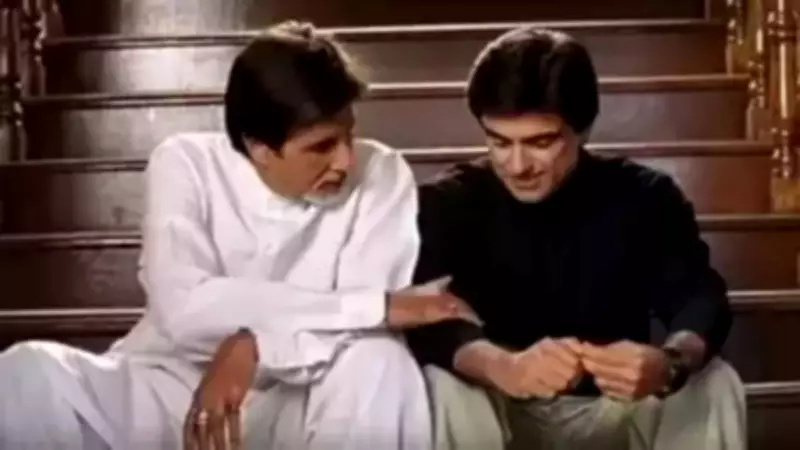
Actor Samir Soni, who portrayed Sanjay Malhotra, the second son of Raj and Pooja Malhotra played by Amitabh Bachchan and Hema Malini respectively, recently amplified this changing perspective. Soni shared a viral Instagram reel that directly challenges Baghban's moral framework. The video features a Gen-Z content creator describing the film as "boomer propaganda" and arguing that Sanjay's character was unfairly portrayed as the antagonist throughout the narrative.

Practical Expectations Versus Emotional Framing
The influencer's analysis focuses specifically on scenes between Raj Malhotra and his son Sanjay, suggesting that Sanjay's expectations were practical rather than cruel. She praises the character for demonstrating discipline and empathy toward his wife's concerns while simultaneously highlighting his sound financial reasoning. "He's also an intellectual because he asks his father why he doesn't have any FDs, gratuity or savings," the creator explains. "But then a very emotional song plays in the background and the son is turned into a villain. Bro, your son is right. Why do you not have savings? It's not like you worked at a bad place. You worked at a very reputed bank."
Revisiting Key Scenes with Modern Sensibilities
The viral reel also reexamines the much-discussed typewriter scene with contemporary sensibilities. In this sequence, Sanjay's wife requests that her father-in-law avoid using the typewriter late at night because the noise disrupts her sleep, particularly important since she is a working professional who needs to wake up early. Sanjay calmly relays this reasonable request, suggesting alternatives like using the machine in his own room, limiting usage to morning hours, or considering a laptop upgrade.
Despite the measured tone of this exchange, Raj Malhotra takes immediate offense, with dramatic background music framing the son and daughter-in-law as insensitive antagonists. Another moment receiving fresh analysis is the Karva Chauth sequence, where Sanjay's wife proposes going out for dinner after fasting all day, assuming her father-in-law would eat at his usual café. When Raj declines the café owner's repeated offers and returns home to find no food prepared, the film presents this as another emotional slight against the elderly protagonist.
Actor's Response to Changing Interpretations
Sharing the critical reel on his personal Instagram account, Samir Soni responded with both irony and appreciation for evolving cultural perspectives. In his caption, the actor wrote, "Finally some redemption after 20 years. Just love the new generation." This acknowledgment from one of the film's original cast members highlights how cinematic interpretations transform across generations, with contemporary viewers bringing different values and expectations to classic narratives.
The ongoing reassessment of Baghban illustrates how cultural artifacts accumulate new meanings over time, particularly as societal norms and generational perspectives evolve. What was once universally accepted as a moral lesson about filial responsibility is now being questioned for its underlying assumptions about financial planning, intergenerational communication, and emotional manipulation through cinematic techniques.