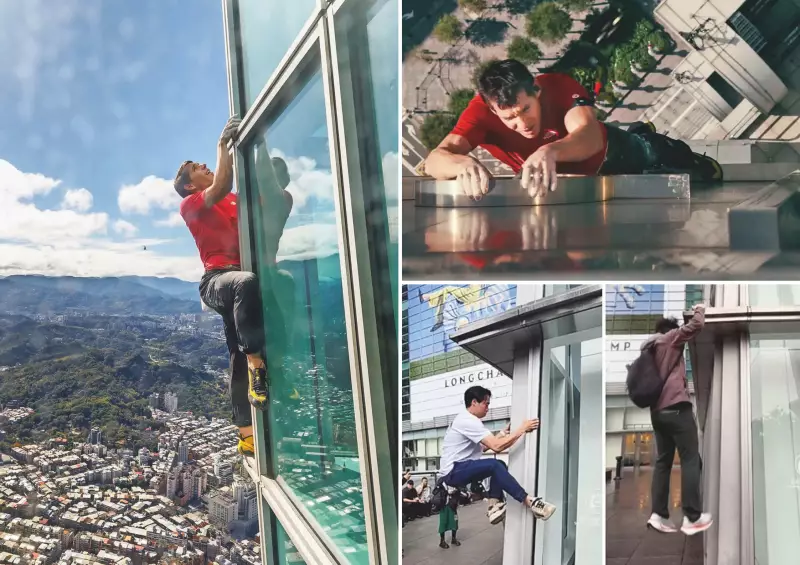
The world watched in awe as American climber Alex Honnold executed a breathtaking free-solo ascent of Taipei 101, featured prominently in the Netflix series Skyscraper Live. With no ropes, no harness, and relying solely on his exceptional skill and nerve, Honnold scaled the iconic 1,667-foot skyscraper, using architectural ledges and decorative features to navigate the towering structure.
Clear Warnings Ignored as Amateurs Attempt Risky Replication
Despite clear on-screen warnings urging viewers not to attempt the climb, the internet's copycat culture quickly took hold. Within days, authorities reported multiple incidents of amateur climbers trying to scale parts of Taipei 101, mimicking Honnold's stunt. This rash behavior prompted significant concern over public safety and the dangers of imitating professional feats without proper training or equipment.
Most Copycats Fail Miserably, Sparking Online Mockery
As expected, most amateur climbers struggled to make any meaningful progress. While a few managed to shimmy up window frames, none appeared to get past the first storey. The online community responded with a mix of ridicule and caution. One netizen quipped, "Alex is a professional... what kind of monkey are you again?" while another warned, "This isn't something you replicate solo."

Entrepreneurial Suggestions and Broader Implications
In a twist, some entrepreneurial-minded individuals suggested that Taipei 101 could capitalize on the interest by offering harnessed climbs for a fee. This incident highlights the broader issue of copycat behavior following high-profile stunts, emphasizing the need for public awareness about the risks involved in such dangerous activities.
Honnold's climb was a precision stunt designed strictly for professionals, and the subsequent attempts by amateurs nearly turned his jaw-dropping feat into a public-safety headache. The episode serves as a stark reminder of the importance of heeding safety warnings and respecting the expertise required for extreme sports.