The world of cinema is undergoing a seismic shift, and the catalyst is Artificial Intelligence. No longer a futuristic concept, AI has firmly embedded itself into every stage of filmmaking, from the first storyboard to the final visual effects. This rapid integration is forcing the entire Indian film industry to re-evaluate its core processes, production pipelines, and even the nature of performance itself. Amidst a whirlwind of excitement, fear, and hype, the pioneers of visual storytelling are grappling with profound questions: What is the ethical purpose of AI in art? What human elements must it never replace? And crucially, how does cinema retain its soul in an age of automation?
AI as a Creative Accelerator, Not a Shortcut
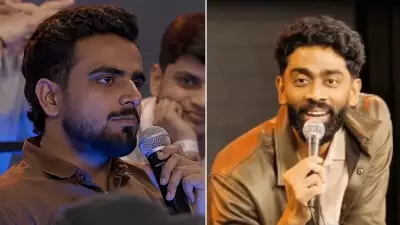
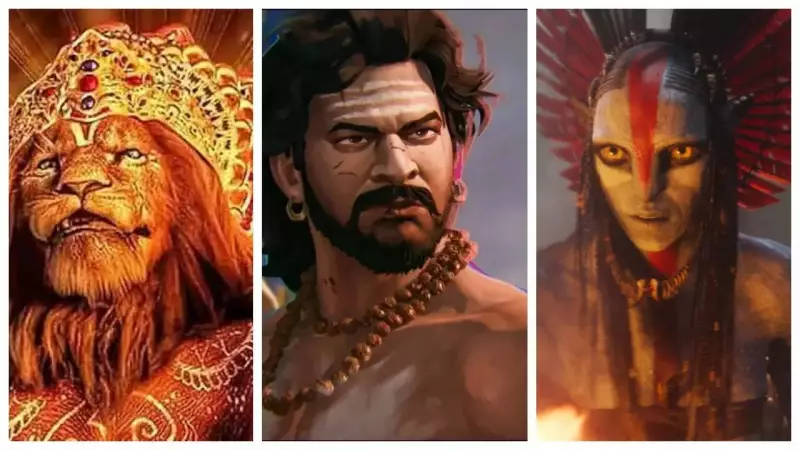
For director Ashwin Kumar, whose work on Mahavatar Narimsha has redirected the course of Indian animation, AI represents a tremendous opportunity. He views it as a boon for content creators, particularly in a content-hungry nation like India. "Animated content is going to be dished out sooner," Kumar states, acknowledging the massive demand. He sees AI as a powerful tool to facilitate storytelling, helping creators bring their ideas to screen faster, allowing for more iterations, and ultimately serving the narrative.
However, Kumar draws a clear line. He is not an advocate for simple prompt-based AI generation. For him, the tool's true value lies in its ethical integration as a storytelling aid. He predicts an initial wave of mediocre content but believes quality will rise over time, leading to a new landscape shaped by "micro AI filmmakers." For his upcoming Mahavtar films, AI will play an integral role as a technological upgrade, used consciously to enhance the story, not replace the storyteller.

The Human Touch: Where AI Falls Short
While Kumar sees acceleration, filmmaker and animator Ishan Shukla, the creative force behind Bahubali- The Eternal War, offers a grounded note of caution. He argues that AI cannot replicate the artistic touch and nuance that trained animators bring to human characters, complex emotions, and culturally rich narratives. "There's some good AI out there," Shukla concedes, "but it can work on cyborgs or characters which are not human or worlds which are not Earth. Using it to create massive, nuanced work—we still have a long way to go." For him, AI can generate images, but true art originates from human experience and intent.
This sentiment is powerfully echoed by veteran Hollywood director James Cameron. Discussing AI in the context of his upcoming film Avatar: Ash and Fire, Cameron acknowledges its permanence: "You can't put the genie back in the bottle." However, he emphasizes learning to use it constructively and ethically. He firmly rejects the idea of replacing actors, whose performances spring from unique, lived human experience. "Actors don't do generic, they do individual," he asserts, highlighting the idiosyncratic magic that stars bring, which cannot be mimicked by a prompt. Cameron sees AI's practical value in pre-visualization, editing, and early experimentation—areas that free filmmakers to take bigger creative risks.
The Irreplaceable Magic of Collaboration
Director Shekhar Kapur, who is actively exploring AI in his project Warlord, highlights a critical limitation he has encountered. He stresses the irreplaceable power of human collaboration on set. Describing the electric atmosphere created between himself, his cinematographer, and an actor like Cate Blanchett on Elizabeth, Kapur notes, "I don't think AI, yet, can do what Cate Blanchett can do."
He points to the close-up as AI's current Achilles' heel. "When a great actor comes on screen, with amazing eyes – be it Cate or Shabana Azmi or Brad Pitt – something happens. A connection is formed quite subconsciously between the actor and the audience," Kapur explains. This profound, subconscious connection, driven by minute, unpredictable variations in expression, is something AI has not yet mastered, underscoring the enduring primacy of human performance.
How AI is Practically Transforming Filmmaking Today
The application of AI is already yielding tangible benefits across the production pipeline:

- Faster Pre-Production: AI generates detailed, full-color storyboards in hours instead of days, aids in set design, and provides intelligent prompts for shot composition and camera choices.
- Reduced Shooting & Post Time: Enhanced planning with AI tools can save 5–8 shooting days, drastically cutting costs. AI also accelerates dubbing, subtitling, and allows editors to create rough cuts overnight.
- Enhanced VFX & Animation: AI speeds up 2D animation and complex VFX workflows. It is heavily used for de-aging actors, as seen with a young Amitabh Bachchan in Kalki 2898 AD, and for recreating characters.
The Final Takeaway: Tools Evolve, Storytellers Remain
Across the spectrum of opinions—from the optimistic to the philosophical—a unifying truth emerges: AI is a tool, but humans are the storytellers. It will undoubtedly speed up production, lower barriers for new creators, and reshape budgets and workflows. However, the soul of cinema—the depth of performance, the resonance of emotion, the nuance of cultural storytelling—remains firmly in the domain of artists. If wielded with ethical consideration, AI will not spell the end of cinema but will propel it into a new era of bold, dramatic, and more creative storytelling than ever before.