6 Biggest Controversies in Oscars History: From Will Smith's Slap to Envelope-Gate
For nearly a century, the Oscars have stood as Hollywood's premier celebration of cinematic excellence, featuring glamorous red carpets, emotional acceptance speeches, and coveted golden statuettes. While the event honors the artistry of filmmaking, it would be misleading to portray it solely as a polished awards ceremony. In reality, the Oscars have gained equal fame for their dramatic behind-the-scenes controversies, which often overshadow the accolades themselves.
Each year brings new shocks: from glaring mistakes and political protests to awkward encounters and even physical altercations. Some controversies highlight profound societal issues, such as Hollywood's struggles with race and representation, while others are simply bizarre incidents that captivate global audiences. With the rise of social media and digital platforms, these moments no longer fade into obscurity; instead, they go viral and become permanent fixtures in the Oscars' storied legacy.
From Marlon Brando's symbolic protest in 1973 to the chaotic Envelope-gate blunder of 2017 and Will Smith's headline-dominating slap in 2022, these incidents demonstrate that the Academy Awards are more than just a celebration of film. The ceremony consistently mirrors the industry's underlying tensions, evolving values, and inherent flaws, making it a cultural barometer for Hollywood and beyond.

Will Smith's Slap of Chris Rock (2022)
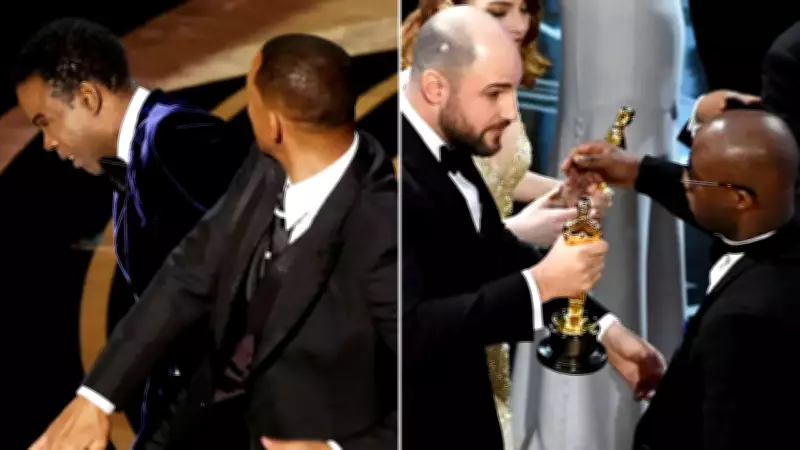
This moment is destined to be remembered as one of the most discussed incidents in Oscar history. During the 2022 ceremony, Will Smith unexpectedly rose from his seat, walked onto the stage, and slapped comedian Chris Rock. The altercation erupted after Rock made a joke about Jada Pinkett Smith's shaved head, a reference to her medical condition, alopecia. Initially, Smith appeared to laugh at the joke, but he quickly changed his demeanor, delivering the slap and shouting, "Keep my wife's name out of your mouth."
The aftermath was equally dramatic: Smith later apologized, resigned from the Academy, and received a ten-year ban from attending the Oscars. The incident sparked worldwide debate about violence, decorum, and the pressures of live television.
The Envelope-gate Best Picture Mix-up (2017)
The 2017 Oscars concluded in unprecedented chaos when presenters Warren Beatty and Faye Dunaway mistakenly announced La La Land as the winner of Best Picture. As the La La Land crew began their acceptance speeches, producers rushed onstage to reveal a critical error: the presenters had been given the wrong envelope, intended for Best Actress winner Emma Stone. The actual winner was Moonlight, leading to a live-television correction that left audiences stunned.
This embarrassing blunder, now famously known as Envelope-gate, highlighted the high stakes of award shows and remains one of the most unforgettable moments in Oscar history.
Marlon Brando's Oscar Refusal (1973)
In 1973, acclaimed actor Marlon Brando won the Best Actor award for his role in The Godfather but chose not to attend the ceremony. Instead, he sent activist Sacheen Littlefeather to decline the award on his behalf. Littlefeather explained that Brando was protesting Hollywood's mistreatment of Native Americans, a bold statement that sparked immediate backlash. She faced severe criticism and even threats, but decades later, the Academy issued a formal apology for her treatment, acknowledging the significance of her protest.
The #OscarsSoWhite Movement (2015–2016)
The #OscarsSoWhite hashtag evolved from a social media critique into a global movement after activists noted the overwhelming whiteness of acting nominees in 2015 and 2016. Spearheaded by activist April Reign on Twitter, the campaign went viral, forcing a public reckoning with Hollywood's racial disparities. In response, the Academy pledged to diversify its membership and implement reforms, marking a pivotal shift toward greater inclusion in the industry.

Crash Beating Brokeback Mountain (2006)
In 2006, the film Crash unexpectedly won Best Picture over the critically acclaimed Brokeback Mountain, a groundbreaking love story between two men. Many interpreted the outcome as the Academy playing it safe, avoiding a progressive narrative in favor of a more conventional choice. This decision remains hotly debated among cinephiles and critics, cementing it as one of the most controversial wins in Oscar history.
The Streaker Incident (1974)
The 1974 Oscars took an absurd turn when photographer Robert Opel ran naked across the stage behind host David Niven. As the audience gasped, Niven quickly quipped that the streaker was probably seeking "the only laugh he'll ever get." This bizarre moment became a legendary example of live-television unpredictability, showcasing the Oscars' capacity for both high drama and sheer absurdity.