A prestigious literary festival in Colombia has been plunged into a political controversy, leading to a significant author boycott. The Hay Festival Cartagena, a major event on the global literary calendar, is facing criticism after three prominent writers pulled out in protest against the invitation extended to Venezuelan opposition leader and 2025 Nobel Peace Prize laureate María Corina Machado.
The Core of the Controversy: A Platform or an Endorsement?
The boycott was initiated by two Colombian authors and one from the Dominican Republic. Their fundamental objection stems from the festival's decision to provide a platform to Machado, a figure who is celebrated in Western capitals but is deeply controversial within large segments of the Latin American left. The authors argue that her political stance and alliances represent a direct threat to regional sovereignty.
Their protest centres on several key points. Firstly, they cite Machado's explicit support for the "maximum pressure" campaign against the government of Nicolás Maduro in Venezuela, championed by former US President Donald Trump. More critically, they point to her past openness to potential US military intervention as a solution to Venezuela's political crisis. For the boycotting authors, this aligns her with a long and painful history of US interventionism in Latin America.

Secondly, they highlight her political alliances. Machado has cultivated close ties with right-wing and far-right leaders in the region, including Argentina's Javier Milei and Brazil's former president Jair Bolsonaro. Recently, she also celebrated the election of Chile's president-elect, José Antonio Kast, who has expressed admiration for the former dictator Augusto Pinochet.
The authors firmly reject the festival's defence that a speaking platform enables neutral dialogue. Acclaimed Colombian novelist Laura Restrepo articulated this position, stating, "Imperialist intervention is not something to debate, but something to reject outright." They contend that in the current highly charged political context, an invitation from a prestigious forum like the Hay Festival inherently validates Machado's ideology and provides it with a powerful cultural weapon.
The Festival's Stance and Machado's Symbolism
In response, the Hay Festival, which originated in Wales and hosts events worldwide, stated that it respects the authors' decisions to withdraw but remains committed to the principle of the "free exchange of ideas." The organisers clarified that an invitation to speak does not equate to an endorsement of the speaker's views.
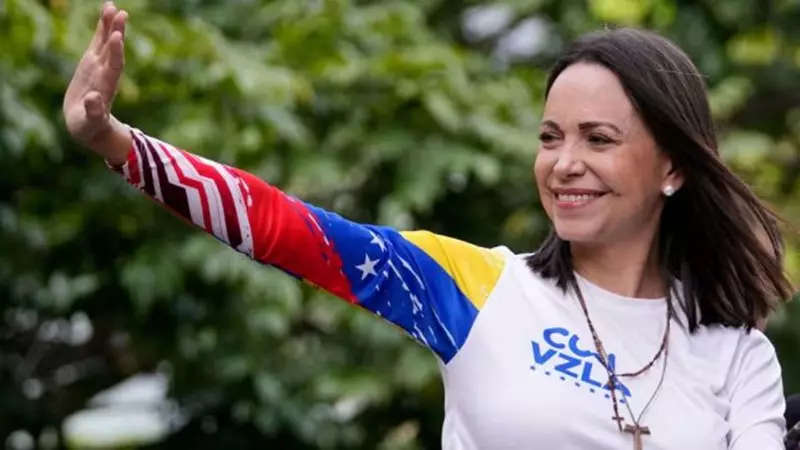
For her supporters, María Corina Machado is a potent symbol of democratic resistance. Barred from running for office by Maduro's government, she was awarded the 2025 Nobel Peace Prize for her relentless advocacy for democratic rights in Venezuela. Her dramatic, injury-inducing escape from Venezuela to receive the prize in Oslo captured global attention. She argues that strong external diplomatic and economic pressure is the only viable strategy to dislodge Maduro, whom she and many Western nations label a dictator.
A Reflection of Latin America's Deep Political Rift
This episode at a literary festival lays bare a persistent and profound division across Latin America. It presents two starkly contrasting visions. One view sees figures like Machado as essential, pro-democracy allies in the fight against authoritarian socialism, justified in using all available international tools. The opposing view interprets such alliances with the US and regional right-wing figures as a betrayal of Latin American self-determination, potentially paving the way for a return to an era of foreign domination and homegrown authoritarianism.
The boycott raises a pressing question for cultural institutions everywhere: is true neutrality possible when the platform itself carries immense symbolic weight? For the authors who chose to withdraw, the issue was not about shunning debate, but about preventing what they see as the normalisation of calls for foreign intervention through a respected literary forum. This incident underscores how cultural spaces are increasingly becoming arenas for intense geopolitical and ideological battles.