Ludhiana's Punjab Agricultural University (PAU) has cemented its reputation as a premier institution in 2025, demonstrating leadership across national rankings, cutting-edge research, and direct farmer engagement. The university's annual review highlights a year of significant accomplishments that strengthen its role in advancing sustainable agriculture.
Sustained Excellence in Rankings and Global Recognition
The university achieved a notable milestone by securing the top position among state agricultural universities in the National Institutional Ranking Framework (NIRF) for the third consecutive year. It also ranked second nationally in the Indian Institutional Ranking Framework (IIRF) 2025. On the global stage, PAU made its mark by entering the EduRank's Top 100 Agricultural Institutions list, securing the 93rd spot in agricultural sciences. This achievement made it the only Indian state agricultural university to feature on this prestigious global list.
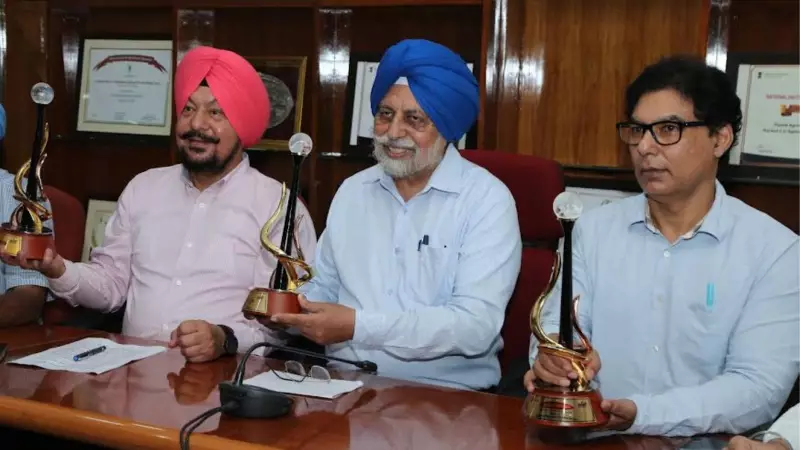
Further validating its educational model, PAU was honored with the IIRF Education Impact Award 2026 for its focus on experiential and extension-linked learning. The annual convocation, presided over by Punjab Governor and Chancellor Shri Gulab Chand Kataria and Vice-Chancellor Dr. Satbir Singh Gosal, celebrated the academic success of hundreds of students who received degrees and awards.

Infrastructure Boost and Farmer-Centric Innovations
With sustained support from the Punjab Government, including a capital grant of Rs 20 crore, PAU expanded its critical infrastructure. Key projects inaugurated or initiated in 2025 include:
- The Agro-Processing Complex and Jaggery Processing Plant, inaugurated by Finance Minister Sardar Harpal Singh Cheema.
- The foundation stone for a new Plant Acclimatisation Facility.
- Upgrades to hostels and a swimming pool, and the establishment of a new gymnasium.
In research, PAU delivered practical, field-ready technologies aimed at solving farmers' immediate problems. Notable innovations patented or developed this year include:
- A portable maize dryer to reduce post-harvest losses.
- A magnetic field-assisted freezing process for horticultural produce.
- A stable zinc phosphide bait for safer rodent control.
- Advances in precision agriculture like GNSS-based tractor auto-steering, sensor-based paddy transplanters, and IoT-enabled irrigation systems.
The university also released 20 new crop varieties and hybrids across cereals, pulses, oilseeds, vegetables, fruits, and ornamentals. Several of its wheat and maize varieties topped the national trials conducted by the Indian Council of Agricultural Research (ICAR).
Expanding Global Footprint and On-Ground Impact
PAU significantly enhanced its international collaborations in 2025. It appointed 22 honorary visiting professors, including World Food Prize laureates, and hosted delegations from Japan, the USA, Argentina, South Sudan, and the Food and Agriculture Organisation (FAO). A new memorandum of understanding with BITS Pilani was signed to expand work in precision agriculture and agri-tech.
The university's extension efforts remained robust, ensuring large-scale adoption of its technologies. Through Kisan Melas, Krishi Vigyan Kendra programmes, crop residue management drives, and flood-relief seed distribution, PAU maintained a direct connection with the farming community. Innovations like a remotely operated paddy transplanter gained national attention for their practical utility.
Summarizing the year's work, Vice-Chancellor Dr. Satbir Singh Gosal stated that 2025 marked PAU's integrated leadership in research, education, and farmer-first extension, all contributing to the advancement of sustainable and climate-resilient agriculture for Punjab and India.