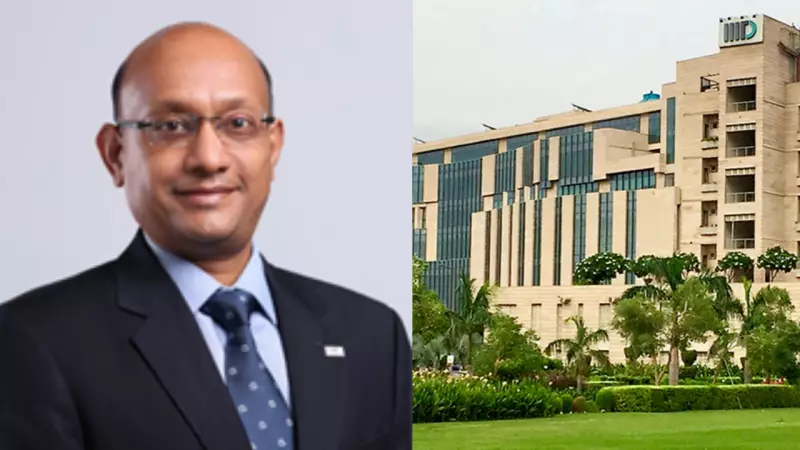
The director of the Indraprastha Institute of Information Technology Delhi (IIIT Delhi), Professor Ranjan Bose, has stepped down from his position. This resignation follows a confrontation with the office of the Lieutenant Governor (LG) of Delhi, Vinai Kumar Saxena, who also serves as the institute's chancellor. The central issue was Bose's failure to obtain mandatory prior approval before signing three significant research and funding agreements with foreign entities.
The Controversial Memorandums of Understanding
The controversy revolves around three specific MoUs signed by IIIT Delhi between June 2024 and October 2025. This period came after clear guidelines were issued by the LG's office on June 13, 2024, mandating chancellor approval for all funding agreements and MoUs at Delhi government-run universities.
The agreements in question are:

- A partnership with the Gates Foundation for an 'Innovation Challenge for Health AI Solutions'.
- An MoU with the Bill & Melinda Gates Foundation for an 'R&D Partnership on Inclusive Public Digital Systems'.
- A project with Skykraft Pvt Ltd for 'Demonstration of Collaborative PNT (Position Navigation and Timing) in LEO (Low Earth Orbit)'.
The financial stakes were substantial. Sources indicated the promised funding was $277,352 for the first Gates Foundation project, $1.67 million for the second, and $48,333 per year for three years from Skykraft.
Show-Cause Notice and Allegations of Misconduct
The matter escalated when the Department of Training and Technical Education (TTE) issued a show-cause notice to Bose on December 5. The notice accused him of failing in his statutory duties and accepting foreign funds without the chancellor's due approval and authorisation.
In its response, the IIIT Delhi registrar acknowledged the lapse, calling it an "inadvertent" oversight due to internal processes. The registrar defended the actions by stating that as the institute operates in a "self-sustaining mode," securing external funding was "extremely important" to avoid burdening other resources.
However, the LG's office was not convinced by this explanation. In its internal notings, it stated that signing three MoUs in succession showed a "premeditated mind to violate such directions," rather than being an isolated mistake. A more serious allegation emerged from a General Council meeting on November 21. The LG's office claimed that when Saxena asked Bose to explain the situation, the director misled the council by stating the funding came via the Ministry of Electronics and Information Technology (MeitY), not directly from the foreign organisations. The office termed this a "patent falsehood" that amounted to misguiding the council.
Resignation and Aftermath
Faced with these allegations and the show-cause notice, Ranjan Bose submitted his resignation. Attempts to reach him for comment were unsuccessful. Bose, who was on deputation from IIT Delhi, is an accomplished academic with an MS and PhD from the University of Pennsylvania and previously held the Microsoft Chair Professor position at IIT Delhi.
The incident highlights the tightening scrutiny over academic collaborations with foreign entities, particularly concerning data security and procedural compliance. The LG's office had emphasized the need for "caution and due diligence" in such agreements to prevent the misuse of institutional resources for data mining. The resignation of a prominent institute director marks a significant development in the ongoing dialogue between academic autonomy and governmental oversight in India's higher education sector.