Maharashtra's New Women's University Aims to Bridge Rural Education Gap
Globally, universities are increasingly adopting inclusive and community-based education models. In India, however, access to higher education remains uneven, particularly for women in rural and tribal regions. A new initiative in eastern Vidarbha seeks to directly address this imbalance by merging global design principles with local relevance.
A Campus Rising in Ballarpur
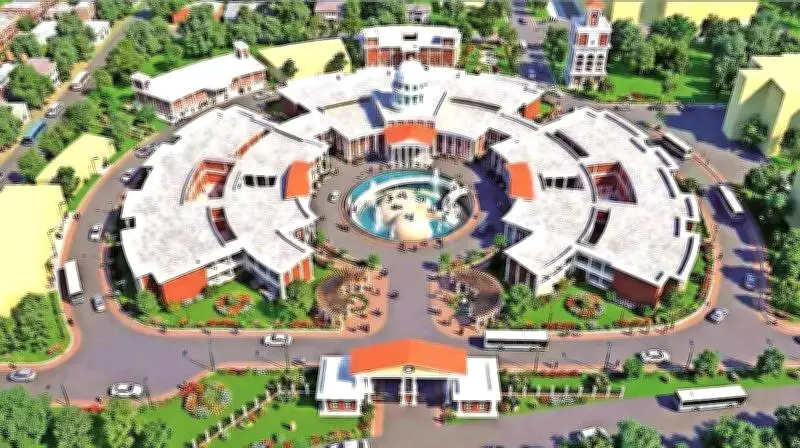
A 50-acre university campus is currently under construction on the outskirts of Ballarpur in eastern Vidarbha. This facility represents the Maharshi Karve Mahila Sakshamikaran Dnyansankul, a subcentre of SNDT Women's University that was formally established in June 2023. Its primary mission is to expand educational access for girls from rural and tribal communities across the Gadchiroli-Chandrapur belt.
The project's ambition extends beyond its immediate geography, aiming to bring an "Oxford-style" academic environment to one of India's most underserved regions for women's higher education. With construction now approximately 75% complete at its permanent site in Visapur near Ballarpur, the campus is positioned as a potential template for future educational projects beyond metropolitan centers.

Conceptual Foundation and Design
What truly distinguishes this campus is its unique conceptual foundation. The entire layout is built around the theme of "motherhood," which planners say shapes both academic programming and student life. From classroom design to residential facilities, the emphasis is on creating a holistic and secure environment for women learners.
Vice-chancellor Ujwala Chakradeo explained the vision: "This campus is being conceived as a space that nurtures learning and life skills together. It will be a blend of British and Indian architecture." The architecture draws inspiration from traditional university towns while thoughtfully adapting to local climatic and cultural contexts.
The central academic complex, spanning 1.5 lakh square metres, will house teaching spaces and a substantial exhibition hall of 65,000 square feet. "We will showcase the journey of a woman, from a girl to becoming a mother," Chakradeo noted, adding that these narratives will include historical figures such as Jijabai and Ahilyabai Holkar.
Academic Programs and Initiatives
Backed by the Maharashtra government's Higher and Technical Education Department, the Ballarpur campus is expected to offer more than 60 academic programs with a focus on employability, interdisciplinary learning, and alignment with regional needs.
Chakradeo highlighted the flagship residential program under the 'Gurukul' initiative: "This will be perhaps the first time in India that a traditional university is starting such a fully residential course for girls." The proposed bachelor's program in Indian knowledge systems aims to integrate traditional learning, including the Vedas, with contemporary subjects.
Additionally, the university plans to offer skill-based courses tailored to local communities, including training in bamboo crafts and other livelihood-oriented activities specifically designed for tribal students.
Current Operations and Future Expansion
The university has already commenced academic operations at a temporary campus, offering courses in fashion design, food technology, computer applications, and engineering design. Currently, 300 students are actively pursuing their education at this facility.
Plans are finalized to introduce 5-6 new academic programs in the 2026-27 session, which is when the permanent campus is scheduled to begin full academic operations. With this expansion, student enrolment is expected to nearly double in the upcoming session.
Balu Rathod, deputy registrar of the Ballarpur campus, shared the long-term vision: "We have a long-term goal of reaching 5,000 students once the campus is fully developed." Under the guidance of VC Chakradeo and registrar Vilas Nandavadekar, development has accelerated, with major construction work targeted for completion by July.
Infrastructure and Sustainability
The campus design integrates numerous sustainability features and culturally rooted programming:

- Academic & Knowledge Spaces: Academic Building Wings A, B and C forming core teaching clusters; Central Exhibition Hall based on the 'motherhood' concept; dedicated library building; Narayani Gurukulam building for residential programs
- Student & Community Facilities: Auditorium for academic and cultural events; cafeteria designed as central social space; indoor sports building
- Residential Infrastructure: Two hostel buildings for students; guest houses for visiting families and institutional guests; staff quarters
- Sustainability Features: Green campus design with focus on sustainability; solar power systems; provisions for water harvesting; sewage treatment; landscaped open spaces; discussions underway for an electric bus system
Regional Impact and Support
For the Gadchiroli-Chandrapur region, historically associated with forests and mineral resources, this campus represents a significant shift toward education-driven development. By creating a large, residential institution focused exclusively on women, policymakers aim to address barriers such as distance, safety, and affordability that often limit access to higher education in rural areas.
The project has received substantial support from state authorities, including Higher and Technical Education minister Chandrakant Patil and former minister and Ballarpur MLA Sudhir Mungantiwar. At recent reviews, officials have outlined a vision to develop the campus as a "model" educational hub, featuring landscaped spaces, pedestrian-friendly design, and integrated academic clusters.
Public Works Department engineers overseeing the project confirm that core structures, including the main academic building and utility infrastructure, are progressing according to schedule. This initiative reflects a deliberate shift toward decentralization in a country where higher education infrastructure remains concentrated in urban centers and literacy rates among women continue to lag behind those of men.