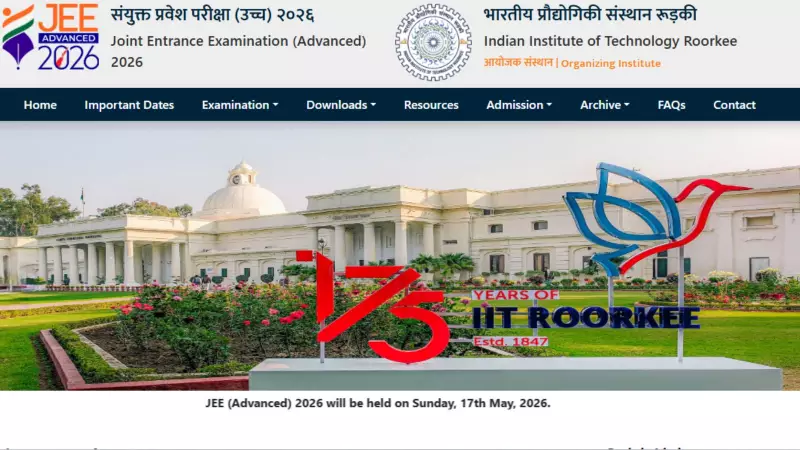
The Indian Institute of Technology Roorkee (IIT Roorkee), the organising institute for JEE Advanced 2026, has officially released the information brochure, outlining significant modifications for the upcoming prestigious engineering entrance examination. The exam is scheduled for May 17, 2026, with the registration process set to commence on April 23, 2026.
Revised Fee Structure and Registration Details
A notable change this year is the upward revision of the application fee for candidates opting to take the exam at centres located outside India. For Indian nationals and OCI/PIO (I) candidates at foreign centres, the fee has been increased to $200, marking a $50 rise from the previous year's $150.
The fee structure for foreign nationals and OCI/PIO (F) candidates has also seen an adjustment. Those choosing centres in SAARC countries will now pay $200 (up from $150), while candidates in non-SAARC countries must pay $300, increased from $250.

For candidates within India, the fee remains unchanged. General, OBC-NCL, and GEN-EWS category candidates are required to pay Rs 3,200. Female candidates of all categories, along with SC, ST, and PwD candidates, will pay a reduced fee of Rs 1,600. All payments must be made online during registration and cover the cost of both Paper 1 and Paper 2.
Changes in Exam Centres and Zonal Coordination
The list of examination cities for JEE Advanced 2026 has been revised, with Pathankot and Saharanpur being removed from this year's roster. Candidates from Himachal Pradesh can now select from Hamirpur, Kangra (Dharamshala), Mandi, and Shimla. In Uttar Pradesh, exams will be held in 14 cities including Agra, Lucknow, Kanpur, and Noida. During online registration, candidates must compulsorily select 10 preferred cities.
Significant changes have also been made in the zonal coordination framework for conducting the exam. The 23 IITs are divided into seven zones. For JEE Advanced 2026, IIT Bhubaneswar will serve as the zonal coordinating institute for the East Zone, taking over from IIT Kharagpur. Similarly, in the South Zone, IIT Madras will assume the role, replacing IIT Hyderabad. These zonal institutes are pivotal in overseeing exam logistics, centre coordination, and protocol implementation across their regions.
What Aspirants Need to Know
The release of the information brochure by IIT Roorkee marks the formal beginning of the JEE Advanced 2026 cycle. Prospective candidates are advised to carefully review the revised fee structure, especially those planning to appear from abroad, and note the updated list of exam cities during their registration process. The shift in zonal institutes may also influence local administrative procedures, though the core examination pattern remains unaffected. With the exam date set for May 17, 2026, aspirants now have a clear timeline to structure their preparation strategy for securing a seat in the premier IITs.