In a significant move aimed at transforming the academic culture, the Indian Institute of Technology (IIT) Kharagpur has decided to implement a flexible evaluation scheme starting from the upcoming semester. This decision, approved by the institute's Senate on Wednesday, marks a shift away from a purely exam-centric model towards fostering deeper learning, innovation, and ethical teamwork among students.
Details of the New Flexible Evaluation Scheme
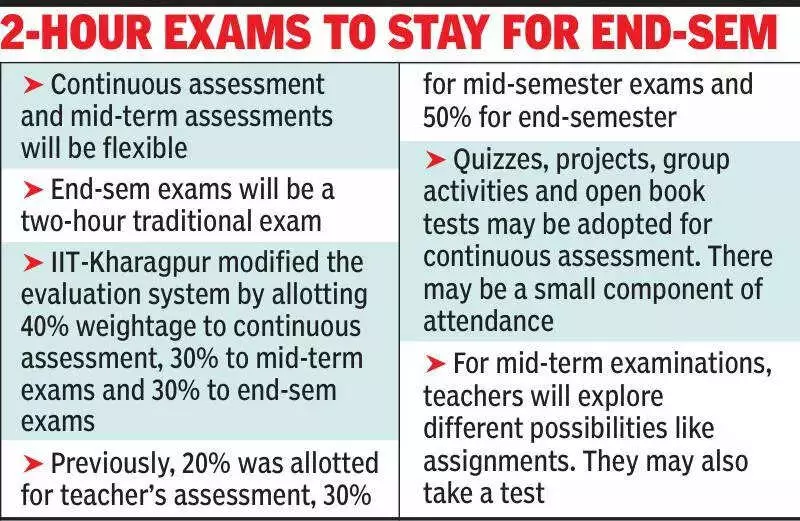
The newly approved evaluation structure rebalances the weightage given to different academic components. Under the new system, continuous assessment will now account for 40% of the total marks. The mid-term examinations and the final end-semester exams will each comprise 30% of the overall grade. This is a notable change from the previous breakdown, where teacher assessment was 20%, mid-terms were 30%, and a hefty 50% was allocated to the end-semester examinations.
IIT Kharagpur Director, Professor Suman Chakraborty, explained the philosophy behind the reform. "We are reimagining evaluation as an evolving dialogue between learning, reflection, and innovation," he said. "The new flexible evaluation scheme will foster deeper engagement and ownership of learning among students. It will also help us recognise talents beyond just exam performance and improve skills like teamwork, ethos, innovation, and critical thinking."

How Continuous and Mid-Term Assessments Will Change
The move is designed to engage students more consistently throughout the semester and reduce the anxiety associated with high-stakes, single-sitting exams. A member of the Senate elaborated on the practical implementation. Teachers will now have the freedom to employ flexible and innovative strategies for the continuous assessment component, which makes up 40% of the grade.
These strategies can include:
- Small quizzes and surprise tests
- Group activities and project submissions
- Open book tests
- Assignments
The Senate member also noted that while a teacher can allot a component for attendance within the continuous assessment, this will not be encouraged in higher classes where students are often busy with internships and placements. However, at the first-year level, an attendance component can be included to help new students transition into college life with discipline.
Similarly, for the mid-term exams (30%), instructors will have the flexibility to assess students through alternative forms like assignments, though they retain the option to conduct a traditional test if preferred.
The Role of Traditional End-Semester Exams
Despite the increased flexibility in other areas, the institute has decided to retain a core element of the conventional examination system. The end-semester exams will remain as a two-hour, pen-and-paper-based traditional examination, constituting the final 30% of the evaluation. This ensures a balance between innovative continuous assessment and a standardised final evaluation.
This major academic reform follows IIT Kharagpur's recent decision to discontinue the de-registration of students solely due to low attendance, signaling a broader shift towards a more holistic and student-centric educational approach. The combined changes are expected to create a learning environment that values consistent engagement and conceptual understanding over rote memorisation for final exams.