IIT Kharagpur Unveils Pioneering BTech Programme in Biomedical Engineering
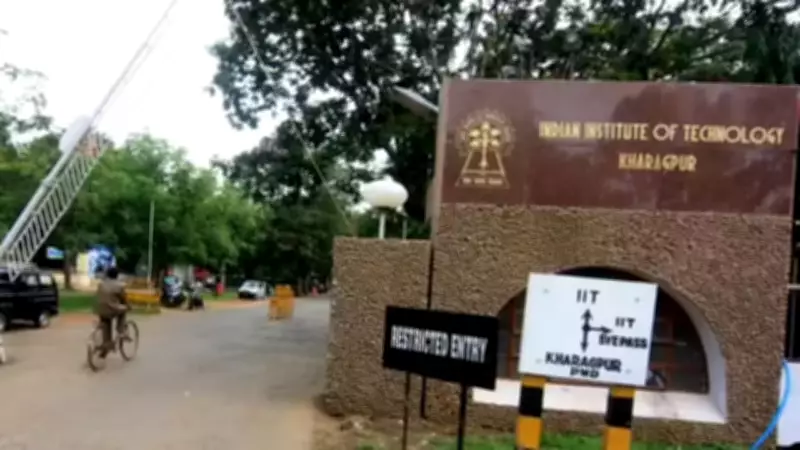
In a significant move to address critical gaps in India's healthcare sector, the Indian Institute of Technology (IIT) Kharagpur is set to launch a four-year Bachelor of Technology (BTech) programme in biomedical engineering starting from the upcoming academic session. This initiative aims to cultivate a new generation of professionals who are adept in engineering rigour, clinical insight, and translational impact, thereby enhancing the nation's healthcare innovation landscape.
Admission and Initial Intake Details
Admission to this cutting-edge programme will be conducted through the Joint Entrance Examination (JEE) Advanced, ensuring a rigorous selection process for aspiring students. Initially, the institute plans to enrol 30 students, fostering an environment where engineers, doctors, industry experts, civil society, and the general public can collaborate and share knowledge seamlessly.
Transformation of School into Full-Fledged Department
To support this new academic offering, IIT Kharagpur has decided to elevate its School of Medical Science and Technology (SMST) into a full-fledged department. Previously, SMST offered Master of Technology (MTech) programmes in medical imaging and informatics, as well as biomedical engineering. This upgrade underscores the institute's commitment to expanding its footprint in the biomedical engineering domain.

Global Significance and National Imperative
According to Subhamoy Mandal, an assistant professor at SMST, biomedical engineering has evolved globally into an independent and high-impact discipline, driving breakthroughs in areas such as MRI technology, medical imaging, robotic surgery, prosthetics, diagnostics, and digital hospitals. He emphasised that India is at a pivotal juncture, with a rapidly expanding healthcare ecosystem but a severe shortage of engineers capable of developing deployable technologies to tackle clinical challenges. This programme is designed to directly bridge that national gap.
Curriculum and Integration with Medical School
The four-year BTech course features an internationally benchmarked and future-facing curriculum that blends core engineering principles with a hands-on approach to translational healthcare technology development. It will be integrated with IIT Kharagpur's medical school, the B C Roy Institute of Medical Sciences, providing students with a unique interdisciplinary learning experience.
Living Lab Model for Practical Exposure
Suman Chakraborty, director of IIT Kharagpur, highlighted the implementation of a unique living lab model, where students will learn at the intersection of industry, hospital, and academia. From the outset, they will gain exposure to authentic medical challenges, with the living lab serving as a source of practical data for human resource training and creating simulations, such as surgery simulations or disease modeling, based on real-life data. Faculty from the B C Roy Institute of Medical Sciences will teach foundational clinical sciences, while the institute's super-speciality hospital will act as a continuous site for immersion, observation, and co-creation.
Comprehensive Training Across Frontier Domains
Professor Manjunatha Mahadevappa of SMST stated that students will receive training across various frontier domains, including artificial intelligence in medicine, medical devices, robotics, biomedical imaging and signal processing, tissue engineering, immunology, and modeling and simulation. This holistic approach is intended to equip them with an integrated perspective for solving complex human health problems.
Addressing Current Educational Shortcomings
Chakraborty pointed out that most existing biomedical engineering courses in India are taught as purely academic subjects, lacking strong clinical connections and integration with real-world applications. With this new programme, IIT Kharagpur aims to set a template for how engineering institutions can meaningfully partner with medicine to transform education, innovation, and healthcare delivery on both national and global scales. The vision is to produce a new generation of specialised workforce for futuristic healthcare.

Infrastructure and Faculty Recruitment
To ensure the programme's success, IIT Kharagpur has secured significant investments to establish modernised laboratories and integrated prototyping facilities. Additionally, new faculty members are being recruited to launch the programme with ambition and depth, as confirmed by Chakraborty.
This initiative marks a transformative step in India's educational and healthcare sectors, positioning IIT Kharagpur as a leader in fostering innovation and addressing pressing national needs through advanced engineering education.