UPSC Mains Answer Writing Practice: GS Paper 3 Focus
Are you preparing for the Civil Services Examination 2026? This week's answer writing practice focuses on crucial topics from General Studies Paper 3. We present two important questions that test your understanding of agricultural policies and productivity patterns in India.
This practice session aims to enhance your mains answer writing skills. It covers both static and dynamic aspects of the UPSC syllabus. You can use this exercise as valuable preparation material for the actual examination.
Question 1: Reforming India's Fertiliser Subsidy System
Discuss the need for reforming India's fertiliser subsidy regime and suggest measures to align it with sustainable agriculture goals.

This question holds significant relevance for GS Paper 3. It connects agricultural subsidies with fiscal sustainability and environmental concerns. The topic touches upon agricultural reforms, climate-resilient farming practices, efficient resource utilization, and sustainable development goals.
These themes represent core focus areas in UPSC mains examinations. The question also relates to current debates about nutrient-based subsidies, direct benefit transfers, and long-term food security strategies.
Important note: This content does not provide model answers. Instead, it offers thought processes that you can incorporate into your own responses.
Understanding the Need for Reform
India's fertiliser subsidy system requires substantial reform. The current regime creates several challenges that need urgent attention.
The subsidy represents one of the government's largest expenses. This creates a significant fiscal burden on the national budget. Overuse of chemical fertilisers leads to soil degradation and nutrient imbalance.
Environmental damage occurs through groundwater contamination with nitrates. This pollution causes serious health issues like Blue Baby Syndrome. It also contributes to greenhouse gas emissions through nitrous oxide release.
Market distortions currently favour urea over other fertilisers. Price controls encourage misuse and create illegal markets. Some urea gets diverted for industrial purposes rather than agricultural use.
Excessive use of nitrogenous fertilisers reduces overall productivity over time. It damages soil health and creates micronutrient deficiencies. This ultimately affects crop yields and farmer incomes.
Suggested Measures for Sustainable Alignment
Several measures can help align fertiliser subsidies with sustainable agriculture goals:
- Implement Direct Benefit Transfer systems using digital vouchers similar to e-RUPI. This ensures targeted, transparent delivery to genuine farmers.
- Promote precise and balanced farming practices. Provide incentives for complex fertilisers, micronutrients, and tailored blends.
- Encourage sustainable alternatives including organic farming, biofertilizers, and nano-fertilisers. This reduces dependence on conventional chemical inputs.
- Rationalise energy subsidies and connect solar irrigation programs like PM-KUSUM with fertiliser initiatives. This promotes greener energy use in agriculture.
The government aims to achieve self-sufficiency in pulses and oilseeds through various missions. However, current incentive structures favour water-intensive crops like rice, sugarcane, and wheat.
Substantial subsidies from both central and state governments contribute to this imbalance. Free or heavily subsidised power and fertilisers, particularly urea, encourage resource-intensive cropping patterns.
Question 2: Regional Variations in Rice Productivity
Discuss the causes behind regional variations in rice productivity in India and suggest strategic interventions to promote equitable agricultural development.
This question addresses important aspects of agricultural productivity and regional disparities. It connects with themes of inclusive growth, efficient natural resource use, and water sustainability.
The issue also relates to Minimum Support Price systems, procurement biases, and crop diversification policies. These factors significantly influence agricultural development patterns across different regions.

Key Causes of Productivity Variations
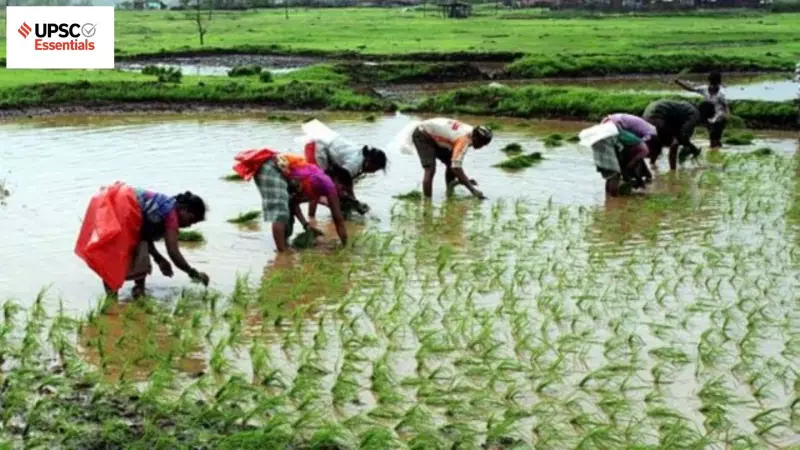
India recently surpassed China as the world's largest rice producer. The country produced approximately 150 million metric tonnes in 2024-25. This represents about 28% of global rice output.
However, significant regional variations exist in rice productivity across India. Several factors contribute to these disparities:
- Climatic conditions: Warm, humid weather supports rice growth. Regions with consistent monsoon rainfall or abundant river water show higher productivity. Areas with erratic rainfall patterns struggle to maintain consistent yields.
- Irrigation facilities: Well-irrigated regions, particularly river deltas like Godavari and Krishna, demonstrate better productivity. Adequate water availability remains crucial for rice cultivation.
- Soil quality: Fertile alluvial soils that retain water effectively support higher yields. Saline coastal soils or sodic soils in some regions reduce productivity.
- Technology adoption: States like Punjab and Haryana extensively use high-yielding varieties, fertilisers, and farm machinery. However, excessive fertiliser use creates its own problems in northern regions.
- Infrastructure limitations: Inadequate storage facilities, poor market access, unstable electricity supply, and insufficient water management systems limit productivity in regions like Northeast India.
- Crop diseases and nutrient deficiencies: Issues like rice blast disease and mineral deficiencies (zinc, phosphorus, potassium) reduce yields in certain areas.
Strategic Interventions for Equitable Development
Several interventions can promote more equitable agricultural development across regions:
- Promote micro-irrigation techniques and sustainable groundwater management. The System of Rice Intensification (SRI) can help reduce water consumption.
- Encourage adoption of climate-resilient, high-yielding rice varieties. Provide small farmers with access to digital farming tools and technologies.
- Strengthen rural infrastructure including roads, storage facilities, and marketplaces. Platforms like e-NAM can improve market access for farmers.
- Enhance agricultural extension services and ensure timely credit availability. Strengthen Minimum Support Price mechanisms to provide better income security.
India's rice production has shown consistent growth over decades. Between 1969-70 and 2024-25, the area under paddy cultivation increased by more than 36%. Yield tripled during this period while production almost quadrupled.
Despite these overall gains, regional disparities persist. Strategic interventions must address these variations to ensure more equitable agricultural development across the country.
This answer writing practice provides essential fodder for your UPSC preparation. Consider these points while developing comprehensive responses to these important questions.