Teachers Absent from Classrooms, Deployed for Census and Surveys Across India
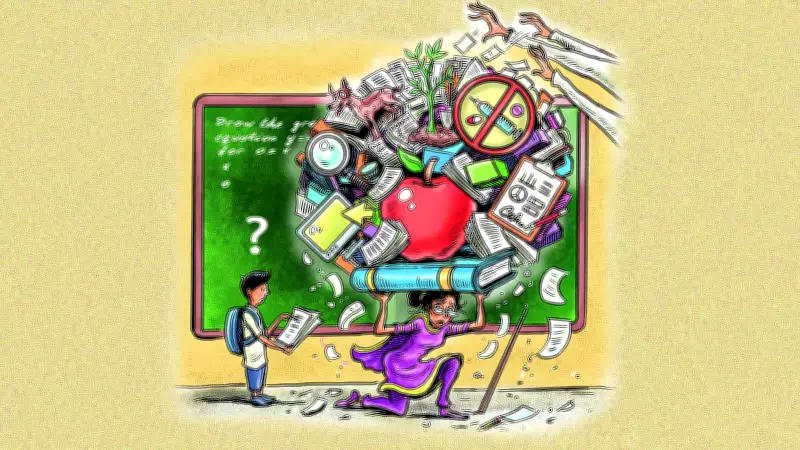
In a nationwide shift, government school teachers are being pulled from their primary duties in the classroom to serve as enumerators for the Census and other official surveys. This deployment has left classrooms empty and sparked significant concerns about the impact on education.
Teachers Roped In for Extensive Fieldwork
Around 30 lakh enumerators, the majority of whom are government school teachers, have been assigned for door-to-door enumeration starting April 16. This follows earlier assignments where teachers were requisitioned as booth level officers for the Special Intensive Revision (SIR) survey in February. Their tasks have ranged widely, from counting stray dogs in Gujarat and drug addicts in Punjab to tasting mid-day meals in Andhra Pradesh.
As a result, teachers are now omnipresent in various field roles but conspicuously absent from where they are most needed: the classroom. This has raised alarms about the disruption to regular academic activities and student learning outcomes.

Pushback and Legal Implications
In states like Karnataka, this deployment has triggered pushback from the teaching community. Teachers are already burdened with additional duties such as board exam supervision, making the Census assignment an added strain. However, under Census rules, refusal or failure to perform these duties can lead to severe penalties.
Anyone assigned to assist who refuses or fails to perform their duties can face imprisonment of up to three years, adding legal pressure on teachers to comply despite the impact on their educational responsibilities.
Broader Impact on Education System
The situation highlights a critical tension between administrative needs and educational priorities. Key points include:
- Disruption of classroom teaching and student engagement.
- Increased workload for teachers, affecting their well-being and job satisfaction.
- Potential long-term effects on educational quality and student performance.
- Varied responses from different states, with some facing more resistance than others.
As the Census enumeration progresses, the debate continues over whether such large-scale deployment of teachers is sustainable or detrimental to India's education goals. Stakeholders are calling for a balance that ensures both national surveys and classroom learning can proceed without compromise.