Odisha Announces Phased Integration of Anganwadi Pre-Schools with Sishu Vatikas
In a significant move to reform early childhood education, Odisha Chief Minister Mohan Charan Majhi has declared that pre-school classes at anganwadi centres will be gradually integrated with Sishu Vatikas in government schools. This initiative is part of the state's alignment with the National Education Policy (NEP) 2020, aimed at enhancing the foundational learning experience for young children.
Current Education Structure and Planned Changes
Currently, children in Odisha undergo their first two years of education at anganwadi centres before transitioning to Sishu Vatikas, which were introduced in government schools for the 2025-26 academic session for children aged five and six. Under the new three-year pre-school programme of NEP 2020, Sishu Vatikas in Odisha are divided into three stages, with Sishu Vatika 1 and 2 currently operating in anganwadi centres and Sishu Vatika 3 functioning in schools.
Chief Minister Majhi emphasized that, in a phased manner, Sishu Vatika 1 and 2 will also be integrated into the schooling system. This strategic shift is expected to strengthen the foundation for primary, upper primary, secondary, and higher secondary education, ensuring a seamless educational journey for students from an early age.

Progress on Sishu Vatika Implementation and New School Developments
Last year, Sishu Vatika 3 was successfully opened in 45,042 government schools across Odisha, enrolling children aged five. In addition to this, the CM highlighted ongoing work on the construction of Godabarish Mishra primary schools. These model primary schools, for which the foundation stone was laid virtually in January, will be established at the gram panchayat level.
Each Godabarish Mishra school will be built on a five-acre plot, equipped with all necessary amenities for both students and teachers. The schools are designed to focus on the overall development of students, incorporating measures for holistic growth. The state government has allocated a budget provision of Rs 6 crore to Rs 7 crore for each school, underscoring its commitment to improving educational infrastructure.
Cultural Initiatives and Educational Philosophy
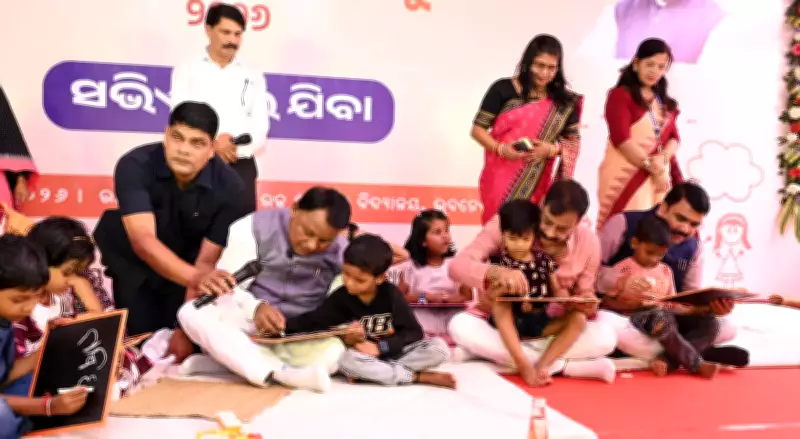
During the inauguration of the state-level Khadi Chhuan Divas at Raj Bhawan Upper Primary School in Bhubaneswar, CM Majhi elaborated on the cultural significance of Khadi Chhuan, a sacred tradition in Odia culture that marks the beginning of a child's formal education. Implemented in government schools since last year, this tradition saw five lakh invitations distributed at school and individual levels this year to encourage greater student participation.
The CM stressed that efforts are being made in schools to foster interest and respect for learning among children, rather than instilling fear. This approach aligns with the broader goals of NEP 2020, which emphasizes a joyful and engaging learning environment to nurture young minds effectively.
This integration initiative represents a pivotal step in Odisha's educational reforms, aiming to create a robust and inclusive system that supports children from their earliest years through to higher education.