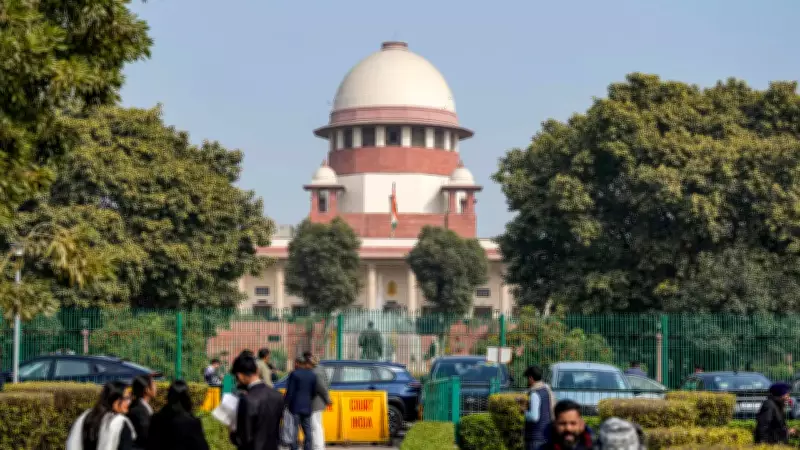
Supreme Court Seeks Government Responses on Pre-Primary Education PIL
The Supreme Court of India has taken a significant step towards addressing educational disparities by seeking formal responses from the central government and all state governments. This action comes in response to a public interest litigation (PIL) that demands the fair and comprehensive implementation of provisions for free and compulsory education at the pre-primary level.
Core Demands of the Public Interest Litigation
The PIL, filed by petitioner Haripriya Patel, specifically calls for the integration of pre-primary education within the ambit of the right to education as guaranteed under Article 21A of the Constitution. Furthermore, it emphasizes the need to align this implementation with the guidelines set forth in the National Education Policy (NEP) 2020, which advocates for universal access to quality early childhood care and education.
Critical Issues Highlighted by the Petitioner
During the proceedings, the counsel representing Haripriya Patel presented alarming statistics and concerns. It was revealed that a substantial majority of children, approximately over 60% in rural areas and around 30% in urban areas, rely exclusively on government schools for their education. Despite this dependency, these institutions are plagued by severe inadequacies.

The petition underscores that a critical shortage of qualified teachers, coupled with a profound lack of access to essential information and modern technology tools, is severely hindering educational development. This stunting of education occurs at the most crucial formative stage of a child's life, disproportionately affecting those from marginalized and underprivileged sections of society.
Proposed Solutions and Oversight Mechanisms
To ensure accountability and effective implementation, the petitioner has urged the Supreme Court to consider establishing a robust oversight mechanism. The proposed solutions include:
- The creation of an independent monitoring authority dedicated to supervising pre-primary education standards.
- Alternatively, the formation of a court-monitored oversight committee. This committee would comprise a diverse group of experts in early childhood education alongside representatives from the National Council of Educational Research and Training (NCERT).
The bench, acknowledging the gravity of the issues raised, has issued notices to the concerned governments, directing them to file their detailed responses. This move marks a pivotal moment in the ongoing national discourse on educational equity and the foundational right to quality education for every Indian child.