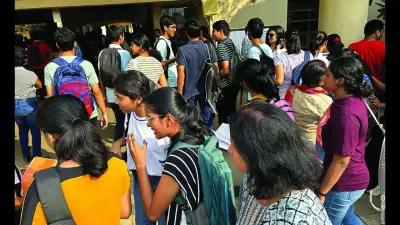
The Rajasthan government has introduced a significant new initiative aimed at enhancing the educational experience for students in its public schools. The state's Department of Education has issued a directive making it compulsory for all government schools to incorporate a daily session of newspaper reading into their routine.
Details of the New Educational Mandate
According to the official order, this new rule will be implemented starting from the upcoming 2024-25 academic session. The directive mandates that every government school across Rajasthan must allocate dedicated time for students to read newspapers. The primary objective behind this move is to improve students' language proficiency and expand their general knowledge by exposing them to current affairs and diverse topics.
The order specifically states that this activity should be conducted regularly to ensure students develop a habit of engaging with news and information beyond their standard textbooks. This initiative reflects a broader pedagogical shift towards creating more informed and well-rounded learners.

Expected Benefits and Implementation
Education officials believe that consistent newspaper reading will offer multiple benefits. Firstly, it is expected to significantly enhance reading comprehension and vocabulary in both Hindi and English, depending on the publication. Secondly, it will keep students updated on local, national, and international events, fostering a sense of civic awareness from a young age.
The government sees this as a low-cost, high-impact intervention. Schools will need to source newspapers, potentially through local subscriptions or partnerships, and integrate the reading time into the daily timetable, likely during morning assembly or a dedicated period.
Broader Implications for School Education
This mandate places Rajasthan among a growing number of states recognizing the value of supplementary learning tools. By formally incorporating current affairs into the school day, the state is acknowledging that education extends beyond prescribed syllabi. The policy aims to bridge the gap between classroom learning and the dynamic world outside.
The success of this initiative will depend on consistent implementation across thousands of government schools. It represents a clear effort by the state's education department to innovate within the public schooling system and equip students with skills that are crucial for competitive exams and informed citizenship.
As the new academic year approaches, school administrators and teachers will prepare to embed this new practice into their daily schedules, marking a simple yet potentially transformative change in Rajasthan's educational landscape.