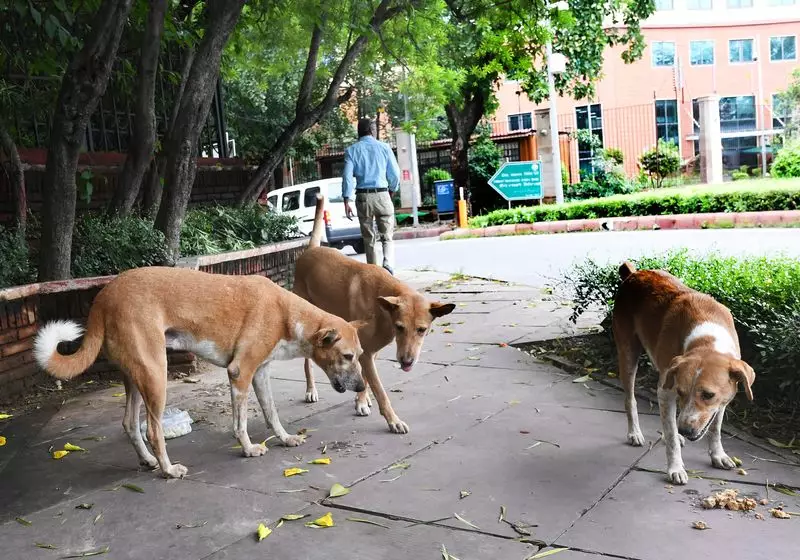
The Punjab government has ignited a firestorm of criticism with a recent directive that many are calling baffling and illogical. The state's Education Department has ordered school teachers to conduct a census of stray dogs in their localities. This move, intended to support municipal efforts, has been met with fierce resistance from educators and rationalists alike, who argue it defies all common sense and misuses the teaching workforce.
A Bizarre Directive from the Education Department
The controversial order was issued by the Director of the State Council of Educational Research and Training (SCERT). It mandates that teachers, already burdened with academic and administrative duties, must now venture into their neighborhoods to count stray dogs. The collected data, which includes details like the dogs' color and location, is to be compiled and submitted to the civic authorities.
The rationale provided is that this survey will aid municipal corporations and panchayats in their efforts to manage the stray dog population. However, this logic has been widely rejected. Critics point out that teachers are trained professionals hired to educate children, not to perform tasks that fall squarely under the jurisdiction of the civic bodies' sanitation and veterinary departments.

Why This Order Defies Logic and Priority
The backlash stems from several glaring issues with the directive. First and foremost is the question of safety and expertise. Approaching and counting stray dogs, especially in packs, poses a genuine risk of dog bites and attacks. Teachers are not equipped or trained for this hazardous activity.
Secondly, it highlights a severe misallocation of human resources. Punjab's education system faces numerous challenges, including learning gaps post-pandemic and infrastructure needs. Diverting teachers' time and energy to non-academic, non-educational tasks undermines their primary function and the quality of education.
Furthermore, the order exposes a failure in governance and civic planning. The responsibility for animal population control lies with urban local bodies, which have dedicated budgets and staff. Passing this duty to the Education Department suggests a shirking of responsibility and a lack of coordinated policy.
Broader Implications and the Path Forward
This incident is not isolated. It reflects a persistent trend where teachers across India are saddled with extraneous governmental duties—from election work to census surveys—detracting from their core mission. The Punjab dog census order is a stark example of this administrative overreach.
The solution, as argued by educators and commentators, is clear. Civic bodies must strengthen their own mechanisms and employ trained personnel for such surveys. The government should invest in proper animal birth control (ABC) programs and empower municipal staff to execute them effectively.
For the teaching community, this order is a call to push back against non-academic burdens. The state must recognize that the classroom is where a teacher's impact is greatest. Assigning them tasks that are dangerous, unrelated to their expertise, and outside their job description is an inefficient use of a critical state resource and a disservice to students awaiting quality education.