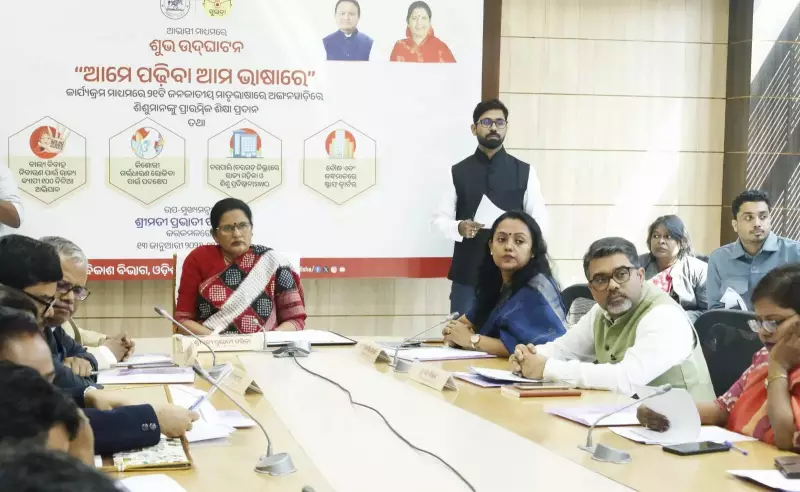
Odisha Introduces Mother Tongue Learning for Tribal Preschool Children
In a significant move for early childhood education, Odisha has launched a new initiative to teach tribal preschoolers in their own native languages. Deputy Chief Minister Pravati Parida officially started the 'Aame Padhibaa Aama Bhasare' program on Tuesday. This scheme will change how young tribal children learn at anganwadi centers across the state.
Focus on Foundational Learning in Native Languages
The program specifically targets children between three and six years old. Instead of using Odia as the primary teaching language, these young learners will now receive instruction in their mother tongues. This approach directly follows the recommendations outlined in the National Education Policy of 2020.
Pravati Parida emphasized that the state sector scheme aims to strengthen early learning outcomes through mother tongue-based education. The initiative will eventually cover twenty-one different tribal languages spoken throughout Odisha.

Pilot Phase in Six Tribal Districts
This year, the project will begin as a pilot program in six tribal districts. These initial locations include Keonjhar, Kandhamal, Rayagada, Gajapati, Malkangiri and Nabarangpur. In subsequent years, officials plan to extend the program to other districts with significant Scheduled Tribe populations.
During the first year, the focus will be on six specific tribal languages: Munda, Kui, Gondi, Saura, Kuvi and Koya. The remaining fifteen languages will be incorporated gradually as the program expands.
Training and Curriculum Integration
To ensure effective implementation, anganwadi workers will receive special training in regional languages. The Women and Child Development Department will facilitate this training process. The mother tongue instruction will integrate with Nua Arunima, Odisha's existing preschool curriculum.
Importantly, the Nua Arunima curriculum has already been translated into all twenty-one tribal languages. This translation work ensures alignment with current Early Childhood Care and Education frameworks.
Culturally Responsive Education Approach
Deputy CM Parida, who also serves as Women and Child Development Minister, explained the program's philosophy. "Our initiative focuses on providing culturally responsive, linguistically relevant, and developmentally appropriate learning opportunities," she stated. The goal is to create educational experiences that respect and incorporate tribal children's cultural backgrounds.
For the pilot year, implementation will happen in collaboration with two organizations: Piramal Foundation and Pratham Education Foundation. These partnerships will help establish effective teaching methodologies and monitoring systems.
Expanding Beyond Previous Limitations
Previously, mother-tongue-based learning in Odisha was limited primarily to government schools. This new program marks a significant expansion into the anganwadi system, which serves younger children during their most formative years.
The initiative represents a substantial shift in how Odisha approaches early education for tribal communities. By starting instruction in children's native languages, educators hope to build stronger foundational skills that will support future learning success.