NCERT Withdraws Controversial Textbook Following Supreme Court's Suo Motu Action
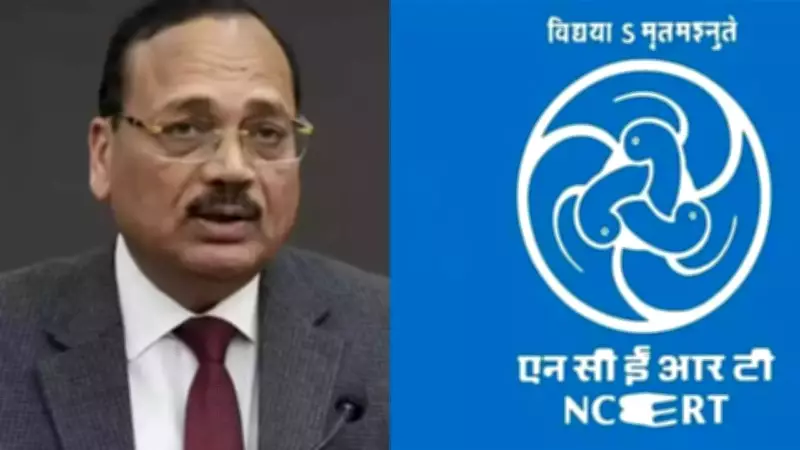
The National Council of Educational Research and Training (NCERT) has officially withdrawn its newly published Class 8 Social Science textbook from circulation after it included a contentious section discussing "corruption in the judiciary." This decisive action came swiftly on Wednesday, mere hours after the matter was brought before the Supreme Court of India.
Supreme Court's Strong Response and Suo Motu Proceedings
Chief Justice of India (CJI) Surya Kant, heading the bench, expressed strong disapproval of the textbook content, asserting that "no one would be allowed to defame the institution of judiciary." The apex court has initiated suo motu proceedings regarding the inclusion of this section, highlighting the seriousness with which the judicial establishment views the matter.
CJI Kant stated, "I'm fully aware of it. We will wait for a day. This definitely concerns the entire institution—both bar and bench. I am getting a lot of calls, lots of messages. I'm taking suo moto cognisance of the issue. I will not let anybody, no matter how high up they are, defame the institution."

Legal Arguments and Concerns Raised
The issue was initially raised before the CJI-led bench by senior advocates Kapil Sibal and Abhishek Manu Singhvi. They argued that the textbook presented corruption as if it were exclusive to the judiciary, while omitting references to other sectors like bureaucracy and politics.
"They have left out bureaucracy, politics, etc. Not a word on other sectors. They are teaching as if it only exists in this institution," the senior lawyers remarked, questioning the selective focus of the educational material.
A Notable Shift in Textbook Content
The inclusion of this section marked a significant departure from previous editions of the textbook, which traditionally focused on the structure, functions, and role of courts within the Indian democratic framework. The revised chapter, titled "The Role of the Judiciary in Our Society," expanded its scope beyond explaining court hierarchy and access to justice mechanisms.
It now addresses various challenges faced by the judicial system, including issues of corruption and the persistent problem of case backlogs. This pedagogical shift has sparked considerable debate about the appropriate content for school-level civics education.
Institutional Response and Future Implications
CJI Kant acknowledged the gravity of the situation, describing it as "a calculated and deep-rooted thing," while adding, "We will not say anything more than that. As the head of the institution, I'm aware, I'm already doing something about it."
The swift withdrawal of the textbook underscores the sensitivity surrounding discussions of judicial integrity in educational materials and raises important questions about academic freedom versus institutional reputation in India's educational framework.