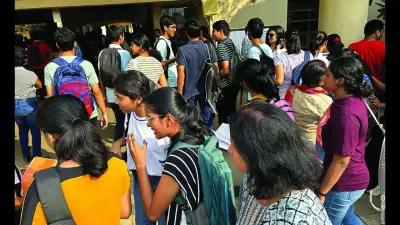
Thiruvananthapuram: A wave of innovation swept across Kerala as the highly anticipated Little KITEs sub-district camps officially kicked off on Friday. This unique initiative witnessed the enthusiastic participation of 14,804 students, all eager to unravel the science of modern meteorology and the inner workings of weather forecasting centers.
From Learners to Creators: The Camp's Core Mission
These young participants were carefully selected from a vast pool of over 2.08 lakh members spread across 2,248 school units, following preliminary camps at the school level. They are now immersed in intensive two-day sessions being held at 225 centers statewide. The core objective of these camps is to transition students from being mere technology users to active creators. They achieve this by developing prototypes of weather monitoring instruments through hands-on programming and producing original digital content using animation tools.
Little KITEs is a flagship programme by the Kerala Infrastructure and Technology for Education (KITE), which serves as the technology arm of the state's general education department. It proudly holds the title of India's largest student ICT network. The programme is specifically designed to cultivate a culture of innovation and technical prowess, equipping students in public schools with cutting-edge skills in critical areas like artificial intelligence, robotics, the Internet of Things (IoT), and animation.

Hands-On Learning: Building Weather Stations & Digital Worlds
During the programming segments of the camp, students are tasked with designing their own systems to predict weather conditions. They learn to analyze key inputs such as temperature, atmospheric pressure, wind speed, and humidity. Using the robotic kits previously distributed to schools by KITE, participants are constructing fully functional models of essential weather station equipment.
Their practical projects include:
- Creating a temperature gauge using LDR sensor modules, servo motors, and Arduino components.
- Developing digital anemometers to accurately measure wind speed.
- Building functional wind vanes to determine wind direction.
In the animation track, students are exploring the world of digital storytelling using OpenToonz, a professional-grade, free, and open-source 2D animation software. They are employing advanced techniques such as:
- Rotate animation and in-between frame animation.
- Lip-syncing for character dialogue.
- Tweening and applying special effects to produce captivating animated short films.
Additionally, the curriculum introduces students to 3D modeling using the powerful Blender software, expanding their digital creation toolkit.
A Future of Advanced Tech in Every School
In his inaugural address at the camp, K Anvar Sadath, the Chief Executive Officer of KITE, made a significant announcement for the future of tech education in Kerala. He revealed that starting January 2026, all schools will receive advanced robotic kits. These new kits will enable students to build even more complex systems, ranging from sophisticated moving robots to fully integrated smart weather stations, further empowering the next generation of innovators.
The Little KITEs camps stand as a testament to Kerala's commitment to integrating advanced technological education into the public school system, ensuring its students are not just prepared for the future but are actively shaping it.