Kolkata Grapples with Severe Teacher Shortage as HS Examinations Commence
The prolonged SIR (State Information Resource) process in West Bengal has exacerbated an already critical shortage of teachers in state-run schools, casting a shadow over the commencement of the Higher Secondary (HS) examinations. This systemic issue mirrors the challenges faced during the Madhyamik examinations, where the education department has consistently relied on educators from secondary and even primary schools to fulfill invigilation duties.
Triple Examination Systems Amplify Demand for Invigilators
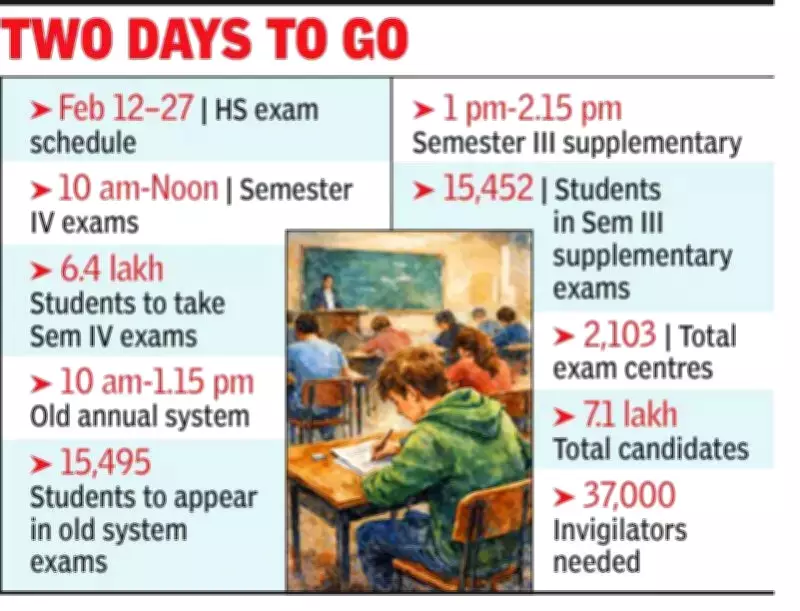
This academic year presents a unique logistical hurdle with three distinct HS examination systems scheduled to begin simultaneously on Thursday. The primary cohort consists of 6.4 lakh candidates appearing for the fourth-semester examinations. They are joined by 15,452 candidates taking the third-semester supplementary tests and another 15,495 students enrolled in the old annual system exam. Cumulatively, this brings the total number of examinees to a staggering 7.1 lakh.
The convergence of these three streams has significantly increased the demand for examination supervisors. While approximately 29,000 invigilators were deployed during the previous year's examinations, the current scenario necessitates between 36,000 to 37,000 personnel to ensure the smooth and fair conduct of the tests.
Primary Teachers Drawn Into Examination Duties
To bridge this substantial gap, the authorities have been compelled to extend invigilation responsibilities beyond traditional secondary school teachers. In a notable shift, over 3,000 primary school teachers have been assigned HS invigilation duties this year. This move underscores the depth of the staffing crisis within the state's education framework.
The situation is further strained by the ongoing SIR process, which currently engages over 80,000 Booth Level Officers (BLOs). A significant portion of these BLOs are teachers from state government schools, effectively pulling them away from their primary educational roles and contributing to the classroom vacancy crisis.
Official Assurance Amidst Operational Uncertainty
Chiranjib Bhattacharjee, President of the HS Council, addressed the concerns, stating, "We have a robust system in place to hire teachers from other schools, including primary institutions, should any school face a shortage. The district administration has been instructed to take this matter with utmost seriousness and make all necessary arrangements to cover the invigilation requirements."
However, this assurance is juxtaposed with a concerning operational detail. Despite the examinations being merely three days away, the HS Council has admitted it remains unaware of the final and total number of invigilators successfully deployed across the various examination centers. This lack of centralized data at the eleventh hour highlights the administrative challenges in managing the crisis.
The reliance on a patchwork system of borrowing teachers, while a necessary stopgap, raises questions about the long-term sustainability of the state's examination logistics and the impact of diverted teaching resources on the quality of primary and secondary education during this critical period.