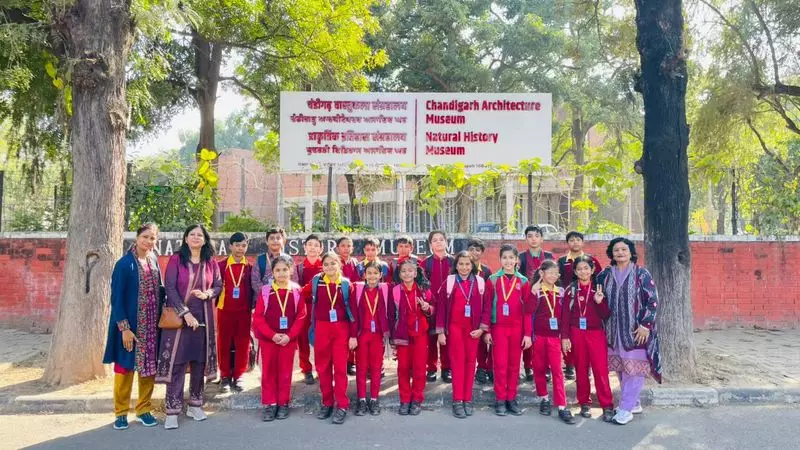
In a move to blend textbook knowledge with real-world experience, KB DAV Senior Secondary Public School in Chandigarh recently organised a series of educational excursions for its students. The trips, designed as an extension of the classroom, took different groups of students to two significant landmarks in Punjab: the Pushpa Gujral Science City in Kapurthala and the Virasat-e-Khalsa museum in Anandpur Sahib.
Exploring the Wonders of Science and Heritage
The school orchestrated these visits with clear educational objectives in mind. A group of students from classes 6 to 8 embarked on a journey to the Pushpa Gujral Science City. This massive scientific hub is renowned for its interactive exhibits and live demonstrations that make complex scientific principles accessible and engaging for young minds.
Concurrently, another batch of students, from classes 3 to 5, visited the iconic Virasat-e-Khalsa. This architectural marvel and museum in Anandpur Sahib is dedicated to preserving and presenting the rich history and cultural heritage of Sikhism. The visit aimed to provide the young students with a profound understanding of the region's history and the values of the Sikh faith.

Principal Emphasizes Holistic Learning Approach
The initiative was spearheaded by the school's principal, Dr. Neelam Mittar. She strongly advocates for a holistic educational model where learning is not confined to the four walls of a classroom. Dr. Mittar believes that such educational excursions are vital for the comprehensive development of students.
"These trips are an integral part of our curriculum," Dr. Mittar stated. "They provide students with experiential learning opportunities that textbooks alone cannot offer. Witnessing scientific phenomena firsthand or walking through the corridors of history leaves a lasting impression and deepens their understanding." She emphasized that the goal is to create well-rounded individuals by exposing them to diverse fields of knowledge.
A Day of Discovery and Engagement
At the Pushpa Gujral Science City, students were captivated by a wide array of exhibits. They explored galleries dedicated to space, technology, human biology, and environmental science. The hands-on experiments and live shows, particularly the 3D show and the energy ball demonstration, were major highlights, sparking curiosity and numerous questions among the young learners.
Meanwhile, at Virasat-e-Khalsa, the younger students were taken on a visual and auditory journey through the history of the Sikh Gurus and the Khalsa. The museum's use of advanced technology, panoramic paintings, and immersive soundscapes helped narrate historical events in a compelling manner. This exposure was intended to instill a sense of respect and connection to their cultural roots.
The trips were meticulously planned and supervised by a team of teachers from the school to ensure both safety and a productive learning environment. The school management expressed its commitment to continuing such initiatives, viewing them as essential investments in the students' future.
The Lasting Impact of Experiential Education
Educational experts often highlight the multifaceted benefits of such field trips. The key outcomes observed and intended by KB DAV School include:
- Enhanced Conceptual Understanding: Complex subjects become clearer when seen in practice.
- Stimulated Curiosity: Interactive environments encourage students to ask questions and seek answers.
- Cultural and Historical Awareness: Visits to heritage sites foster a sense of identity and pride.
- Social Learning: Students learn to interact outside their regular peer group, building teamwork and social skills.
By organising these educational excursions to the Pushpa Gujral Science City and Virasat-e-Khalsa, KB DAV School has reinforced its philosophy that true education involves seeing, touching, and experiencing the world. This approach not only supplements academic syllabi but also plays a crucial role in shaping informed, curious, and culturally aware citizens of tomorrow.