In an innovative educational initiative, students from two government schools in Karnataka's Gadag district are stepping out of their classrooms to learn about the natural world and local industry through immersive arts-based projects. These unique programs are supported by the India Foundation for Arts (IFA), a not-for-profit organization based in Bengaluru.
Bridging Arts, Ecology, and Local Craft
The projects are part of IFA's Arts Education programme, which has signed a Memorandum of Understanding (MoU) with the Department of State Educational Research and Training. Under this initiative, a selected teacher from each school receives a grant of Rs 1 lakh to lead a 15-month long, multidisciplinary learning experience. The goal is to place the school teacher at the core of the work and support arts-based training in government schools.
TN Krishnamurthy, senior programme officer for Arts Education at IFA, explained that the foundation works across practice, research, and education in Indian arts and culture. "Two teachers in Gadag district have taken up projects under this programme," he stated, highlighting the local implementation of this national effort.

Project 'House for Foreign Birds' at Kurtakoti
At the Government Higher Primary School in Kurtakoti, teacher and project coordinator SM Marigoudra is guiding students on a journey titled 'House for Foreign Birds'. The project revolves around the nearby Magadi Bird Sanctuary, a habitat for diverse avian species.
"This project explores the ecological significance of bird migration through visual, theatre, and language arts," Marigoudra told TOI. The aim is to help students observe and connect with their natural environment. He specifically involved Class 6 students as their curriculum includes a lesson on birds.
After a visit to the sanctuary where students collected information about the birds, they are now expressing their understanding and observations through various creative forms. "They are now expressing their outcome through paintings, essays, poems, dramas, etc.," Marigoudra added. The final outcome will be a publication, exhibition, and performance at the school.
Project 'Mudranakashi Namma Gadag' at Hulkoti
Meanwhile, at the Government Model Kannada Boys School in Hulkoti, teacher SK Mathapati is leading a different exploration. His project, named 'Mudranakashi Namma Gadag' (Our Gadag of Printing), engages students from classes 5 and 6 in discovering the resources and processes of the local printing industry.
"This initiative is crafted to explore the resources and processes of local printing presses, nurturing students' curiosity, observational abilities, creative thinking, and practical reasoning," Mathapati explained. The project lays the foundation for deeper, more meaningful learning by connecting education to local craftsmanship.
Students have already visited the Vemana Printing Press. Their future plans include:
- Visiting local publications to study newspaper patterns.
- Collecting books by local writers for a dedicated 'Readers' Corner' in school.
- Reading these books during a weekly period and writing their opinions.
- Interacting with printing press owners and workers during field visits.
"Finally, we will compile all their activities and bring it in the form of a book," Mathapati said, outlining the tangible output of this hands-on project.
Fostering Multidimensional Thinking
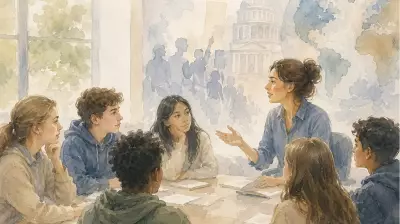
The core objective of the IFA's intervention is to help students develop multidimensional thinking. By moving beyond textbook learning, the projects encourage a holistic understanding of subjects like ecology and local economics through the lens of arts and culture.
The students' learnings from both projects will be showcased through a vibrant mix of creative forms including paintings, plays, poems, and essays, alongside the study of recorded texts. This approach not only reinforces academic concepts but also fosters creativity, critical thinking, and a sense of connection to their community and environment.

These pioneering projects in Gadag demonstrate a powerful model for experiential learning, proving that education can be profoundly enriched by integrating arts with real-world exploration.