Delhi Education Department Launches Online Portal for School Fee Hike Complaints
The Delhi education department has significantly upgraded its official website, introducing a crucial feature that will impact countless families across the national capital: a dedicated online section for the Fee Review Committee where parents can formally file complaints against unjustified school fee increases.
Streamlining a Traditionally Chaotic Process
Historically, disputes over school fee hikes in Delhi have followed a predictable and often frustrating pattern. Parents receive a fee hike circular, discussions erupt on WhatsApp groups, followed by personal visits to school administrations, and protracted exchanges of formal letters. In many instances, these conflicts escalate to lengthy and expensive court battles.
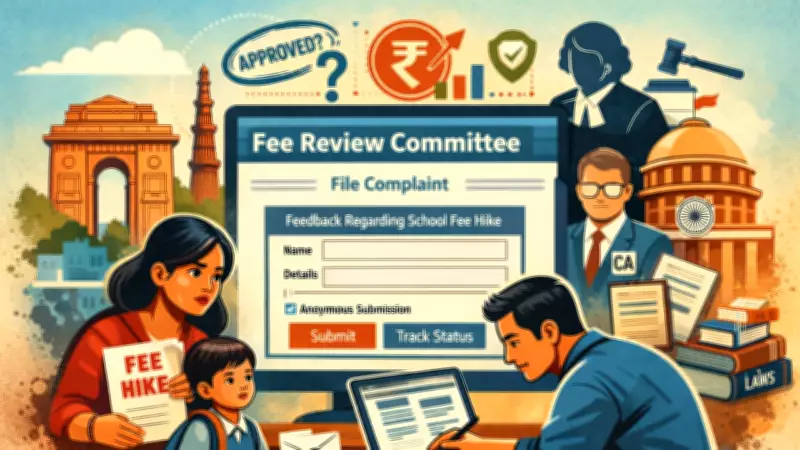
The newly introduced online complaint system aims to bring order to this chaos by creating a formal, trackable mechanism. The revamped website now hosts a specific form titled "Feedback Regarding School Fee Hike." Parents who believe a school has implemented an unfair fee increase or has done so without obtaining the necessary regulatory approvals can now register their grievance directly through this digital platform.

Legal Framework and Committee Composition
This initiative is directly linked to the Delhi School Education (Transparency in Fixation and Regulation of Fees) Rules, 2025. The grievances submitted online will be reviewed by the official Fee Review Committee, which is chaired by retired Justice Anil Dev Singh. The committee also includes Chartered Accountant J S Kochar and R K Sharma, a former additional director of education, ensuring a mix of legal, financial, and administrative expertise.
The key transformation brought by the website is accessibility and transparency. Parents can now submit their complaints from anywhere, and the updated portal allows them to track the real-time status of their filed grievances. Additionally, the portal provides a direct option to email the committee chairperson, facilitating easier communication.
Anonymous Submission to Protect Families
A particularly significant feature of the new system is the option for parents to submit feedback anonymously. Many families have long feared that directly confronting school authorities over fees could lead to their children being unfairly targeted or facing repercussions. This anonymity feature is designed to alleviate that fear, at least in principle, encouraging more parents to come forward without apprehension.
Providing Context and Legal Resources
The website also serves an educational purpose by providing digital copies of key legislation, including the foundational Delhi School Education Act and the newer fee regulation rules. It references the extensive legal history surrounding fee disputes, such as the petition filed by the Delhi Abhibhavak Mahasangh in the Delhi High Court and the court's previous directives on fee scrutiny, offering parents crucial context for their complaints.
Beyond Fees: Attendance Tracking and Learning Resources
The website revamp extends beyond fee regulation. It now includes a daily attendance monitoring section for all 1,086 government schools in Delhi, which are mandated to upload attendance data daily. Early reports indicate a high compliance rate, a move that could enhance institutional accountability if the data is maintained accurately and acted upon.
For students, the portal is being developed as a comprehensive learning hub. It hosts a wealth of educational materials, including:

- Question banks and mock tests
- Printable workbooks
- Mental maths exercises
- Resources for the Common University Entrance Test (CUET), particularly for students in Classes 3 through 12
The Critical Test Ahead
The Delhi government's website update represents a formal attempt to bring transparency and systemization to two highly sensitive areas: school fee regulation and institutional accountability. The ultimate effectiveness of this initiative, however, hinges on its implementation. The real test will begin when the first several thousand complaints are filed. Will schools face prompt and meaningful scrutiny, or will parents merely receive automated online acknowledgments followed by bureaucratic silence? The answer to this question will determine the true impact of this digital governance effort.
With inputs from PTI.