Fresh Legal Challenge Emerges Against CBSE Examination Practices
A significant legal confrontation is developing around the Central Board of Secondary Education (CBSE) as preparations are underway to file a Public Interest Litigation (PIL) that directly questions the fundamental fairness of the board's current examination pattern. The core controversy centers on persistent allegations that question papers distributed across different sets during recent examinations have exhibited substantial variations in difficulty levels, potentially placing students' academic outcomes at the mercy of random chance rather than their actual preparation and knowledge.
Educator Prashant Kirad Leads Charge Against Academic Discrimination
Prominent educator Prashant Kirad has emerged as the leading voice of this growing protest movement, asserting forcefully that these documented disparities in examination difficulty constitute a form of academic discrimination. Kirad's allegations have ignited a broader, more profound debate about the integrity and equity of standardized testing systems throughout India. While the utilization of multiple question paper sets represents a common administrative practice intended to prevent cheating and maintain examination security, critics now argue compellingly that inconsistent difficulty levels fundamentally undermine the very purpose of establishing a fair and just evaluation system for all students.
Specific Allegations in Class 10 and Class 12 Examinations
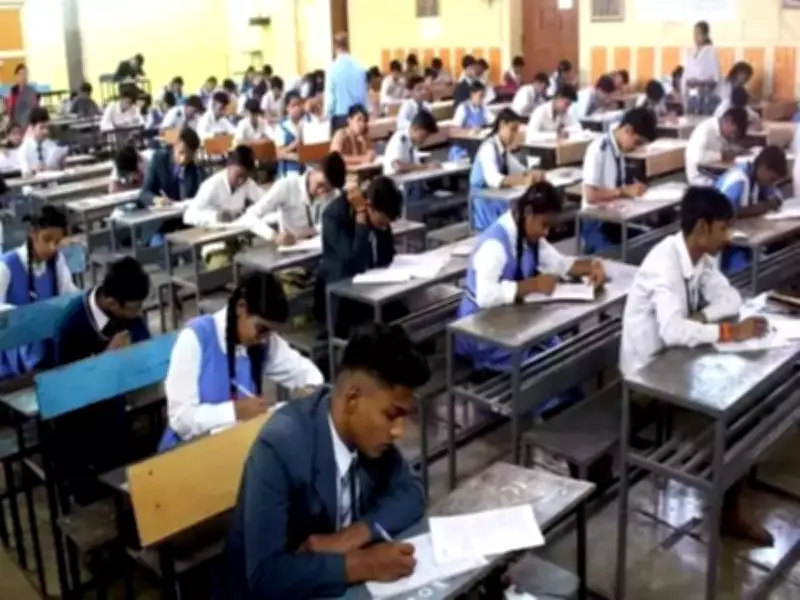
The initial discrepancies were reportedly observed during the recent Class 10 Mathematics examination, where students and educators noted extreme variations between different paper sets. According to widespread reports, some students received papers of moderate difficulty, while others were confronted with sets containing problems that demanded high-conceptual knowledge typically associated with advanced competitive entrance examinations like JEE Main and JEE Advanced.

The controversy intensified significantly following the Class 12 Physics examination, where similar patterns of disparity allegedly reemerged. Kirad has articulated a central concern that diligent students who have invested months in rigorous preparation find themselves unfairly disadvantaged simply due to the misfortune of being assigned a more challenging paper set. This randomness, he argues, invalidates the principle of merit-based assessment.
Viral Social Media Appeal and Direct Challenge to CBSE
In a viral video that has circulated extensively across social media platforms, Kirad issued a direct public challenge to the CBSE board. He stated unequivocally, "We are filing a PIL against the board to seek a formal response regarding the unfair practice of setting question papers with unequal difficulty. This issue first surfaced in Class 10 Mathematics, where some sets were straightforward while others required JEE-level knowledge. Now, the Class 12 Physics paper has exhibited the same problematic pattern."
Kirad further emphasized the profound psychological and academic impact on students, noting that months of dedicated study time can be rendered uncertain because outcomes become unpredictable, dependent on the arbitrary difficulty of the assigned paper rather than demonstrated competency.
Fundamental Questions About the Multiple-Set System
The unfolding debate raises critical questions about the implementation of the multiple question paper set system. While education experts acknowledge that multiple sets serve an important anti-cheating function, they stress that this approach must be accompanied by rigorous, advanced statistical and pedagogical moderation to ensure equitable difficulty across all variants. Kirad has challenged the longstanding practice of producing numerous sets without implementing strict, verifiable difficulty calibration protocols.
"Why create multiple sets if they are not meticulously assessed and balanced for relative difficulty?" Kirad questioned, adding that the scale of disparity witnessed recently appears unprecedented in recent examination history.

Demands for Remedial Action and Systemic Transparency
Beyond legal action, Kirad and supporting stakeholders have called for immediate remedial measures for affected students. Specific demands include:
- Official clarification and acknowledgment from CBSE regarding the difficulty variations.
- Consideration of awarding grace marks to students who were administered comparatively more difficult question paper sets.
- Implementation of normalized marking schemes that account for set difficulty differences.
The issue has resonated deeply with students and parents nationwide, many of whom have expressed frustration over the perceived unreliability and inequity in high-stakes examinations. On social media platforms, a consistent theme has emerged: hard work and preparation should yield equitable outcomes, regardless of paper set distribution.
There are growing calls for enhanced transparency in the question paper setting process. Suggestions from the student community include publicly releasing difficulty mapping analyses after examinations to build trust and accountability in the evaluation system. The coming legal proceedings and institutional responses will likely shape the future of standardized testing fairness in India's educational landscape.