Bhopal Government School Toilet Projects Grind to a Halt Despite Available Funding
In a concerning development for educational infrastructure, all construction and repair projects for girls' toilets in government schools across Bhopal have completely stalled. This stagnation persists despite the availability of sanctioned funds and repeated administrative directives from higher authorities. The situation has escalated to the point where the Madhya Pradesh State Education Centre has been compelled to issue a formal show-cause notice to the district coordinator responsible for overseeing these critical projects.
Complete Neglect of Essential Sanitation Infrastructure
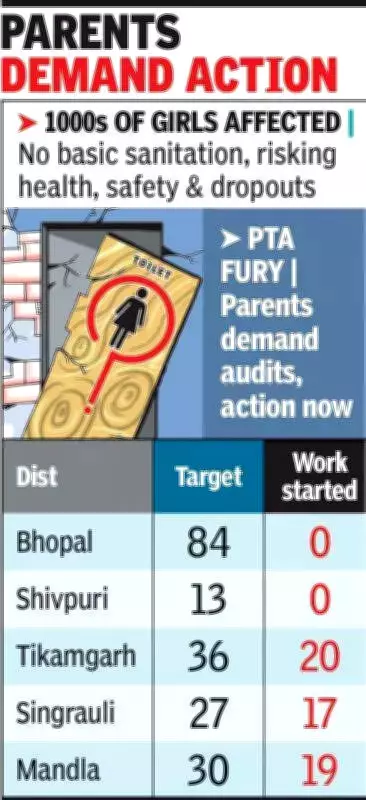
Officials have confirmed that not a single project in the state capital has broken ground or reached completion. This administrative failure leaves thousands of schoolgirls without access to basic, functional sanitation facilities. Authorities involved have described this lapse as representing "complete neglect" of a vital government program. The inaction is viewed as a direct disregard for established national priorities, involving arbitrary decision-making and potential violations of service rules.
The gravity of the situation is amplified by the widely recognized role that proper toilet facilities play in the educational ecosystem. Functional toilets are crucial for preventing student dropouts, bolstering overall student health and safety, improving retention rates, and promoting gender equity within the education system. Denying these facilities effectively denies girls their basic right to dignity and equitable access to schooling.
National Context and Failed Implementation
The issue gained significant urgency following the National Chief Secretaries' Conference held on December 27, 2025. During this high-level meeting, states across India, including Madhya Pradesh, pledged to upgrade school infrastructure nationwide. Data from the Unified District Information System for Education (U-DISE) for the 2025-26 academic year was instrumental in pinpointing infrastructure gaps, specifically the lack of adequate sanitation facilities.
Based on this assessment, central funds were disbursed directly to School Management Committees (SMCs). The mandate was clear: utilize these funds to construct new toilets and repair existing ones, with the ultimate goal of providing safe, hygienic, and functional spaces that support girls' dignity and regular school attendance.
Monitoring Reveals "Alarmingly Slow" Progress
However, monitoring through the government's Education Portal 3.0 has exposed an "alarmingly slow" pace of progress across the state. Bhopal's performance has been particularly dismal, registering at absolute zero. The district's file is marked by stalled tender processes, significant amounts of unspent money, and apparent bureaucratic holdups that have prevented any physical work from commencing.
An official, speaking on condition of anonymity, starkly characterized the situation as a systemic failure that erodes both the dignity of young girls and their fundamental access to education. The recently issued show-cause notice demands a swift and satisfactory explanation for the prolonged inaction. The notice explicitly threatens disciplinary action if the response is found to be unsatisfactory, signaling that the state education body is finally taking a firm stance on this critical issue of public welfare and educational equity.