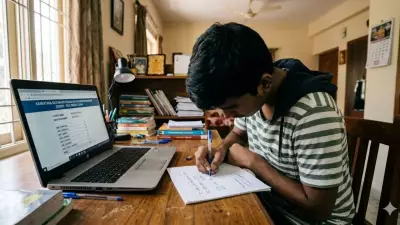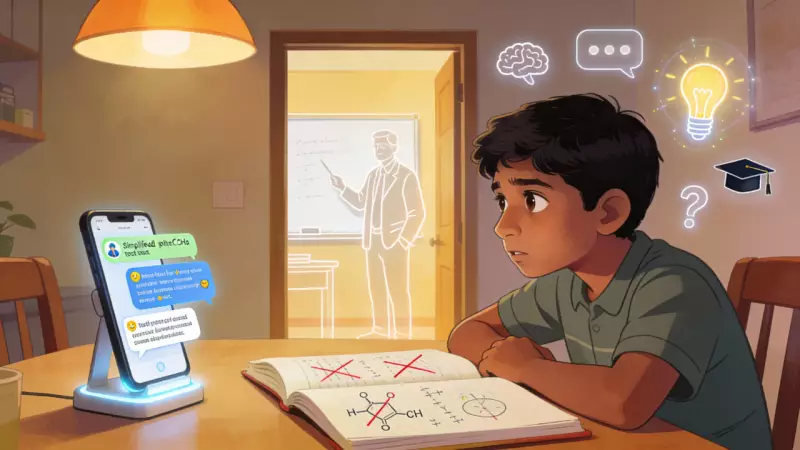
In a quiet home in Bengaluru, 14-year-old Aarav faces a challenging chemistry problem in his notebook. With his next tuition class two days away, he turns not to a textbook, but to his smartphone. He types a prompt into an AI chatbot: "Explain this like I’m new to chemistry." Within seconds, a clear, step-by-step explanation appears. Aarav asks for a real-world example, and the AI adapts its response, patiently offering guidance without judgment.
The New Reality: AI as a 24/7 Study Companion
This scene is no longer futuristic; it's the daily reality for countless students across India. Artificial intelligence has moved from policy debates into the heart of the education system, influencing how students study and how teachers instruct. The central question is no longer about AI's presence in education, but about how it is used, where it fits, and who maintains control over the learning process.
In practice, AI in education isn't about robots at the front of the class. It manifests in subtle, often invisible ways. Most students now use generative AI tools like ChatGPT, Gemini, Grammarly, QuillBot, and Canva Magic Design. They rely on these platforms to simplify complex textbook language, clarify doubts, create summaries, practice answers, and plan essays. For many, AI has become an always-available study partner.

These tools are powered by large language models (LLMs) that generate original text, images, or code based on user prompts. Unlike older educational software that simply retrieved information, Gen AI constructs answers, a capability that can sometimes mask errors or biased reasoning. Another layer is formed by adaptive learning platforms used by schools and coaching centers. These systems track student responses and adjust lesson difficulty in real-time, aiming to personalize education in crowded classrooms.
Teachers are also adopting AI. Tools like MagicSchool AI and Eduaide.AI assist with creating lesson plans, worksheets, quizzes, and analyzing student performance. When used effectively, AI acts as a support system, freeing up educators to focus on areas where human guidance is irreplaceable.
The Critical Thinking Dilemma: Learning vs. Outsourcing
Students have embraced AI faster than many schools anticipated. A revealing 2024–25 report by the Center for Democracy and Technology found that 86% of students and 85% of teachers used AI during the school year, primarily for tutoring and career advice. This rapid adoption raises a pressing concern: Are students truly learning, or are they outsourcing the hard work of thinking?
A Class 10 student preparing for board exams shared, "Yes, AI has changed how I study. I often know the answer but struggle to write it well. AI tools help me phrase answers by giving templates and refining my responses." Used judiciously, AI can democratize learning, allowing students to revise at their own pace and access help without embarrassment. It can bridge gaps for those without personal academic support.
However, the risk is significant. When answers arrive instantly, the essential struggle with confusion vanishes. This struggle is not a bug in learning; it's a feature. It forces students to pause, test ideas, and forge connections between concepts. Research from higher education indicates that students who over-rely on LLMs for writing and research invest less mental effort and can show weaker reasoning compared to peers using traditional methods. Like using a chess app that suggests the perfect move, you might win the game but never learn the strategy.
The Human Element: Connection in the Age of Convenience
The impact extends beyond academics to the vital human connections within education. A middle-school science teacher at a CBSE school in Pune observed, "Earlier, students came to me with doubts. Now they come with answers, and I have to check if they understand them." The CDT report underscores this, finding that half of the students felt less connected to teachers with AI in the classroom.

In India, where teachers are often revered as gurus, this shift carries profound cultural weight. Classrooms teach more than facts; they are spaces for collaboration, debate, empathy, and trust. If AI becomes the primary conduit for knowledge, the human fabric of education risks thinning. This is why experts unanimously stress that AI must remain a tool, not the teacher.
Why Bans Fail and What Works
Some schools have attempted to ban AI over plagiarism fears, but these measures are largely ineffective. Students continue to use the tools outside school, often without guidance. As researchers at the Harvard Graduate School of Education argue, denying AI's presence avoids responsibility instead of protecting learning. A practical framework has emerged:
- AI should support, not replace: It should handle routine tasks while human judgment leads explanation and mentorship.
- Teach AI literacy: Students must learn to ask good questions, check for accuracy, spot bias, and understand the limits of AI.
- Rethink assessment: Schools must value reasoning, process, and application over polished, AI-generated answers. Oral exams and in-class work gain importance.
- Use AI collaboratively: Teachers should examine AI responses with students, modeling critical questioning.
The goal, as one educator put it, is not to stop students from using AI, but to stop AI from doing the thinking for them.
The Path Forward: A Hybrid, Human-Centered Model
The classroom of the future will not be teacher-less or AI-dominated. It will be a hybrid model. AI will manage administrative tasks and offer personalized practice. Teachers will focus on fostering discussion, creativity, ethics, and social learning. Students will be taught to question AI, not just consume its outputs.
This foundation must extend beyond schools. Universities and workplaces must invest in AI literacy to strengthen human judgment and productivity. How society navigates this integration will shape the coming century of education.
Back at his dining table, Aarav doesn't see AI as radical or risky. For him, it's a patient resource when he feels stuck. The true test comes the next morning, when his teacher doesn't ask for the answer but asks him to explain the process. In that moment, the machine's help recedes, and learning becomes human again.