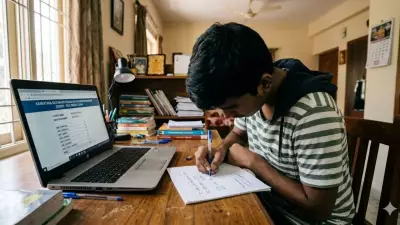
A Class 8 student from a school in western Ahmedabad was granted a crucial second chance, narrowly escaping expulsion after being found with a knife in his school bag. The reversal followed timely intervention by the state's women and child helpline, Abhayam 181.
School's Initial Strict Stance and Parental Distress
The alarming episode unfolded when the boy's mother, referred to as Nita, received a call from the school principal. She was informed that her son was caught carrying a knife and had been involved in repeated altercations with his classmates. Given the seriousness of the offence and recalling a grave incident earlier this year at a school in eastern Ahmedabad, the principal initially asked the parents to obtain the school leaving certificate (LC), effectively rusticating the child.
Deeply distressed by this development, Nita reached out to the Abhayam 181 helpline for support and intervention. She explained that her son had maintained a strong academic record over the years but had been severely affected by recent domestic troubles.

Root Causes: Family Crisis and Emotional Neglect
A counsellor from the Abhayam helpline elaborated on the family's situation. The boy's father had suffered major financial losses, compelling Nita to start working to support the family. This sudden shift left the child feeling emotionally neglected and lonely. According to his mother, this vulnerability led him to fall into bad company, resulting in uncharacteristic behaviour like getting into frequent arguments.
The mother appealed to both the helpline counsellors and the school authorities to consider her son's previously good conduct and the extenuating family circumstances. She pleaded for them to think about his future and grant him another opportunity.
Resolution: Counselling and a Conditional Second Chance
Following discussions mediated by the helpline, the school agreed to reconsider its decision. This involved direct counselling sessions with the student and interactions with his parents. As a result, the school decided to allow the boy to continue his education, replacing expulsion with an eight-day suspension.
However, the school has set a strict boundary. The counsellor added that the authorities made it unequivocally clear that any repetition of such behaviour would lead to immediate and permanent rustication. This case highlights the role of counselling and dialogue in addressing behavioural issues rooted in external trauma, offering a rehabilitative approach alongside disciplinary action.