Massive Student Shortage in Jammu and Kashmir Government Schools
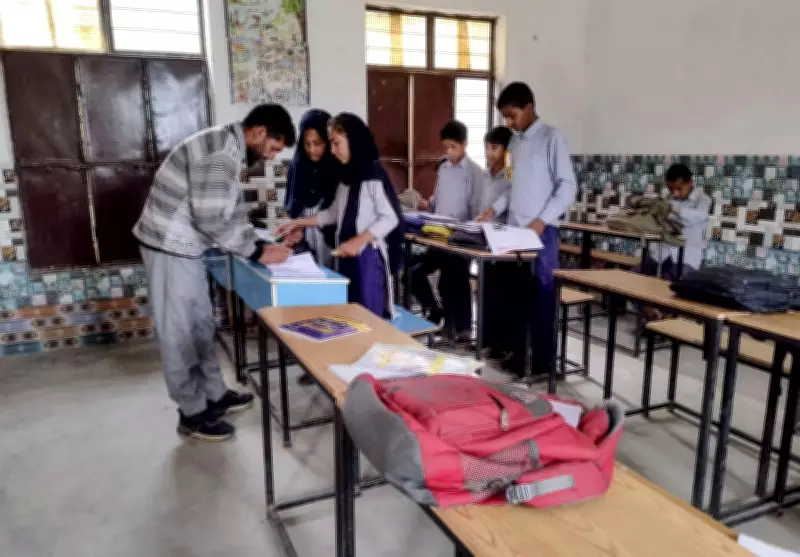
In a startling revelation to the state assembly, Jammu and Kashmir's Education Minister Sakina Itoo disclosed that over 3,000 government schools across the union territory have been operating with zero or fewer than ten students since 2022. This concerning data highlights a severe crisis in the public education system, raising questions about resource allocation and educational priorities.
Regional Distribution of Underpopulated Schools
According to the minister's written reply to BJP legislator RS Pathania, the total number of such schools stands at 3,192. The Jammu division accounts for 1,494 of these institutions, while the Kashmir region has 1,698. District-level analysis reveals Kathua in Jammu leads with 508 underpopulated schools, followed by Baramulla in Kashmir with 396. Interestingly, Srinagar records the lowest in the Valley with 90 such schools, while Poonch has the minimum in Jammu division at just 17.
Critical Infrastructure Deficiencies Exposed
The National Conference government further revealed alarming infrastructure gaps plaguing the education system. A staggering 2,698 schools lack boys' toilets, while 57 institutions have no facilities for girls. Additionally, 9,078 schools operate without boundary walls, and 10,896 schools have no playgrounds whatsoever. These deficiencies create an environment hardly conducive to quality education or student safety.

Political Reactions and Criticism
BJP legislator RS Pathania described the numbers as a "big expose," arguing they reflect diminishing public confidence in government schools. "If people are not enrolling their children in these schools, why are they being opened?" he questioned, suggesting these institutions primarily serve to accommodate teaching staff rather than educate students.
Former J&K education minister Naeem Akhtar of the PDP called the situation "serious," accusing the NC government of reducing education to an employment scheme for teachers while neglecting their fundamental duty. "Government's primary responsibility is human development. This data presents a dismal picture," Akhtar stated. "Students aren't absent; they're forced toward private schools due to inadequate facilities and poor teaching methods in government institutions."
Private Sector Perspective and Proposed Solutions
Baba Nazrul Islam, president of the Private Schools Association of Jammu and Kashmir, acknowledged the data indicates growing parental preference for private institutions, attributing this shift to superior infrastructure, greater accountability, and faster decision-making. However, he cautioned against viewing private schools as competitors, instead proposing them as "knowledge partners" in addressing the crisis.
"If the government agrees to collaborate with private schools, this issue can be effectively addressed," Islam suggested, emphasizing a cooperative approach rather than adversarial positioning. This perspective opens potential pathways for public-private partnerships to revitalize Jammu and Kashmir's struggling education sector.