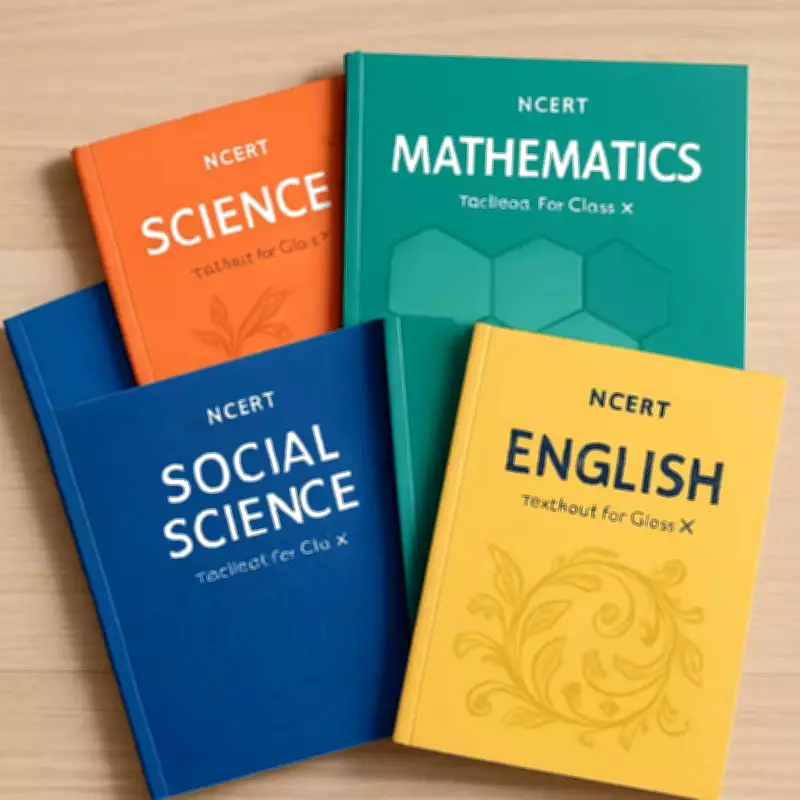
NCERT Launches Comprehensive Textbook Revisions for Secondary and Senior Secondary Levels
The National Council of Educational Research and Training (NCERT) is set to roll out extensively revised textbooks for Classes IX and XI, commencing from the current academic session. This initiative represents a significant step in modernizing India's educational framework.
Timeline and Availability of New Textbooks
According to an NCERT official, the Class IX textbooks are finalized and currently undergoing printing. They are scheduled for release by April 10-15 at the latest. Students entering Classes IX and XI in April will be the pioneers of this updated curriculum, while those in Classes X and XII will continue with the existing syllabus for one more year before transitioning in the next session.
Substantial Content Overhaul and Educational Focus
Education experts emphasize that the new curriculum involves a profound transformation, with approximately 60% of the content expected to change. The revision prioritizes a shift towards practical knowledge and skill-based education, moving away from traditional rote learning methods.

In subjects such as mathematics, topics previously reserved for higher grades, including Arithmetic Progression (AP) and Geometric Progression (GP), are now being introduced as early as Class IX. Additionally, a new integrated English textbook titled "Kaveri" will replace the older Beehive and Moments books. This reorganization aims to eliminate repetitive content and ensure a more logical and cohesive flow of concepts across different grade levels.
Alignment with National Education Policy 2020
The NCERT's move to revamp textbooks is in direct alignment with the guidelines set forth by the National Education Policy (NEP) 2020. The National Curriculum Framework for School Education (NCF-SE) 2023, developed by NCERT under the guidance of NEP 2020, outlines a 5+3+3+4 structure for children aged 3-18. This framework replaces the older system that had been in place since 1985, marking a pivotal shift in the country's pedagogical approach.
Phased Implementation and Current Challenges
The transition to the new curriculum is being implemented in a phased manner across various school levels. While changes for middle school stages, including Classes VI to VIII, have been ongoing for the past two years, this year signifies the beginning of Phase 1 for secondary and senior secondary levels.
Despite the new academic session starting on April 1, many schools are currently operating with older textbooks as the new NCERT books are still in the printing process. NCERT had previously issued a circular advising students and parents against purchasing old books due to the impending changes. In the interim, teachers are utilizing the digital syllabus available on the NCERT website to align their lessons with the new requirements, focusing on overlapping topics until the physical copies become available.
Broader Impact and Future Expectations
State education boards across India are anticipated to follow suit with similar updates, though many are awaiting the official release of the NCERT textbooks before revising their own localized syllabi. This shift is expected to necessitate extensive training for educators, who must adapt to new teaching methodologies and a reorganized subject structure.
As the 2026 academic year progresses, the focus remains on ensuring a smooth transition for millions of students navigating this modernized educational landscape, fostering a more dynamic and relevant learning environment.