UGC Caste Regulations: Why India's Narrow Approach to Caste Policy Fuels Backlash
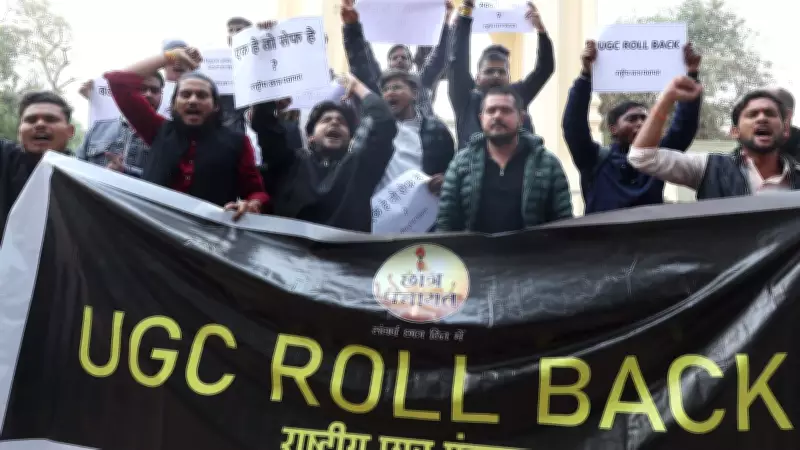
The widespread protests against the new University Grants Commission regulations have resulted in the Supreme Court temporarily halting their implementation. The court expressed concerns that these regulations might potentially "divide society", highlighting the deep-seated tensions surrounding caste-based interventions in India's educational system.
The Fundamental Question Unanswered
While public debate has extensively analyzed the specific provisions of the UGC regulations, a more critical question remains largely unexamined. Why do measures designed to correct historical caste-based inequities consistently face such severe opposition? Even after more than 75 years since the adoption of India's Constitution, why does society struggle to accept the necessity of such interventions?
The answer lies in how Indian society, supported by its socio-political institutions, continues to treat caste primarily as a relic of the past. We repeatedly encounter caste-related issues while simultaneously insisting that caste no longer significantly influences contemporary social structures.

The Limitations of Current Policy Approaches
The draft UGC regulations aimed to eradicate discrimination and promote equity and inclusion within higher education institutions. However, even within sections titled "Measures for the Promotion of Equity", the focus remained almost exclusively on discrimination rather than systemic privilege.
Students are required to submit undertakings not to discriminate and report discrimination instances, while institutions must implement guidelines protecting socio-economically disadvantaged groups. This approach frames caste as something affecting only disadvantaged students, with minimal engagement expected from advantaged-caste students beyond a basic commitment to "not discriminate".
This policy framework assumes neutrality as the default condition while treating discrimination as an unfortunate but contained aberration. As sociologist Satish Deshpande has highlighted in his writings on caste and castelessness, the privileges of advantaged castes often operate invisibly, allowing their ways of being to pass as "neutral" cultural norms.
The Need for Comprehensive Institutional Reform
Indian caste policy remains narrowly legalistic in its approach, focusing primarily on punishing atrocities, allocating reservations, and establishing grievance redressal mechanisms. While these measures are necessary, they fail to address how caste privilege continues to operate unnamed and how caste pride remains socially acceptable in many contexts.
Resistance to caste-based protections and equity measures like reservation reflects this continued institutional failure. Unless addressed comprehensively, even carefully framed symbolic shifts in power will continue to be perceived as attacks on the "general category" rather than necessary corrections to historical inequities.
Learning from Gender Policy Approaches
Valuable lessons can be drawn from how gender has been addressed in Indian policy frameworks. Alongside protective legislation, the Indian state has invested significantly in public sensitization about gender inequality, often collaborating with civil society organizations. This has helped normalize conversations about male privilege and structural disadvantage, leading to broader acknowledgment of women's disadvantage with resistance largely confined to marginal groups.
No comparable effort has been undertaken regarding caste awareness and education. If the Indian state is genuinely committed to addressing caste, it must confront it as a comprehensive institution requiring systemic reform rather than piecemeal legal adjustments.
Pathways Toward Meaningful Change
This requires substantial pedagogical reform that teaches caste, including caste privilege, as a lived social reality from basic schooling levels upward. Additionally, public campaigns must challenge the notion that dominant-caste norms represent simply neutral culture rather than expressions of historical privilege.

The protests against UGC regulations are not an isolated incident but rather the predictable outcome of long-neglected institutional responsibilities. As B.R. Ambedkar warned in Annihilation of Caste, political reform without corresponding social reform can never lead to lasting, meaningful change in India's complex social landscape.
Until India develops a more comprehensive approach to caste that addresses both discrimination and privilege, resistance to educational and social reforms will persist, undermining efforts to create genuinely equitable institutions.