Scaler School of Technology Pioneers New Model for Engineering Education in India
India produces approximately 1.6 million engineering graduates annually, yet a significant portion lack the practical skills required for immediate job readiness. Many enter software roles without understanding how to construct real products, integrate artificial intelligence into workflows, or manage production-grade systems. This disconnect between academic training and industry demands is a critical issue that Scaler School of Technology (SST) aims to resolve.
Addressing Career Uncertainty in an AI-Driven World
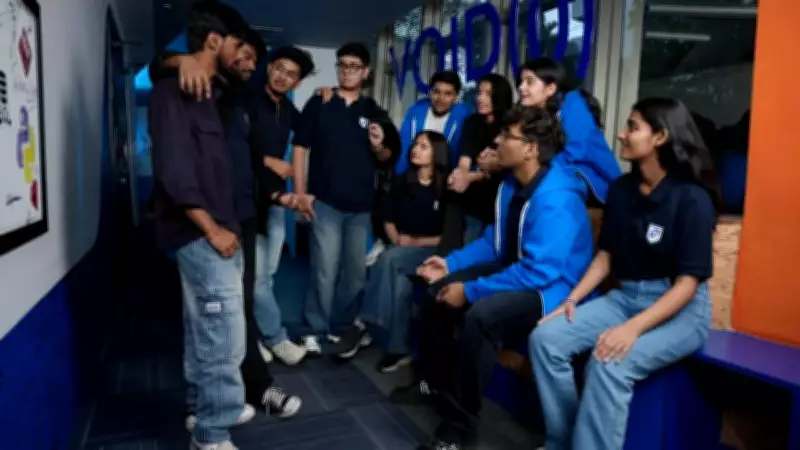
For students and parents, uncertainty surrounding software careers is escalating as AI automates tasks like code generation, debugging, and testing. A pressing question emerges: Will software engineers remain relevant in an AI-first environment? SST responds not with mere reassurance but through a curriculum overhauled to reflect contemporary technology development. Located in Bengaluru, SST diverges from traditional engineering colleges by emphasizing hands-on learning over lecture-based instruction and theoretical assignments.
Learning from Industry Leaders and Hands-On Experience
A cornerstone of SST's approach is direct mentorship from industry veterans who have built and scaled major technology firms. Students engage with founders, CXOs, and engineering leaders from organizations such as Meta, Google, Uber, and prominent AI labs, gaining insights into real product thinking, system design, and founder-first execution. This learning extends beyond classrooms into experimental environments like Scaler AI Labs, robotics setups, and product labs, where students work on projects involving large language model workflows, drone systems, and emerging interfaces like Apple Vision Pro.

"The engineering degree was built for a world where technology cycles moved slowly," stated Anshuman Singh, Dean of Scaler and former Tech Lead at Facebook Messenger. "Today, AI compresses tasks that once required teams and quarters into what individuals can accomplish in days. If software development has fundamentally transformed, education must adapt to train students for an industry that no longer exists in its previous form."
Structured Curriculum Focused on Real-World Application
For students and parents navigating post-12th Science career choices, SST offers clarity through a structured path: build tangible products, utilize real tools, and enter the industry with fluency in its operations. The four-year academic program is designed as follows:
- First Year: Students develop foundational products, including e-commerce platforms, AI-powered image editors, and portfolio-ready web applications.
- Second Year: The curriculum advances to complex systems such as Google Maps-style routing engines, full-stack social platforms, and machine learning analytics tools.
- Third Year: Focus shifts to AI systems, LLMOps, operating systems, and scalable product engineering.
- Fourth Year: Students enter founder mode, required to build a technology startup as part of the curriculum, supported by seed capital, investor demo days, and access to the Scaler Innovation Lab (SIL).
Proven Outcomes and Growing Student Preference
This model is yielding tangible results. According to SST, nearly 96% of eligible students from founding cohorts have secured at least one internship offer, with the highest monthly stipend exceeding Rs 2 lakh. Graduates have landed roles at companies like Apple, Adobe, Swiggy, Zomato, and Tata 1mg, while others are already launching their own startups. Student decision-making reflects confidence in SST's approach, with approximately 187 students opting for SST over seats at top engineering colleges for three consecutive years, including those who left traditional B.Tech programs to join SST's builder-led ecosystem.

Implications for Indian Higher Education
SST's success raises a broader question for Indian higher education: Can conventional engineering degrees evolve rapidly enough for an AI-led economy? As service-oriented jobs become automated and product engineering centers on AI, institutions adhering to outdated teaching methods and slow industry connections may struggle to remain relevant. SST operates on the principle that the gap between learning, building, and launching must be eliminated. With a highly selective acceptance rate of about 3.3%, SST is emerging as a preferred destination for students aspiring to thrive in an AI-native software economy.
In the AI era, the future of engineering education may increasingly favor innovative models like SST over legacy formats, emphasizing practical skills and industry alignment.