Astrophysicist Priyamvada Natarajan on AI, US Funding, and Cosmic Mysteries
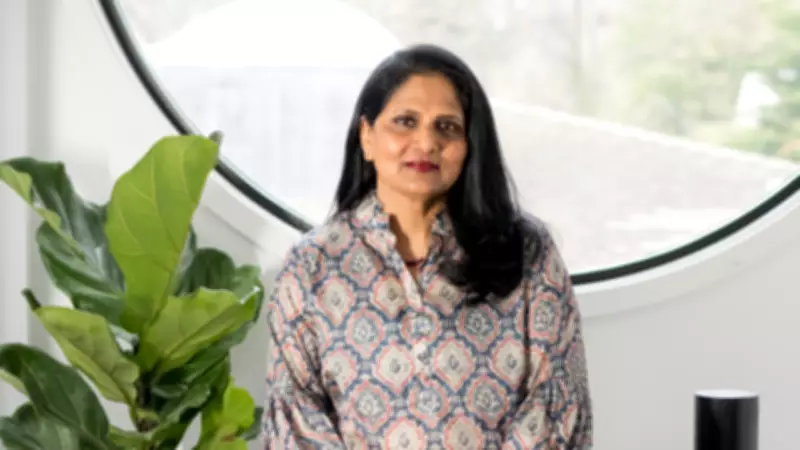
Priyamvada (Priya) Natarajan, a renowned astrophysicist and the inaugural Joseph S. and Sophia S. Fruton Professor of Astronomy and Physics at Yale University, has made groundbreaking contributions to our understanding of dark matter and supermassive black holes. She also serves as an external Principal Investigator at Harvard’s Black Hole Initiative. Her accolades include the 2022 Liberty Science Center Genius Award, the prestigious 2025 Dannie Heineman Prize in Astrophysics, and a spot on the 2024 TIME100 list of the world’s most influential people. A key advisor to NASA, the National Science Foundation (NSF), and the Department of Energy (DoE), Professor Natarajan recently shared insights during a visit to Bengaluru for the Indiaspora Forum, speaking with journalist Ishani Duttagupta about her ties to India, AI's transformative impact on astrophysics, and the future of cosmic exploration.
Challenges for Indian Students in US Science Education
Professor Natarajan expressed deep concern over the increasing strain on US science and technology research funding systems. She highlighted that federal funding for basic sciences has long supported graduate students and post-doal researchers, fostering a unique ecosystem of mentoring and expertise-building at well-resourced universities. The flow of international students was very critical to keeping this kind of engine going, she noted, warning that as funding shrinks, the US may lose its status as the premier destination for the world’s brightest young minds.
Additionally, she pointed to a fundamental transformation in the research landscape driven by AI. While the initial 'LLM revolution' in AI catered to commercial use cases, it shifted the research fulcrum toward the corporate sector due to massive computational requirements. However, as the focus pivots toward 'AI for science'—where short-term monetary returns may not be clear—the intellectual work may recenter into universities. We are on the precipice of a fundamental shift in scientific method, with AI, she said, emphasizing that achieving breakthroughs in 'good science' remains paramount despite uncertainties.

Paradigm Shifts in Astrophysics
Astrophysics, described as the original 'big data' science, has evolved from physical photographic plates in the 1920s and 30s to massive digitized datasets today. Professor Natarajan explained that discovery in the field is technology-intensive, relying on massive computing and advanced cameras. New instruments don’t just provide better views—they spark radical new ideas, she stated.
Over the last five years, an amazing convergence of ideas, instruments, and computational power has opened up our understanding of the cosmos in previously unimagined ways. Her work centers on big cosmic questions, such as why we are here and how the material universe has unfolded. My mind is driven by a detective-like curiosity in trying to figure out with clues, she shared, noting that astrophysicists often infer from indirect data. In this AI age, the laws of physics provide a rigorous order to guide and validate machine learning, ensuring computational leaps remain grounded in universal truth.
Journey from India to Global Recognition
Reflecting on her milestones, Professor Natarajan expressed gratitude for opportunities beyond her control. Growing up in Delhi in a home full of books, with parents who were academics, she was encouraged to pursue her curiosity. I had the permission to dream and soar, she recalled, benefiting from an intellectual 'salon' where scientists, artists, and writers converged.
Serendipitous encounters with mentors led her to the United States for undergraduate studies, a rare move at the time. She chose MIT due to its undergraduate research opportunities program, which opened doors to a different orbit. Personal qualities like mental discipline, focus, and ambition driven by childlike joy in problem-solving have sustained her career. For me, the central challenge is how to remain a lifelong learner without letting the scale of what I don’t know intimidate me, she said.

Her journey included transformative years at the University of Cambridge, where she was elected a Fellow of Trinity College in 1997—the first woman in astrophysics to achieve that distinction. This interdisciplinary environment led to a faculty position at Yale University, secured even before defending her PhD thesis. She cherishes proposing new ideas and seeing them validated by observational data, a dream for any scientist.
Balancing Mentorship and Research
As chair of her department, Professor Natarajan finds balancing mentorship and research roles tricky and taxing. It requires intention, deliberate planning, and prioritizing. I have learnt with time how to do this well, but it’s still very challenging, she admitted. An advantage has been the absence of domestic demands, allowing her to live a life of the mind.
Connections to India
Personally, Professor Natarajan maintains strong ties to India, with her mother and brothers there, and she identifies with her middle-class Tamil Brahmin roots. I carry all of those values, she said, emphasizing the power of intergenerational connections. Professionally, she serves on the advisory board for science at Ashoka University and engages with young aspiring students through public talks. She noted a positive transformation in India’s scientific research environment from scarcity to abundance, advocating for more investment in fundamental basic sciences research.