India's Youth: Millennials and Gen Z Face Different Fears About Work and Future
People often talk about India's youth as one united group. They describe them as ambitious, energetic, and ready to build the country's future. However, this broad picture hides a more complicated truth. The younger generations in India are not a single force. They experience life in very different ways.
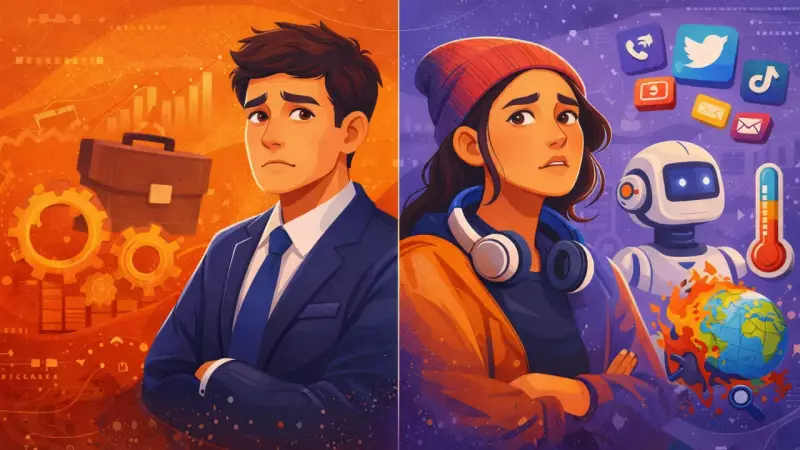
Gen Z and millennials are frequently lumped together as "young India." Yet they are becoming adults under completely separate conditions. The political climate, economic situation, and technology they grew up with are not the same. These factors create unique fears about careers, stability, and personal security.
Two Generations, Two Different Worlds
Millennials and Gen Z together make up almost half of India's population. That is over 600 million people. But they entered adulthood in entirely separate eras. Their ideas about success and safety are shaped by the times they lived through.

Millennials typically grew up before social media dominated life. Their childhoods featured limited internet access and slower information flow. They believed in a straightforward path. Study hard, earn a degree, secure a stable job, and then build a family. Economic liberalisation gave them hope for steady progress.
Gen Z has never known a world without smartphones and constant online connection. Their lives are under constant digital scrutiny. Every achievement is visible. Every setback feels magnified. They started their adult lives during a pandemic. They face global layoffs, climate crises, and the rapid rise of artificial intelligence.
For millennials, instability feels like a broken promise. For Gen Z, it feels like the normal state of affairs.
Millennials Fear Losing What They Built
For many millennials, fear comes after years of effort. They followed the traditional roadmap. They pursued higher education, started careers early, and took on financial responsibilities. Now they confront rising costs, fragile job security, and shrinking savings.
Employment anxiety is central. While India's overall unemployment rate may seem stable, joblessness among educated urban youth remains a serious concern. Millennials worry less about finding a job and more about keeping it long enough to build a life.
"I earn more than my parents did at my age, but I save less," said Anjali Sharma, a 32-year-old marketing executive in Delhi. "One medical emergency or job loss would derail everything."
Soaring rents in major cities, loan payments, healthcare expenses, and education costs make financial stability fragile. Owning a home, once a key adult milestone, now seems out of reach. Many are postponing marriage, parenthood, and long-term investments.
Millennial women face additional pressure. Their economic instability clashes with rigid social expectations about marriage and family timelines.
The Quiet Struggle with Burnout
Mental health discussions are more open now, but millennials often describe a silent battle marked by guilt. Many feel they cannot admit to feeling overwhelmed because their lives look stable on paper.
"There's a constant voice in your head telling you to be grateful," said a 36-year-old HR professional in Gurugram. "You have a job, a family, responsibilities - so you push through. But pushing through for years comes at a cost."
Unlike Gen Z, which frequently talks about anxiety, millennials tend to internalise their distress. They delay seeking help until burnout becomes unavoidable.
Many millennials talk about exhaustion without payoff. They have worked continuously for over a decade yet still lack a sense of security or fulfilment. They fear being stuck in the middle of their careers. They have too much invested to start over and too little security to slow down.
"I feel tired all the time, not physically but mentally," said a 35-year-old tech manager in Bengaluru. "I've switched jobs, learned new skills, moved cities, taken pay cuts and raises – and still feel one bad quarter away from everything collapsing. Starting again feels impossible at this age."

This is often called sunk-cost anxiety. The idea that years spent on a career path cannot be abandoned, even when growth has stalled. Millennials feel trapped between ambition and duty, unable to take the risks they might have embraced earlier.
The Sandwich Generation Squeeze
Expectations add more pressure. Millennials are increasingly part of the "sandwich generation." They support ageing parents while raising children or planning their own families. Healthcare costs, school fees, and elder care burden their finances and emotions.
"My parents depend on me now, the way I depended on them once," said a millennial lawyer. "I can't afford to experiment with my career anymore. Stability matters more than passion, even if it means living with dissatisfaction."
Gen Z Fears Never Finding Stability
If millennials fear instability after effort, Gen Z fears never reaching stability at all. Jobs exist, but they feel temporary. Career paths are fragmented. Contract work, automation, and AI tools have changed expectations.
"Earlier, you worried about placements. Now you worry about layoffs every quarter," said Rohan Mehta, a 27-year-old software developer in Pune.
Many Gen Z professionals describe being in constant survival mode.
"As a Gen Z Indian, I fear a future where people are stuck in mediocrity. Where jobs exist but do not grow, skills plateau early, and effort leads to survival, not progress," said Srishti Singh, who works at an advertising agency in Mumbai.
"This is a loop, no solution. I had to join the rat race," added Rhea Duara, a media executive in Delhi. She described how career uncertainty merges with mental exhaustion.
She said, "Career. The fact that I jumped into the job life so quickly because everyone my age was doing so but I completely forgot about continuing my studies. No MA… we jump into jobs quickly only to realize we don't have the maturity to deal with stuff, stuff like office politics."
For Gen Z, adulthood feels rushed, unstructured, and harsh.
Gender, Time, and Pressure
Kritika Singh, 25, describes the pressure many in her generation feel. It is a mix of time constraints, preparation demands, and social expectations that make the future feel both urgent and uncertain.
Academics have always been her strength, but years of preparation without clear results are shaking her confidence.
"I'm already 25, people around me are getting jobs, they are travelling, and kind of I'm still preparing – and even clueless if whatever I'm preparing for, what if it does not work out for me. That's something terrifying and also squeezes my confidence."
Her concern goes beyond work. "And as I'm a girl I would not get that endless years for preparation, and then marriage and being dependent on someone is again very scary for me...for my individuality, for my identity, my self respect and all those dreams which I always had would remain unfulfilled."
For Kritika and many peers, the fear is not just about finding a career. It is about carving out independence and keeping personal dreams alive in a world that constantly measures time, age, and milestones.
Shared Anxieties Across Generations
Despite their differences, several fears connect both millennials and Gen Z.
Technology and Obsolescence: For millennials, technology represents the threat of becoming outdated. As automation and AI reshape workplaces, many fear their hard-earned skills may lose value faster than they can adapt.
"You keep upskilling because you're scared of being replaced by someone younger or by software," said a 34-year-old data analyst in Pune. "It's exhausting to constantly chase relevance."
Gen Z also worries about AI taking jobs, especially in creative fields. Komal Verma, a Gen Z creative professional, said, "Another thing I fear a lot is that AI will eat my job, especially in the creative field."
Mental Health Under Pressure: Mental health is a major concern for both groups. Academic pressure, workplace toxicity, social media comparison, and future uncertainty contribute to rising anxiety and depression. Nearly one in seven Indians lives with a mental health disorder, with young adults among the most affected.
Chetan Chowdhery, a final year law student in Delhi, lives in constant fear of disappointing his parents. "My parents will have expectations from me, 23/24 years of hard work building a reputation that is the one from which you can't even expect to get one thing right, so that I won't disappoint them…" he said.
Economic Inequality: Both generations see growing economic disparity as a serious issue. "Then there is the economy. It has become so thrash, the disparity I see just eats me everyday and its just going to increase in the upcoming years," Komal Verma noted.
Climate Anxiety: Extreme heat, floods, pollution, and water shortages are shaping daily life for young Indians. "Climate change affects where you can live and what work you can do," said a 29-year-old urban planner in Delhi.
Geopolitical Uncertainty: Global conflicts and shifting alliances filter into everyday concerns. From energy prices to job markets, young Indians worry about how international disruptions could affect their lives.
"There's a sense that global shocks don't stay global anymore," said a 35-year old law manager at a government bank in Meerut.
The Larger Picture
Together, these fears reveal a generation that is informed and ambitious, yet deeply cautious. Millennials fear losing stability after years of investment. Gen Z fears never attaining it at all.
Both continue to adapt and work hard. But they now understand that effort does not guarantee security. The question facing India's youth is no longer just about opportunity. It is about sustainability. Can ambition coexist with dignity? Can growth happen without burnout? Will the future reward persistence, or merely demand survival?