Governor Advocates for Universities as Architects of Indigenous AI and Quantum Technologies
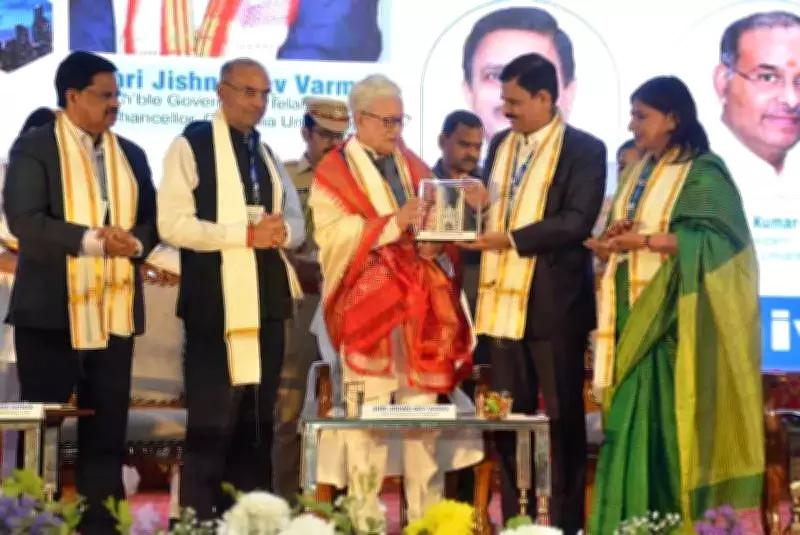
In a significant address at the Central Zone Vice Chancellors' Meet 2025–26, Governor Jishnu Dev Varma highlighted the critical intersection of artificial intelligence (AI) and quantum technology, describing it as both a scientific milestone and a pedagogical necessity. The event, inaugurated on Thursday at Osmania University in Hyderabad, brought together over 100 vice chancellors from six states to discuss the future of higher education in the face of rapid technological advancements.
Transition from Consumers to Architects of Technology
Governor Varma stressed that higher education institutions must evolve beyond merely consuming technology to actively designing and developing indigenous AI solutions. He emphasized that these innovations should be deeply rooted in Indian ethics and values, ensuring they align with the nation's cultural and constitutional principles. "Our universities must transition from being consumers of technology to becoming the architects of indigenous AI solutions that reflect Indian ethics and values," he stated, underscoring the need for a proactive approach in academia.
Impact on Governance, Research, and Learning Systems
The governor further elaborated on the profound influence that AI and quantum technologies are expected to have in the coming decades. He pointed out that these advancements will significantly shape governance structures, research methodologies, and learning systems across the country. Emphasizing ethical responsibility, Varma noted that all innovation must be guided by inclusivity and constitutional values to ensure equitable benefits for society.

Conference Details and Collaborative Efforts
The two-day meet, organized in collaboration with the Association of Indian Universities (AIU), focused on the theme "Creating AI- and Quantum-Enabled Higher Educational Institutions." Participants included vice chancellors from Chhattisgarh, Madhya Pradesh, Maharashtra, Odisha, Telangana, and Uttar Pradesh, fostering a collaborative environment for discussing curriculum reforms, governance models, and indigenous research initiatives.
Academic Leaders Call for Institutional Capacity Building
Professor Kumar Molugaram, Vice-Chancellor of Osmania University, urged academic leaders to move beyond traditional instructional models and build institutional capacity in emerging technologies. He highlighted the university's Centre of Excellence in Artificial Intelligence and Machine Learning (CoE–AIML) as a key hub for AI applications. "The Centre will support collaborative research and serve as a resource platform for government and public sector initiatives, focusing on areas such as smart cities, healthcare systems, transportation, and infrastructure planning," he added.
Strengthening Digital Infrastructure and Curriculum Reforms
Professor V Balakishta Reddy, Chairman of the Telangana Council of Higher Education, emphasized the state's ongoing efforts to strengthen digital infrastructure across universities. The conference deliberations centered on:
- Curriculum reforms to integrate AI and quantum technologies
- Governance models that promote innovation and accountability
- Indigenous research initiatives to reduce dependency on foreign technologies
- Responsible technology use to address ethical and societal concerns
A special issue of University News was also released during the session, marking a step towards disseminating knowledge and best practices in higher education. This event underscores a collective push towards making Indian universities global leaders in technological innovation, with a firm commitment to ethical and value-driven development.