Galgotias University Faces Intense Criticism Over Robot Showcase at AI Summit
Galgotias University is currently embroiled in a significant controversy following the circulation of a viral video from the India AI Impact Summit 2026. The footage depicts the university showcasing a robotic dog manufactured in China, which was presented as a product developed by its Centre of Excellence. This incident has triggered widespread backlash and raised serious questions about the institution's transparency and academic practices.
University's Response and Viral Video Details
In response to the growing outcry, Galgotias University has issued a clarification stating that it never explicitly claimed to have developed the robot itself. However, this defense has been undermined by another viral video featuring Professor Neha Singh from the university. In this video, she introduces the robot as 'Orion,' further fueling perceptions that the university was misrepresenting the technology as its own creation.
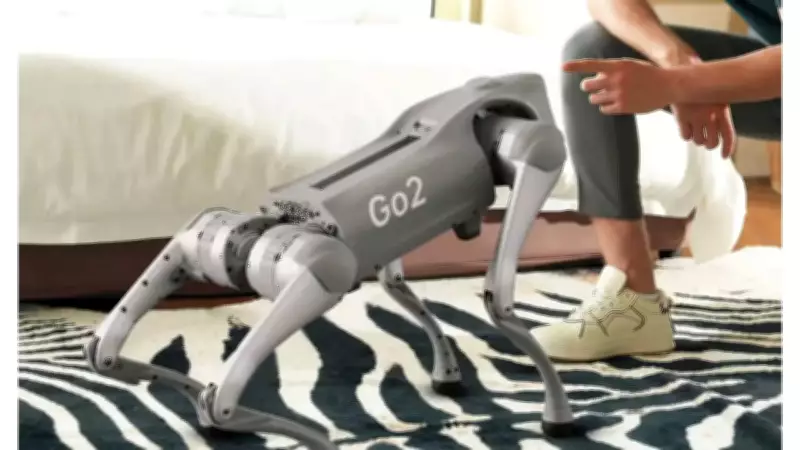
The robot in question is identified as the Unitree Go 2, a commercially available quadruped robot that retails for approximately Rs 3 lakhs in Indian currency. This revelation has intensified scrutiny, as it highlights a potential disconnect between the university's public presentations and the actual origins of the technology being displayed.

In-Depth Look at the Unitree Go2 Robot
The Unitree Go2 represents an advanced iteration of intelligent bionic quadruped robots, engineered with a strong emphasis on mobility, perception, and interactive capabilities. Key specifications and features of this robot include:
- Super Recognition System: This system enables precise environmental awareness and navigation, allowing the robot to operate effectively in varied settings.
- 4D LiDAR L2 Sensor: Utilized for detecting surroundings, this sensor facilitates real-time capture and mapping of three-dimensional environments with high accuracy.
- Performance Metrics: Laboratory tests indicate a maximum running speed of around 5 metres per second, with joints delivering a peak torque of approximately 45 newton metres to ensure stable and agile movements.
- Connectivity Options: The robot supports Wi-Fi 6, Bluetooth, and 4G, enabling remote control, software updates, and interaction through connected devices.
- Battery Life: Depending on usage patterns, the Unitree Go2 offers an estimated battery life ranging from two to four hours under real-world conditions.
- Intelligent Side-follow System (ISS 2.0): This feature allows the robot to smoothly follow users during movement, enhancing its utility in various applications.
- Mobile App Integration: A dedicated mobile app provides users with control over functions and engagement with the robot's features, making it user-friendly and accessible.
Additional notable features of the Unitree Go2 include an intercom microphone, self-retracing strap, tracking module, front lamp, front camera, smart battery options with capacities of 8,000mAh and 15,000mAh, a speaker for music playback, foot force sensors, and 12 aluminium alloy precision joint motors. These components collectively contribute to its advanced functionality and appeal in the robotics market.
Broader Implications and Industry Reactions
This incident has sparked a broader discussion within the academic and technology communities about the ethical presentation of commercial products in educational settings. Critics argue that such misrepresentations can undermine public trust in universities and their research outputs. Meanwhile, supporters of Galgotias University point to the clarification issued, suggesting that the presentation may have been misinterpreted.
As the controversy continues to unfold, stakeholders are calling for greater accountability and clearer communication from institutions when showcasing external technologies. The fallout from this event may influence how universities approach future demonstrations at high-profile events like the India AI Impact Summit, emphasizing the need for integrity in academic and technological displays.