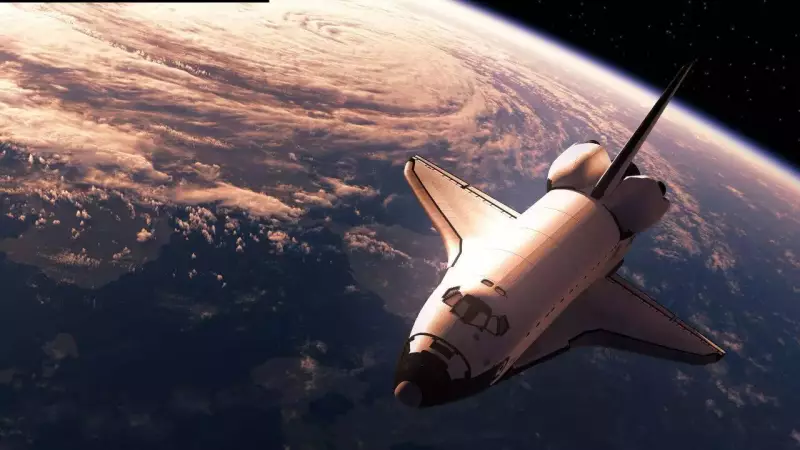
Sierra Space Alters Dream Chaser Flight Plan with NASA Ahead of 2026 Launch
After years of development largely conducted behind the scenes, with schedules experiencing multiple delays and plans undergoing continuous adjustments, Sierra Space has announced a significant strategic pivot for its Dream Chaser spaceplane. This week, the company unveiled a revised pathway for the vehicle's inaugural flight, marking a departure from its original mission profile.
From Cargo Carrier to Demonstration Vehicle
Instead of commencing operations with a cargo delivery mission to the International Space Station (ISS), Dream Chaser will now undertake its first journey as a free-flying demonstration spacecraft. This mission is meticulously designed to gather crucial orbital data, rigorously test onboard systems, and validate the vehicle's technological capabilities in the space environment. The decision reflects evolving priorities concerning launch timing, emerging national security interests, and the constrained operational timeline remaining for the ISS.
The strategic shift was coordinated and approved by NASA, effectively de-emphasizing immediate station resupply obligations while ensuring the program maintains momentum. Presently, the focus is squarely on achieving flight readiness and demonstrating the spacecraft's core functionalities once it achieves orbit, rather than on specific destination objectives.

Navigating Certification Challenges and Gaining Flexibility
The revised plan affords Sierra Space greater operational flexibility. Certification processes required for visiting the ISS have proven more protracted than initially anticipated, influenced by design modifications and complexities associated with finalizing the propulsion system. This system, which transitions between different thrust modes utilizing hydrogen peroxide and a blended fuel, has introduced additional layers of complexity into the testing regimen.
As delays accumulated, the original cargo mission schedule began to appear increasingly constrained. By opting for an initial demonstration flight, the company can decouple early flight performance data from the stringent requirements associated with ISS docking. This approach also alleviates pressure from fixed ISS timelines and allows Dream Chaser to launch as soon as a suitable launch vehicle becomes available.
Objectives of the Free-Flying Demonstration Mission
The demonstration flight is engineered to be a substantive, practical test rather than a merely symbolic gesture. Sierra Space has outlined that the mission will evaluate autonomous operational capabilities, thermal protection systems, guidance and navigation performance, and precision runway landing proficiency. The data acquired will be shared with NASA and will serve as a foundational resource for planning and supporting future missions.
Although the spacecraft will not dock with the ISS during this flight, it is expected to validate many of the critical systems essential for subsequent cargo delivery operations. Industry observers note that a free-flight mission circumvents some of the most rigorous certification hurdles while still providing conclusive evidence of the vehicle's intended orbital performance.
Aligning with National Security and Broader Space Policy
Sierra Space has increasingly positioned Dream Chaser as a national strategic asset. The company emphasizes that an autonomous, reusable spaceplane with conventional runway landing capabilities aligns well with evolving defense and security requirements. Potential applications frequently cited include hypersonic research, rapid payload return to Earth, and responsive launch concepts. Separating the inaugural flight from NASA's station logistics simplifies positioning Dream Chaser for these dual-use roles.
This strategic realignment mirrors wider trends in United States space policy, where commercial systems are increasingly expected to support both civilian scientific endeavors and national security missions without being exclusively tied to a single program or destination.

ISS Timeline and Future Cargo Ambitions
NASA's current plan involves retiring the International Space Station around 2030, followed by a controlled de-orbit and re-entry. This timeline leaves a limited window to schedule multiple new cargo missions. Dream Chaser was originally contracted to perform several ISS resupply flights, but developmental delays had cast doubt on how many missions could be realistically executed before the station's retirement.
The new free-flight strategy does not abandon these cargo ambitions but pragmatically acknowledges the shrinking operational window. Attention is also shifting toward future commercial destinations in low Earth orbit, which may demand different mission timelines and spacecraft capabilities.
The Path to Flight: Targeting 2026
Sierra Space is now targeting a launch in the latter part of 2026. This timeframe is contingent on the availability of a suitable launch vehicle rather than being a rigid calendar commitment. The company stresses that achieving first-flight readiness is the paramount priority, not merely expediency. Progress hinges on successful testing milestones and seamless coordination with various partners.
For now, Dream Chaser remains on the ground, progressing methodically through its final verification and validation checks. The forthcoming steps are incremental, technically focused, and conducted away from the public spotlight. The broader, long-term role this innovative spaceplane might fulfill in the new space economy will likely only come into sharper focus after it successfully completes its first orbital mission and returns to land on a runway, as its design intends.