As the UPSC Civil Services Preliminary Examination 2026 approaches, consistent revision of core subjects is paramount. The Indian Express's UPSC Essentials initiative provides a crucial tool for aspirants: subject-wise quizzes designed to test knowledge and reinforce static syllabus topics. This week's focus on Science and Technology covers a range of high-yield areas, from space technology to advanced battery chemistry.
Decoding the Small Satellite Launch Vehicle (SSLV)
A key question in the quiz tests factual clarity on ISRO's launch vehicles, specifically the Small Satellite Launch Vehicle (SSLV). This topic is highly relevant due to ongoing space sector reforms and the growing small satellite market.
The SSLV is a three-stage all-solid launch vehicle, not a two-stage one as a common misconception suggests. It also incorporates a liquid propulsion-based Velocity Trimming Module (VTM) as a terminal stage for precise satellite placement. The primary aim of the SSLV is to offer a low-cost launch solution with a short turnaround time, catering to the demand for launching satellites weighing up to 500 kg. Importantly, the SSLV is designed for Low Earth Orbit (LEO) and Sun-Synchronous Polar Orbits and cannot launch payloads to Geosynchronous Orbit (GSO).

This distinction is vital for Prelims. ISRO recently conducted a successful static test of an improved version of the SSLV's third stage on December 30, 2025, at the Satish Dhawan Space Centre in Sriharikota, keeping the technology in current affairs.
The Science Behind Battery Degradation
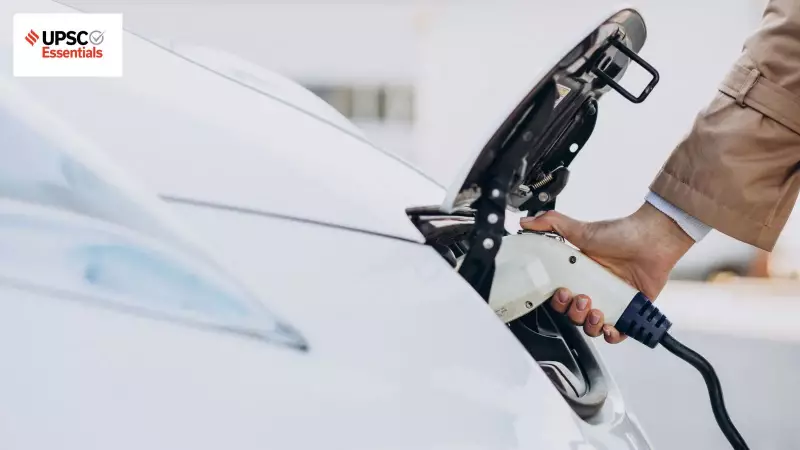
Another significant area covered is energy storage technology, specifically lithium-ion battery cathodes. The quiz clarifies the difference between polycrystalline and single-crystal cathodes, a nuanced topic with implications for electric vehicles and renewable energy storage.
Traditional lithium-ion batteries commonly use polycrystalline nickel-rich cathode materials. These cathodes are composed of numerous small crystal grains. During charge-discharge cycles, these grains expand and contract, causing stress at their boundaries. Over time, this leads to cracking, electrolyte seepage, and eventual capacity loss. The degradation in polycrystals primarily occurs between the grain boundaries.
To solve this, researchers developed single-crystal cathodes, which lack these internal boundaries. However, they face a different challenge: degradation can happen inside the crystal itself due to uneven chemical reactions. Understanding this core scientific principle is essential for questions on clean energy transitions.
Botanical Oddities and Technological Applications
The quiz also ventures into diverse sub-themes. It defines a 'mycoheterotroph' as a plant that obtains nutrients from fungi instead of performing photosynthesis. An example is the rare fairy lantern plant discovered in Malaysia. This connects static biology with current discoveries in biodiversity.
On the applied side, a question from UPSC 2025 is revisited, asking about substances used in cloud seeding to combat air pollution. The correct answer is silver iodide and potassium iodide, highlighting a direct technological intervention for environmental issues.
Finally, the quiz covers fundamentals of cybersecurity by testing the understanding of random numbers. It correctly pairs randomly-generated numbers as the foundation of modern encryption and pseudorandom numbers as those generated by algorithms. This underscores the importance of digital security concepts in the syllabus.
Regularly attempting such curated quizzes helps aspirants identify weak areas, reinforce factual accuracy, and build the confidence needed to tackle the unpredictable nature of the UPSC Prelims. Integrating current developments, like the recent SSLV test, with static concepts is the key to mastering the Science and Technology segment.