As UPSC CSE Prelims 2026 approaches, aspirants must regularly assess their preparation through targeted quizzes. The latest Environment and Geography quiz covers crucial topics from marine conservation to atmospheric science, providing essential revision material for serious candidates.
Sea Cow Conservation Status Clarified
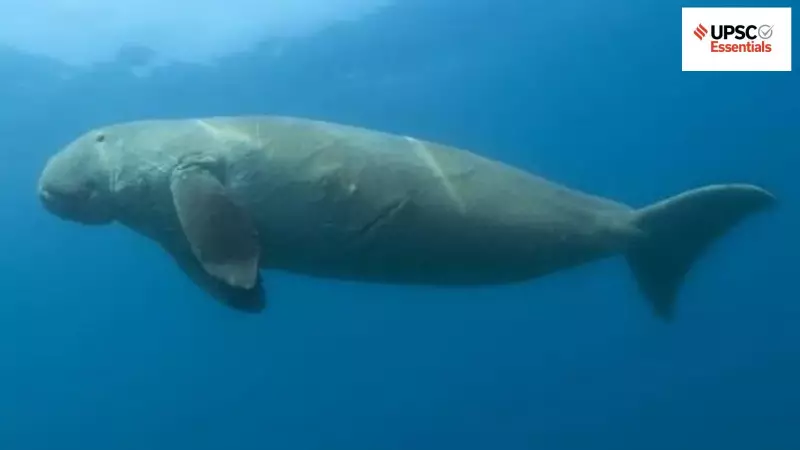
The recent IUCN Conservation Congress in Abu Dhabi highlighted growing concerns about dugong populations in Indian waters. Commonly known as sea cows, these gentle marine mammals face significant threats despite legal protections.
Only two of the four statements about sea cows are correct, according to the quiz explanation. While dugongs are indeed called sea cows and primarily inhabit the Gulf of Mannar-Palk Bay region, they are classified as Vulnerable rather than Critically Endangered by IUCN. Furthermore, they receive Schedule I protection under India's Wildlife (Protection) Act, 1972, not Schedule II as incorrectly stated.

Dugongs, scientifically named Dugong dugon, are fascinating marine mammals that can grow up to 10 feet long and weigh approximately 420 kilograms. Their exclusively herbivorous diet of seagrass earned them the 'sea cow' nickname, and their gentle nature supposedly inspired ancient mermaid legends.
Migratory Patterns and Salt Lake Ecology
The spectacular seasonal migration of flamingos to Rajasthan's Sambhar Lake demonstrates the importance of India's wetland ecosystems. Both statements about this unique habitat proved correct in the quiz.
Flamingos visit Sambhar Lake as part of their annual migration along the Central Asian Flyway, traveling from Africa, the Middle East, and Central Asia between October and March. The lake's saline waters provide ideal breeding and feeding conditions during their long journey.
Sambhar Salt Lake holds the distinction of being India's largest inland salt lake, located in Jaipur district, Rajasthan. The annual pink blush created by thousands of migratory flamingos creates a breathtaking natural spectacle that highlights the ecological significance of this region.
Ozone Layer Recovery Progress
Recent NOAA-NASA analysis revealed encouraging news about atmospheric protection. The Antarctic ozone hole measured as the fifth-smallest since 1992, confirming the positive impact of international environmental agreements.
Only one of the three ozone layer statements is correct. The protective ozone layer resides in the stratosphere at altitudes of 9-22 miles, not the mesosphere as incorrectly positioned. While it确实 shields humans from harmful UVB radiation, the Montreal Protocol—not the Kyoto Protocol—governs the phase-out of ozone-depleting substances.
The assessment predicts complete ozone layer recovery by the century's end, a promising outcome resulting from global commitment to the Montreal Protocol ratified by all UN member states. This demonstrates how international cooperation can effectively address environmental challenges.
Wildlife Tourism and Volcanic Impacts
Recent developments at Rajaji Tiger Reserve (RTR) in Uttarakhand mark a significant moment for wildlife tourism. After a seven-year pause, the reserve has resumed elephant safaris using two female elephants named Radha and Rangeeli from the Chilla Elephant Camp.
Visitors can now observe elephant behavior closely while spotting diverse wildlife including chital, sambar, peacocks, golden jackals, tigers, leopards, hyenas, wild elephants, and various migratory bird species. This initiative enhances ecotourism opportunities while promoting wildlife conservation awareness.
The recent eruption of Hayli Gubbi volcano in Ethiopia's Afar region created unexpected travel disruptions. Ash plumes reaching 14 kilometers high spread across the Red Sea toward Yemen and Oman, affecting flight operations in Northwest India and prompting airlines to implement precautionary safety measures.
These diverse topics underscore the interdisciplinary nature of UPSC preparation, where candidates must master everything from local conservation efforts to global environmental phenomena and their interconnected impacts.