CBSE Class 10 Mathematics Exam 2026: Students Voice Concerns Over Lengthy Paper
The Central Board of Secondary Education (CBSE) conducted the Class 10 Mathematics examination nationwide on Tuesday, February 17, 2026. This crucial board exam, which often carries significant weight in determining academic trajectories, left lakhs of students across India grappling with more than just complex problems. Many emerged from examination centers expressing deep concern about the paper's length and difficulty level, adding to the inherent pressure of this pivotal subject.
Student Reactions Highlight Anxiety and Difficulty
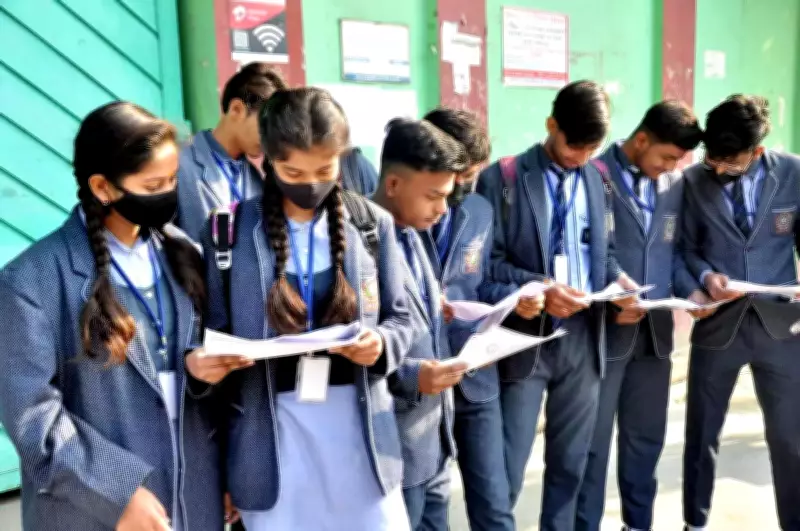
Immediate feedback from students outside various examination centers painted a picture of heightened stress. Abhhisek Sen, a Class 10 student, shared his experience with TOI, stating, "The paper set 430/2/2 was extremely lengthy and also difficult, especially when it is a Basic paper. CBSE should shed its ego and reconduct the exam and this time must set the difficulty level equivalent to basic level."
Another student from Mumbai echoed similar sentiments, telling TOI, "Section E was difficult while the rest of the paper was moderate. Many students looked tense, and some were even crying after coming out of the exam hall." These reactions underscore the emotional toll that challenging board examinations can exact on young learners.

The New Two-Exam Structure: A Game-Changer for Academic Flexibility
However, unlike previous years, the 2026 batch operates under a revised examination framework that fundamentally alters the impact of a single difficult paper. Beginning with the 2025-26 academic session, CBSE has implemented a transformative two-exam system for Class 10. All students must appear for the first board examination, which serves as the primary assessment. This was the Mathematics paper conducted on February 17, 2026.
The Board will now conduct a second board examination within the same academic year, anticipated in May 2026. This innovative approach creates a structured opportunity for improvement and compartment attempts without requiring students to wait an entire year. Students who feel their Mathematics performance was suboptimal can opt to appear for the second examination to enhance their scores.
Improvement and Compartment Rules Under the New System
Under this new framework, improvement is permitted in up to three subjects, including Mathematics, Science, Social Science, and languages. The application process for the second examination will commence after the completion of the first exam cycle. Crucially, the second examination also functions as a compartment opportunity. Students who fail in one or two subjects in the initial exam can reappear under the compartment category, ensuring that a single academic setback does not automatically hinder progression to the next stage.
The Board has established clear eligibility boundaries. Students who miss or fail in three or more subjects in the first examination will be classified as "Essential Repeat" candidates. These individuals will not be eligible for the second exam and must reappear in the subsequent year's main board examinations.
The first examination accommodates fresh candidates, second-chance compartment candidates, essential repeat students from the previous year, and improvement category students. The second examination will be accessible to those seeking improvement in up to three subjects, students appearing for their first or third compartment attempt, candidates combining compartment and improvement, and those who passed with a replacement subject but wish to improve their original subject performance. The syllabus, examination pattern, and question format will remain consistent across both examinations.
Results Timeline and Academic Progression
Results for the first board examination are scheduled for declaration in April 2026, with the second examination results expected in June 2026. Students satisfied with their first attempt can proceed with Class 11 admissions using digitally accessible results via DigiLocker. Final marksheets and official certificates will be issued only after the conclusion of the second examination cycle.

For students who found the Mathematics paper lengthy or challenging, this new system provides a clearly defined pathway forward. While stress remains palpable, as evidenced by reactions from examination centers, the revised structure ensures that one paper does not irrevocably determine academic futures. The second board examination offers a tangible mechanism for performance reassessment within the same academic year, potentially alleviating some of the anxiety associated with high-stakes testing.