

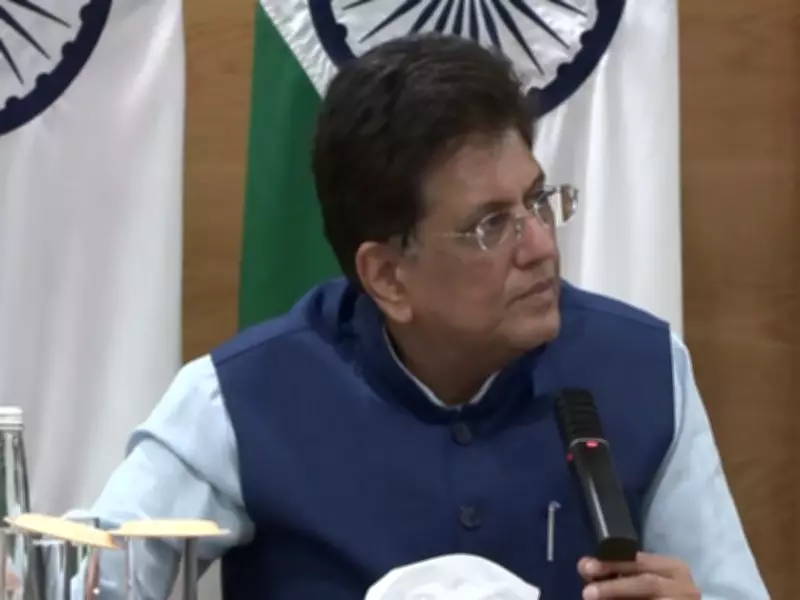
Union Commerce and Industry Minister Piyush Goyal stated on Thursday that the World Trade Organization (WTO) is currently not very effective as a forum. He made these remarks while addressing the closing session of the fifth Annual Meeting of the India Global Innovation Connect (IGIC). Despite this assessment, Goyal emphasized that global trade continues to function under the WTO framework and that India remains committed to expanding its trade and investment partnerships amid rising protectionist trends worldwide.
India's Position of Strength in Global Trade
Goyal noted that India now engages with other countries from a position of strength. He explained that while some negotiations may result in wins or losses, the overall outcome is a win-win for all nations working together. The minister acknowledged that many developed economies, including the European Union, the United States, and the United Kingdom, are taking measures to protect domestic industries such as steel. India also takes steps to safeguard its economy from unfair trading practices when necessary.
Expanding Trade Agreements and Investment Partnerships
Goyal highlighted India's strategic approach of expanding engagement with developed economies through trade agreements and investment partnerships. Over the past three to three-and-a-half years, India has signed nine free trade agreements (FTAs) covering 38 countries, many of which are significantly wealthier on a per-capita income basis. These partnerships are critical to India's goal of becoming a developed nation by 2047, when the country will mark 100 years of independence. Goyal projected that the Indian economy could reach approximately USD 30 trillion by that time, but stressed that such growth requires greater international engagement, higher quality standards, technological advancement, and stronger participation in global trade.

The minister pointed out that many of India's partner countries face challenges such as aging populations, rising production and research costs, and shortages of skilled talent. In contrast, India offers a young workforce, competitive costs, growing innovation capabilities, and a large domestic market of 1.4 billion aspirational consumers. These factors make India an attractive partner for mutually beneficial trade and investment relationships.
Efforts to Improve Ease of Doing Business
Goyal highlighted the government's focus on strengthening macroeconomic fundamentals, reducing regulatory burdens, simplifying taxation, and improving the ease of doing business. Large-scale investments in infrastructure, including airports, ports, expressways, and power systems, are also underway to make India a preferred investment destination. Referring to the Trade and Economic Partnership Agreement (TEPA) signed with the European Free Trade Association (EFTA) countries—Switzerland, Norway, Iceland, and Liechtenstein—Goyal noted that the grouping has committed to bringing USD 100 billion in investment into India over the next 15 years. Investment flows have already begun, and discussions between businesses are progressing actively.
Navigating Protectionist Trends
Despite rising protectionist measures in developed economies, Goyal expressed confidence in India's ability to navigate challenges through cooperation and dialogue. He reiterated that India engages with the world from a position of strength and can manage differences in a spirit of friendship. The minister concluded that deeper integration with the global economy will help create jobs, improve quality standards, attract capital, strengthen innovation, and enhance India's role in international trade.






