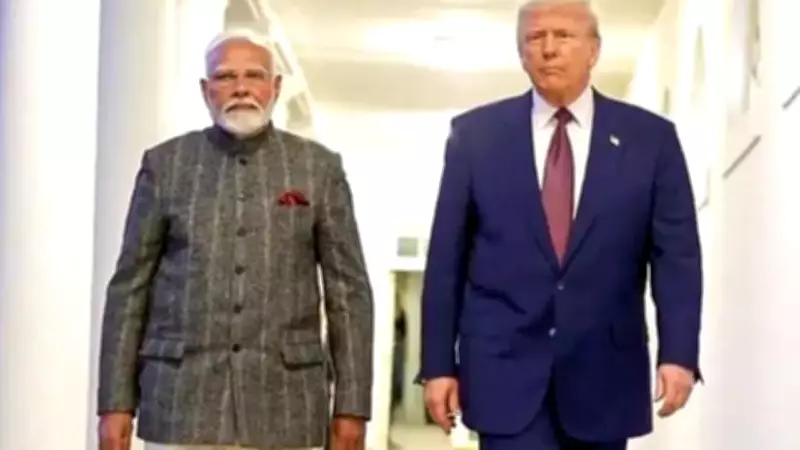
The White House has emphasized the robust personal connection between US President Donald Trump and Indian Prime Minister Narendra Modi while unveiling a substantial new trade agreement between the two nations. Press Secretary Karoline Leavitt highlighted that the two leaders "share a very good relationship," underscoring the diplomatic rapport that facilitated this economic breakthrough.
Direct Engagement Between Leaders
Speaking to reporters, Leavitt revealed that President Trump personally communicated with Prime Minister Modi during the negotiation process. "The President struck another great trade deal with India. He spoke with Prime Minister Modi directly. They share a very good relationship," she stated. This direct dialogue underscores the high-level commitment from both sides to strengthen bilateral ties.
Key Components of the Trade Agreement
Leavitt outlined several critical elements of the agreement that promise mutual benefits. "India is committed to not only no longer purchasing Russian oil, but buying oil from the United States, also perhaps from Venezuela too, which we know will now have a direct benefit on the United States and the American people," she explained. This shift in energy procurement marks a significant realignment in global trade dynamics.

In addition to the oil commitments, Leavitt announced substantial investment pledges from India. "Prime Minister Modi committed to $500 billion dollars of investments into the United States, including for transportation, for energy, and for agricultural products as well. So, this is another great trade deal thanks to President," she added. These investments are expected to create numerous job opportunities and boost various sectors of the US economy.
Trump's Economic Strategy and Tariff Policy
The Press Secretary connected this agreement to President Trump's broader economic agenda, particularly his focus on manufacturing and tariffs. "Our manufacturing sector is obviously something the president cares deeply about. That's why he's so determined and dedicated to his tariff policy," Leavitt remarked. She argued that these policies are already yielding positive results domestically.
"Well, the president's tariffs are working and his economic agenda is working... you're creating jobs. We've seen construction jobs have surged in the past few months," she noted. Leavitt attributed this job growth to increased domestic manufacturing, stating, "That's because those factories are being built right here in the United States and we're putting Americans to work."
Mutual Respect and Productive Dialogue
In earlier comments, Leavitt elaborated on the personal dynamics between the two leaders. "...when it comes to Prime Minister Modi, I know he (Trump) particularly enjoys their relationship and has a deep respect for the Prime Minister and for his country of India. They had a great call. It was very productive yesterday," she shared. This mutual respect appears to have been a key factor in reaching the agreement.
Public Statements from Both Leaders
President Trump publicly celebrated the outcome, expressing optimism about future relations. "Our amazing relationship with India will be even stronger going forward. Prime Minister Modi and I are two people who GET THINGS DONE, something that cannot be said for most," he declared. This statement reflects his confidence in the partnership and its tangible results.
Prime Minister Modi reciprocated the sentiment, referring to Trump as his "dear friend." He expressed satisfaction with specific aspects of the deal, stating, "Delighted that Made in India products will now have a reduced tariff of 18 per cent." Modi extended his gratitude "on behalf of the 1.4 billion people of India," highlighting the widespread impact of this agreement.
This trade deal represents a significant milestone in US-India relations, combining economic cooperation with strengthened diplomatic bonds. The commitments on oil, investments, and tariff reductions are poised to benefit both economies while reinforcing the strategic partnership between the two democracies.