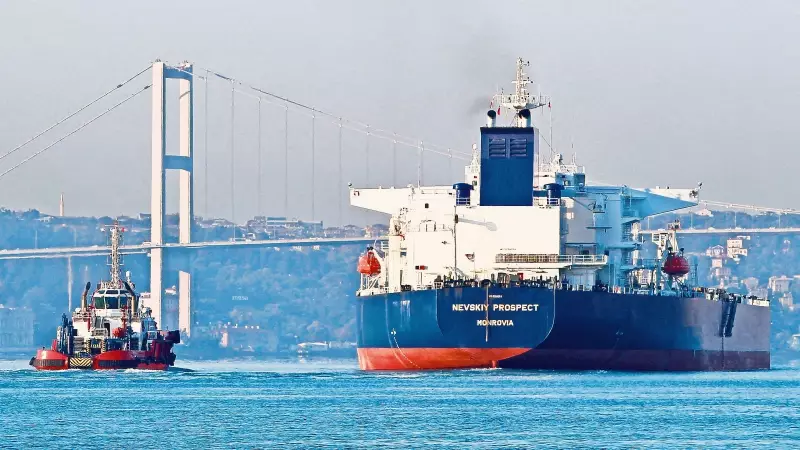
RIL Ceases Russian Crude Imports for Export Refinery Ahead of EU Deadline
In a significant strategic shift, Reliance Industries Limited (RIL), India's largest private sector conglomerate, has officially stopped importing Russian crude oil for its export-oriented refinery. This decisive move comes in response to the European Union's impending ban on petroleum products derived from Russian oil, scheduled to take effect on January 21, 2026.
The company confirmed this development through an official statement released on November 20, 2025, highlighting their commitment to full compliance with international sanctions. RIL has completed this transition ahead of schedule, demonstrating the company's proactive approach to navigating complex global energy regulations.
Strategic Compliance with EU Regulations
Reliance Industries operates the world's largest single-location refining complex located in Jamnagar, Gujarat. This massive facility comprises two distinct refineries, with one dedicated exclusively to fuel exports. The EU represents a crucial market for RIL's exported petroleum products, making compliance with the new regulations essential for maintaining market access.

"We have stopped importing Russian crude oil into our SEZ refinery with effect from 20 November. From 1 December, all product exports from the SEZ refinery will be obtained from non-Russian crude oil," stated an RIL spokesperson. The company emphasized that this transition was completed well ahead of schedule to ensure seamless compliance with the product-import restrictions that will be enforced from January 21, 2026.
The European Union announced these comprehensive sanctions in July as part of a broader package designed to pressure Russia to end its war in Ukraine. The regulations specifically target Moscow's revenue from oil exports, which Western powers argue helps fund Russia's military operations. Under the new rules, exporters of oil products to the EU bloc must provide concrete evidence that their products were not derived from Russian crude.
Navigating US Sanctions and Future Implications
The timing of RIL's announcement is particularly significant as it comes just one day before the wind-down period prescribed by the United States for dealings with Russian oil majors Rosneft and Lukoil was set to expire. The US had announced sanctions against these two companies on October 22, 2025, setting a November 21 deadline for all business engagements to be concluded.
Rosneft and Lukoil represent Russia's largest oil producers and exporters, accounting for the majority of India's Russian oil imports. RIL maintains a term agreement with Rosneft for importing up to 0.5 million barrels per day of crude oil. Industry sources indicate that RIL is also avoiding imports from these sanctioned entities to prevent any risk of attracting secondary sanctions from the United States.
This strategic shift is expected to result in a substantial reduction in RIL's Russian oil imports going forward. The company will now focus exclusively on dealing with non-sanctioned suppliers and intermediaries, marking a significant recalibration of its sourcing strategy.
The company's extensive exposure to American markets and financial systems makes compliance with US sanctions particularly crucial. RIL operates several US-based subsidiaries across various sectors, has raised substantial debt through dollar-denominated bonds, and maintains strategic alliances with prominent US technology companies including Google, Meta, and Intel. This substantial American footprint means that potential secondary sanctions could have severe consequences for the conglomerate's global operations.
Industry Context and Historical Precedents
Indian refiners have historically demonstrated caution when navigating international sanctions regimes. The industry has previously avoided oil imports from countries like Iran and Venezuela when their oil sectors faced US sanctions. Industry analysts and energy experts anticipate a similar approach will be adopted regarding oil from Rosneft and Lukoil.

RIL's status as both India's largest fuel exporter and the country's largest importer of Russian crude adds considerable weight to this decision. The company accounts for approximately half of all Russian oil flows to India, making this strategic shift particularly noteworthy in global energy markets.
The spokesperson further clarified operational details, noting that "all pre-committed liftings of Russian crude oil as of 22 October 2025 are being honoured, considering all transport arrangements were already in place. The final such cargo was loaded on 12 November." Any cargoes arriving on or after November 20 will be processed at RIL's Domestic Tariff Area refinery rather than the export-focused facility.
This development underscores the complex interplay between global energy markets, international diplomacy, and corporate strategy. As Western powers continue to implement measures aimed at constraining Russia's energy revenue, major global players like Reliance Industries must continually adapt their operations to maintain compliance while optimizing their business interests.
The broader implications for India's energy security and refining sector remain to be seen, but RIL's proactive approach demonstrates the sophisticated risk management capabilities required to navigate today's increasingly complex geopolitical landscape.