

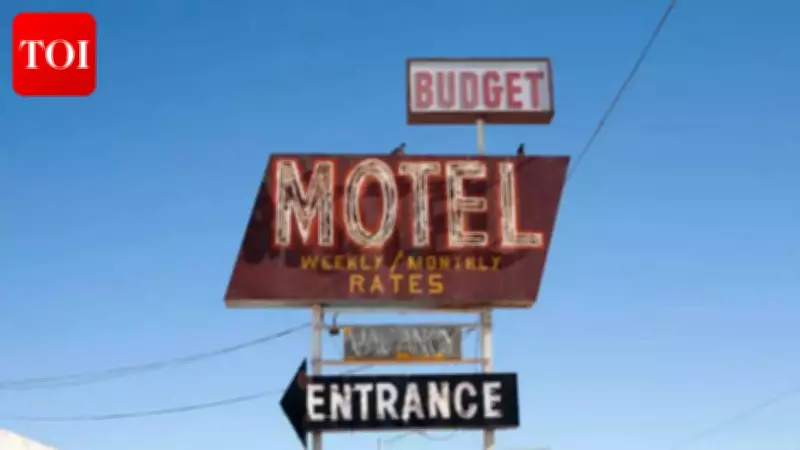
The Patel Phenomenon: From Liquor Stores to Hotel Empires
"Gas, meds, and beds"—this was the humorous yet poignant target for Indians returning to America in 1965 after a 45-year hiatus due to the Immigration and Nationality Act, as joked by Indian-American comedian Nimesh Patel. Son of a Gujarati liquor store owner, Patel often highlights the "Indian American hierarchy," which ranges from CEOs and doctors down to liquor store owners. But in the realm of American hospitality, one name overshadows all titles: Patel. In a classic case of "name as destiny," the Patel community has cultivated such a dominant presence that they are believed to own 60% of all hotels and motels in the U.S., a figure that soars to an astonishing 90% in small-town America.
Inside the Patel Motel Cartel: A Masterclass in Resilience
The "Patel Motel Cartel" is not a shadowy organization but a testament to immigrant resilience. Its origins trace back to the 1940s when early Gujarati pioneers seized opportunities during the post-World War II economic downturn. The trailblazer was Kanji Manchhu Desai, who in 1942, along with two farmworkers, took over a 32-room hotel in Sacramento from a Japanese-American owner forced into an internment camp. By 1947, Desai had moved to the Hotel Goldfield in San Francisco, transforming it into a sanctuary for incoming Gujarati immigrants. This network expanded dramatically after the 1965 Immigration Act and the 1972 expulsion of Indians from Uganda by Idi Amin under the "Africa for Africans" ideology, sending a wave of industrious refugees to American shores.
The Art of the "Dhandho": Low-Risk, High-Reward Business
How did a community with limited English and few corporate skills conquer an entire industry? They relied on the 'Dhandho' philosophy—a Gujarati term for business emphasizing low-risk, high-reward ventures. As investor Mohnish Pabrai explained to 'Diary of a CEO' host Steven Bartlett: "Heads I win, tails I don't lose much." The model was simple yet devastating to competitors:

- The family workforce: Patels realized that by purchasing a 10-20 room motel, the family could live in a room or two and manage the business themselves, dividing tasks and eliminating labor costs.
- The price war: "When a Patel took over a motel in an area, they undercut competitors' prices. If others charged $25 a night, they charged $19," said Pabrai.
- The handshake economy: With higher occupancy rates, they saved money to buy more motels, sending relatives to run them. The community thrived on "handshake loans"—capital provided with no collateral or rigid repayment dates, fueled by communal trust.
From Front Desk to Political Capital: The Patel Ascent
The Patel community's trajectory extends beyond hotel rooms to political influence. Take Kash Patel, a former high-ranking FBI official in the U.S. Before his national security role, Patel was a "motel kid." His parents, Gujarati Indians who fled Idi Amin’s Uganda, settled in New York, embodying the hospitality-driven immigrant hustle. Patel often credits his sharp, combative drive to his upbringing, symbolizing the shift from "motel Indian" to "power Indian."
Patels on the Rise: Building a Trillion-Dollar Legacy
What began in the 1970s has led to Gujaratis, particularly Patels, owning 60% of motels across the U.S., with rates reaching 90% in rural areas. The Asian American Hotel Owners Association (AAHOA), founded in 1989, primarily represents Indian-owned hotels, accounting for nearly 34,000 properties valued at around $1 trillion. This success was built on "sacrificed childhoods" and relentless labor. Chandrakant Patel, founder of Alamo Plaza Hotel Courts in 1976, came to the U.S. for higher education, juggling an airline job with managing his family motel's front desk during lunch hours. His grit paid off, expanding from one motel to thirteen small hotels by 1987. By 2019, he owned eight major hotels, including Hilton, Best Western, and Marriott properties in New York City.

The Cost of Success: Challenges and Resilience
This meteoric rise was not without scars. In the 1970s and 1980s, xenophobic hate groups like the 'Dotbusters' in New Jersey targeted Indian immigrants with physical assaults and threats. Tragedies persist, such as the September 2025 decapitation of Chandra Mouli Nagamallaiah, a 50-year-old manager in Dallas, by a co-worker, and the October fatal shooting of Rakesh Ehagaban in Pittsburgh while intervening in a disturbance. Yet, the Gujarati spirit remains unshakeable. They continue to lead with a smile and a sharp eye for the bottom line. As the Gujarati saying goes: "Vyapar ma vani ane vyavahar na shudh hova joiye" (In business, your word and your conduct must be pure). In America’s motels, that purity of purpose has built an empire that transcends "beds"—it embodies the ultimate American Dream.





