

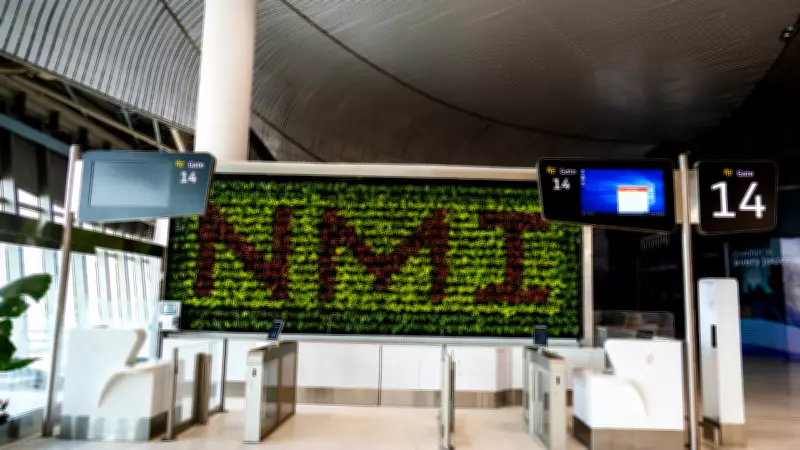
Navi Mumbai Airport Breaks Ground on Rs 2,500 Crore FedEx Cargo Hub
Just two months after the passenger Terminal 1 became operational at the Navi Mumbai International Airport (NMIA), a groundbreaking ceremony has launched the next major phase of development: an exclusive, fully automated air cargo hub. This ambitious project, expected to be completed within two years, represents a long-term investment exceeding Rs 2,500 crore and is set to transform the airport into a pivotal logistics gateway for India.
A Strategic Investment for Global Trade
The proposed facility, spanning 300,000 square feet within the airport premises, will serve as a dedicated cargo hub for FedEx. Designed as a regional consolidation and redistribution centre, it aims to seamlessly connect India with key global markets, including Southeast Asia, West Asia, Europe, and the United States. The ceremony was graced by high-profile attendees, including Maharashtra Chief Minister Devendra Fadnavis, Jeet Adani, Director of Adani Airport Holdings Ltd (AAHL), Raj Subramanian, President and CEO of FedEx Corporation, Richard Smith, CEO of Airline and COO, International at FedEx, and Kami Viswanathan, President of FedEx Middle East, Indian Subcontinent and Africa (MEISA).
In his address, Chief Minister Fadnavis emphasized that this cargo hub will complement the airport's passenger operations and reinforce Maharashtra's position as a premier logistics and trade gateway. He highlighted the strategic advantages of NMIA's proximity to the Jawaharlal Nehru Port, industrial corridors, and multimodal transport links, noting that this development is poised to generate significant employment while strengthening India's export competitiveness on the global stage.

Enhancing India's Trade Infrastructure
Jeet Adani echoed these sentiments, stating that the project reflects NMIA's long-term vision of building integrated infrastructure to bolster India's trade competitiveness. "With its proximity to Jawaharlal Nehru Port, industrial corridors, and multimodal transport networks, NMIA is uniquely positioned to support high-growth export sectors and enhance Maharashtra's role as a global logistics gateway," he remarked. The cargo hub will leverage the airport's multimodal connectivity to fortify Western India's international trade corridor, with projections indicating the creation of over 6,000 direct and indirect jobs across logistics, warehousing, transportation, and allied services once operational.
Raj Subramanian of FedEx highlighted the facility's role in integrating the company's global network with India's fastest-growing trade corridor. "Establishing this hub at NMIA allows us to integrate global network strength with India's fastest-growing trade corridor, providing greater certainty, speed, and efficiency to our customers," he explained. The hub will be equipped with state-of-the-art technology, including:
- Advanced automated sorting systems
- Dimensional scanning capabilities
- High-speed screening technology
- Dedicated aircraft parking bays
These features will enable simultaneous processing of inbound and outbound shipments, enhancing routing flexibility and transit time predictability, particularly for high-value and time-sensitive sectors such as electronics, engineering goods, pharmaceuticals, and perishables.
Scaling Up for Future Demands
Kami Viswanathan underscored the critical importance of reliable and speedy logistics infrastructure for India's competitiveness in global trade. She noted that this development will support trade flows across multiple regions, embedding global network connectivity within India's primary trade corridor. NMIA's cargo infrastructure is planned to commence with an initial handling capacity of approximately 0.5 million metric tonnes (MMT) annually, with phased expansions scaling up to around 3.2 MMT in its final development stage. This calibrated growth aligns with the airport's strategy of positioning the Mumbai Metropolitan Region as a major air freight and logistics hub.

Building on nearly three decades of operations in India, the new hub expands FedEx's dedicated presence in the country while reinforcing NMIA's role as an integrated aviation and multimodal trade platform in global supply chains. This initiative marks a significant step forward in India's infrastructure development, promising to boost economic growth and solidify the nation's standing in international commerce.





