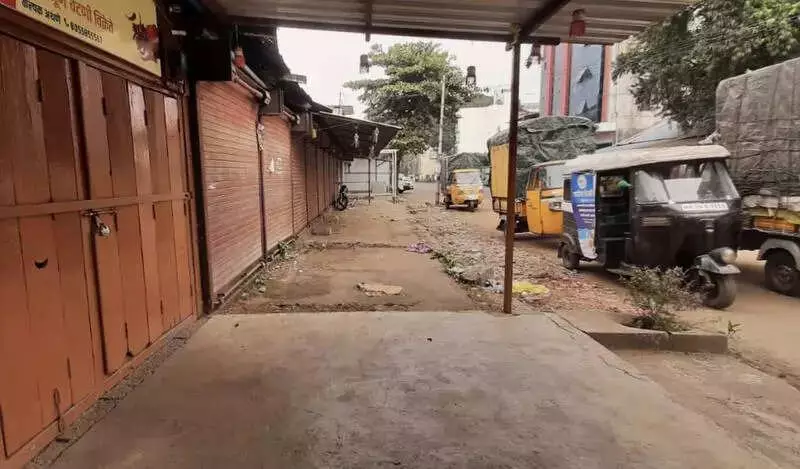
Wholesale markets in four major cities of Maharashtra came to a grinding halt on Friday as thousands of traders joined a coordinated statewide shutdown. The bandh, which paralyzed trade in Pune, Kolhapur, Nashik, and Chhatrapati Sambhajinagar, was a powerful demonstration against what the trading community calls an "obsolete, burdensome and unjust" Agricultural Produce Marketing Committee (APMC) regime.
Core Demands: Scrapping Cess and Ending Dual Taxation
The protest was called by the Maharashtra Rajya Kruti Samiti, a coalition of five apex trading bodies, seeking urgent reforms in the agricultural trade framework. The central and most pressing demand is the abolition of the APMC market cess. Traders argue that this levy has become redundant and punitive after the introduction of the Goods and Services Tax (GST).
With a 5% GST already applied on foodgrains and essential commodities, the continued imposition of the APMC cess creates a system of "dual taxation." This, according to traders, unnecessarily inflates consumer prices and squeezes their already tight profit margins. Beyond the cess, protesters are also seeking the removal of restrictive clauses under the Food Safety and Standards Act, corrections to the draft ordinance for the proposed National Market Committee, and the implementation of a long-promised online licensing system.

City-Wise Impact of the Shutdown
The bandh's impact was felt strongly across all participating cities, bringing business to a standstill.
In Pune, over 500 traders shut their shops early, halting the movement of foodgrains, oilseeds, and grocery commodities through the city's crucial Market Yard. Rajendra Bhatia, chairman of the Poona Merchant Chamber, stated that the mix of GST and APMC cess is unfair and pushes up consumer prices. He highlighted that their business is severely hampered and welcomed the "positive response" from state officials regarding cess abolition.
Kolhapur witnessed overwhelming participation, with APMC yards, jaggery markets, grain shops, grocery outlets, and even jewellery establishments remaining closed. Protesters rallied outside the district collector's office to submit a memorandum. Sanjay Shete, president of the Kolhapur Chamber of Commerce and Industries, emphasized that the APMC cess must go as the state government already earns revenue through GST on food items.
In Nashik, approximately 3,000 grocery and grain shopkeepers joined the bandh, halting work at both retail and wholesale markets. Sanjay Sonawane, vice-president of the Maharashtra Chamber of Commerce, Industry and Agriculture (Nashik), reiterated that the dual taxation is unfair and must end, noting that several issues discussed with then deputy chief minister Devendra Fadnavis in August 2024 remain unresolved.
The Jadhavwadi wholesale market in Chhatrapati Sambhajinagar was completely shut by 150 arhatiyas and buyers, suspending transactions worth an estimated Rs 5 crore to Rs 6 crore. Harish Pawar, president of the Association of Merchants, pointed out that not a single maize transaction was recorded despite the peak season, underscoring the seriousness of the trading community's concerns.
A Symbolic Warning and a Call for Action
The trading bodies have described the one-day bandh as a symbolic but strong message to the state government. They have urged the administration to expedite the long-promised reforms in the agricultural marketing sector. Traders have also warned of intensifying their agitation if the state fails to act in the coming days.
Rajendra Bhatia from Pune expressed hope that Friday's display of unity would finally push the government to implement concrete reforms across Maharashtra's agricultural markets. The protest reflects deep-rooted concerns that traders feel have been ignored for years, now amplified by the pressures of e-commerce competition on traditional trade networks.