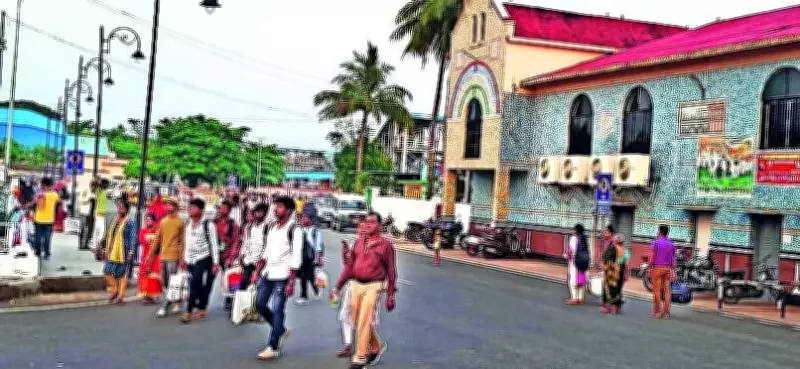
LPG Shortage in Surat Triggers Early Exodus of Migrant Workers to Odisha
Hundreds of migrant laborers employed in Surat, Gujarat, have begun an unplanned return to their native villages in Ganjam district, Odisha, as a severe cooking gas crisis disrupts life and work in the textile hub. This early departure marks a significant deviation from their usual schedule, where workers typically return home just before Vishuba Sankranti on April 14 to participate in local rituals and festivities.
Production Cuts and Soaring Gas Prices Force Workers' Hands
The ongoing LPG shortage, exacerbated by geopolitical tensions in West Asia, has led to drastically reduced production in Surat's textile units. Many workers, lacking domestic LPG connections, rely on commercial refilling centers where prices have skyrocketed. Mitu Pradhan from Kuarpani village explained, "We had planned to return in the first week of April and come back in the third week. But due to non-availability of cooking gas in the open market following the conflict in West Asia, we have returned home early."
Approximately seven lakh migrant workers from Ganjam district work across various sectors in Surat, with the majority employed in textile manufacturing. The crisis has forced many to reconsider their stay. Akula Bhanaj Pradhan of Charikonia, who returned on March 15, shared, "I wasn't planning to return for Sankranti this time, but the LPG crisis forced me to change my plan. Without LPG registration, we used to get our 5kg cylinder filled for around Rs 500. Now centers are charging between Rs 2,500 and Rs 3,000. We can't afford that and decided to return."

Textile Industry Hit Hard by Industrial LPG Shortages
Several textile units have curtailed production days due to shortages of industrial LPG, which is essential for finishing products. This reduction in work has compounded the difficulties faced by migrant laborers. Akula added, "We will return to the workplace only after the situation returns to normal." The impact extends beyond Odia workers; laborers from Bihar, Uttar Pradesh, Chhattisgarh, and West Bengal have also started leaving Surat due to the LPG crisis.
However, migrant workers from Odisha who possess domestic LPG connections in Surat are experiencing fewer problems, though delays have increased. Banabasi Pradhan, an Odia worker, noted, "Earlier we used to get a cylinder within 3-4 days after booking. Now, we are getting the same in 10-12 days." This disparity highlights how the crisis disproportionately affects those without formal gas connections.
Broader Implications for Migrant Labor and Regional Economy
The early return of workers could have significant economic repercussions for both Surat's textile industry and the rural economies of Ganjam district. The disruption comes at a critical time when workers typically contribute to local Sankranti celebrations and family incomes. As the LPG crisis persists, the uncertainty looms large over when normalcy will resume, leaving thousands of migrant families in limbo.