

Indore Airport Runway Resurfacing Project Suspended Amid Global Supply Chain Crisis
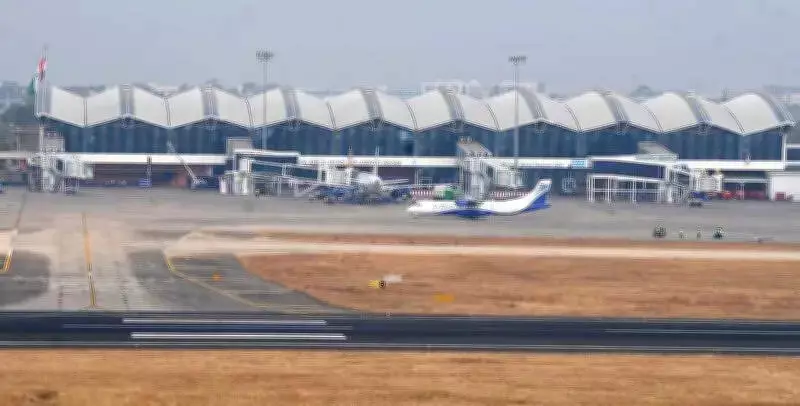
The critical resurfacing work on the 2,754-meter runway at Devi Ahilyabai Holkar Airport in Indore has been officially suspended. This unexpected halt is directly attributed to a severe disruption in the global supply chain for specialized Polymer Modified Bitumen (PMB), a material essential for aviation runway construction. Airport authorities have confirmed that the ongoing conflict in West Asia is the primary cause of this supply shortage.
Flight Operations Continue Uninterrupted Despite Project Delay
Importantly, the suspension of repair work has not impacted the airport's 24-hour flight operations, which resumed fully on April 1. Earlier restrictions on flight movements between 10:30 PM and 6:30 AM were lifted at that time, allowing for continuous air traffic. Airport officials emphasize that all current take-offs and landings remain completely safe and unaffected by the incomplete resurfacing.
The ambitious runway rehabilitation project commenced in February of last year. It involved the meticulous process of stripping away old asphalt to prepare for a fresh, durable surface. While the majority of this extensive project has been successfully completed, a significant 1,100-meter section of the runway awaits its crucial second layer application.

The Critical Role of Specialized Polymer Modified Bitumen
Airport Public Relations Officer Ramswaroop Yadav explained the unique challenge. "The West Asia war has severely impacted the supply of this specialized material," he stated. "Unlike standard bitumen used for ordinary road construction, runway pavements demand PMB or Performance Grade binders. These advanced materials are engineered to withstand the concentrated impact forces of aircraft landings, extreme shear stresses, and dramatic temperature fluctuations experienced on tarmacs."
Civil engineering expert Vivek Tiwari, an assistant professor at SGSITS, elaborated on the technical specifications. "Runway asphalt must meet exponentially higher performance standards compared to highway materials," he told TOI. "PMB is specifically utilized for its superior elasticity, exceptional temperature stability, and strong resistance to aviation fuel spills. Most critically, it provides superior adhesion to prevent 'stone loosening'—a phenomenon that creates dangerous foreign object debris capable of causing catastrophic damage to jet engines."
Tiwari further noted that while major oil corporations produce standard bitumen, the specialized blending and production processes required for high-quality PMB are currently facing insurmountable logistical hurdles due to the geopolitical situation.
Seeking Domestic Solutions and Future Project Timeline
In response to this global dependency, Indian research institutions, including various IITs, are reportedly accelerating efforts to develop viable domestic alternatives. These initiatives focus on creating specialized binders and conducting comprehensive durability studies to reduce the nation's future reliance on imported aviation-grade materials.
The airport management had previously extended the project deadline on two separate occasions before finally reopening the runway for full-time operations this past April. Officials have assured that the remaining resurfacing work on the 1,100-meter section will be rescheduled and completed as soon as the international supply chain for Polymer Modified Bitumen stabilizes and normalizes.






