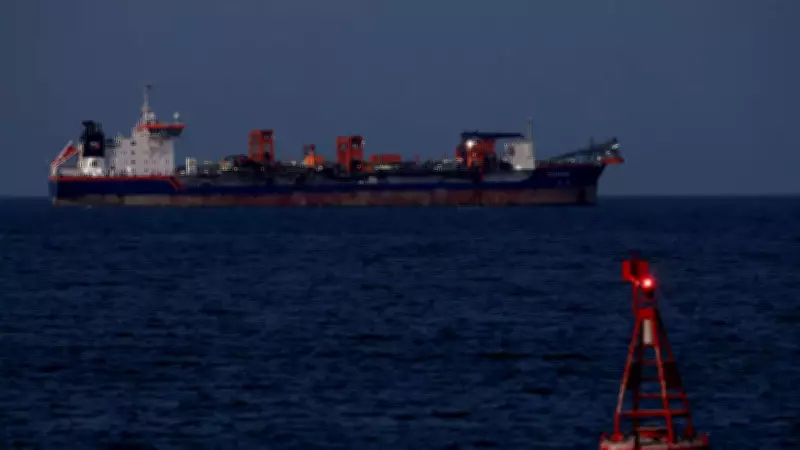
Two Indian LPG Tankers Successfully Navigate Strait of Hormuz Amid Regional Conflict
In a significant development for India's energy security, two Indian-flagged LPG (liquefied petroleum gas) tankers, carrying approximately 92,600 tonnes of cooking gas, safely crossed the war-affected Strait of Hormuz on Monday evening. The vessels, identified as Jag Vasant and Pine Gas, are anticipated to reach their designated Indian ports between Thursday and Saturday, according to an official statement from the shipping ministry.
Increasing Maritime Traffic Through Critical Choke Point
With this latest transit, a total of four Indian-flagged vessels have now sailed through this strategically vital and conflict-hit maritime passage since the escalation of US-Israel-Iran hostilities on February 28. Last week, the LPG tankers Shivalik and Nanda Devi successfully docked at Mundra and Kandla ports in Gujarat, marking the initial successful passages.
Government officials have emphasized that the primary focus remains ensuring the safe passage of the remaining 20 Indian-flagged ships, along with their Indian crews, currently positioned west of the Strait of Hormuz. This effort is critical to maintaining the flow of essential energy supplies into the country.

Operational Details and Strategic Movements
Earlier, Rajesh Kumar Sinha, the Special Secretary in the shipping ministry, confirmed that the two ships had commenced their movement but did not disclose their specific destinations. Analysis of ship tracking data revealed that both tankers navigated between Iran's Larak and Qeshm islands. This routing is interpreted as a potential measure to clearly signal their identity to Iranian authorities before proceeding through the contested waters.
Sinha provided further details on the chartering arrangements for the fleet:
- One LNG (liquefied natural gas) ship is chartered by Petronet LNG Ltd.
- Seven LPG carriers have been hired by Bharat Petroleum Corporation Limited (BPCL) and Hindustan Petroleum Corporation Limited (HPCL).
- Crude oil tankers have been chartered by Indian Oil Corporation (IOC), Reliance Industries, and BGN International.
Broader Context of Energy Imports and Regional Dynamics
In addition to the four Indian vessels, the US-flagged LPG tanker Pyxis Pioneer docked at an Indian port on Sunday. The impending arrival of Jag Vasant and Pine Gas is projected to increase the total volume of imported LNG to over 2.9 lakh tonnes, bolstering the nation's energy reserves.
Addressing concerns about crew welfare, Sinha assured that Indian seafarers onboard these vessels are not experiencing shortages of food or water, and their well-being is being monitored.
The situation in the region remains tense, with reports indicating that close to 500 tanker vessels are currently confined within the Persian Gulf due to the conflict. While some reports have suggested Iran is selectively permitting ships to cross the Strait, the Iranian embassy in India has categorically dismissed claims of any payments being demanded as "unfounded."
This maritime activity underscores India's heavy reliance on seaborne energy imports. The nation imports approximately 88% of its crude oil, 50% of its natural gas, and 60% of its LPG requirements. A substantial portion of these critical imports is routed through the Strait of Hormuz, highlighting the geopolitical and economic significance of maintaining secure passage through this global choke point amidst ongoing regional instability.